The first visit to a gay bar
For gays, especially if they grew up in the sixties, their first visit to a gay bar or club is a very special, impressive experience.
Between the two lockdowns in 2020, gay bars with darkrooms reopened. However, the dark back rooms were used as lounges with minimum distancing. In Berlin-Schöneberg, official complaints about construction defects had previously led to the popular darkroom in Tom's Bar having to close for the time being.
The institution of the dark back room - or cellar - is not only indispensable in the gay subculture and will therefore survive the pandemic, but has not lost its appeal since it was established at the end of the 1970s. Even if, in purely numerical terms, they have declined along with bars during the infamous pub decline from the 2000s onwards. The gay dating platforms Grindr and GayRomeo are often blamed for the latter. Because you can easily be gay there, even in the flat, heterosexual pampas.
The subculture, or at least parts of it, including saunas, darkrooms and the parks that have been converted accordingly, is needed - nationwide. In doing so, they are defying the claim that sexual and other social gay places are only needed because discrimination has driven gays into hiding in their subculture. However, those who frequent bars and darkrooms are looking for more (or something else) than just protection.
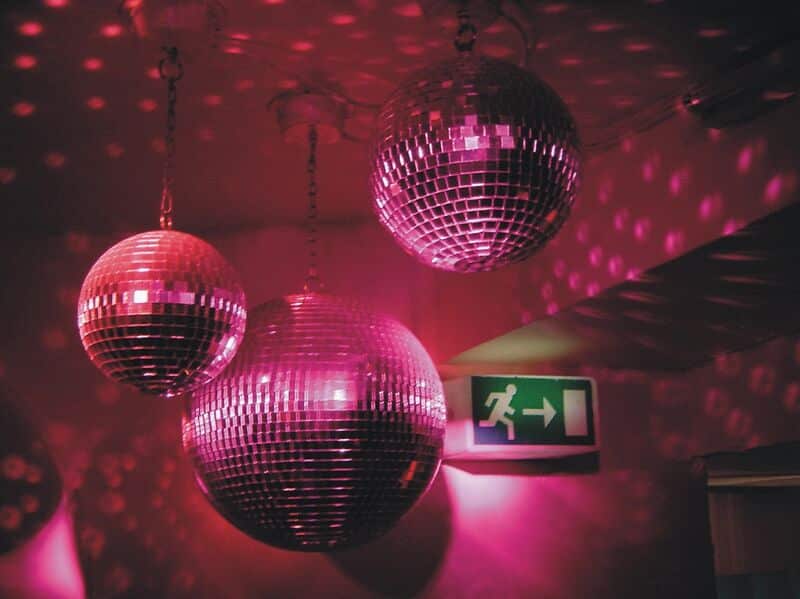
Gay subculture as a place of self-discovery
Long before Grindr and GayRomeo were to compete with the analogue subculture, even before the spread of darkrooms, and at a time when the gay subculture could actually be understood to a much greater extent as protection against discrimination, the bars and clubs were important meeting places - and bar-turned-turning points in many gay life stories. In the 1960s, the bars with names like "Hoppla, Sir!" made it possible to meet other gay people - and not least to come to terms with one's own gayness.
Maria or Stefan M. Weber (67), former West Berlin gay activist and still a gay bookseller, remembers his "first gay bar" called "Goldener Heinrich" in the centre of Stuttgart's red light district. At the end of the 1960s - Paragraph 175 was only reformed in 1969 - Maria ended up for the first time between the older homosexual regulars, who were smoking and drinking beer and looking at young boys like him, and the whores from the surrounding street prostitutes, who took a break there with their cheap and good food from the pub opposite: "Later in the evening, people liked to stand in small groups in front of the bar and discreetly rub each other's bare cocks. For little Stefan, it was the big world, completely exciting, unforgettable and formative."
Between pub, flap and cruising venue
He doesn't remember how he got there in the first place, but Maria took the bad reputation of the area where the "Goldener Heinrich" was located as an incentive to go there. For a while, the pub meant "the world" to her: "I wasn't alone! There were others like me!" The way out of isolation in a heterosexual environment was intertwined here with exciting sexual activity - even if it was a bit subdued: "You could hardly see the dicks, hidden by bar stools and the counter." Maria also had her first gay relationship at the time, but not at Heinrich, but in the flap at the Charlottenplatz tram stop. Such flaps, i.e. public toilets where men have sex with men, hardly exist in Germany today. Parks and lakes have survived as cruising areas.
Everything was clear in the bar
Erwin Gruhn, a dedicated photo collector on the history of the gay movement and a member of the „Homosexual Action West Berlin“ (HAW) in the 1970s, also got to know the first other gays at the end of the 1960s, but not yet in the subculture. It was only there that they were more open: „Everything was clear in the bar!“ In 1974, he visited the popular „Club David“ in Essen - Erwin's first trip to „the sub“. Located close to the main railway station, you were first observed through a peephole before you were allowed to enter, a security precaution that can still be seen today in selected bars and many darkroom pubs.
At work, at school, „there were hardly any gay people, at least not openly. So the sub was the best place for us.“ By "us", Erwin means gay people as a whole, who had to go through the subjective process of becoming gay, according to his assessment, and who used offers such as pubs and gay bookshops to help them.
Gay spaces between culture and activism
Art, culture and activism could be found in bookshops and alternative bars such as the "Café TucTuc" in Hamburg or the "Anderes Ufer" in West Berlin. Maria quickly had enough of the latter when the leading member of a West Berlin gay group "Allgemeine Homosexuelle Arbeitsgemeinschaft" (AHA) called an unscheduled members' meeting because of him: "I had to justify myself because I was in a relationship with a HAW member. I didn't understand a thing and it was too stupid for me."
With the new gay shops and the political groups that were often linked to them, committed homosexuals tried to offer an alternative to the subculture, primarily in university towns in West Germany in the 1970s. It was not only the first place to meet other gays - but also gays who were interested in left-wing issues and wanted to be politically active. This gave rise to a gay political subculture of its own, which in turn had different rules depending on the city and the left-wing movement. For some gays of the 1968 generation, these groups and shops became a refuge for a completely new self-confidence. Others saw the whole thing as not sexual enough, too stubborn or elitist. If you talk to gays of this generation about the spaces they frequented, they are united by the experience of the new. To a certain extent, little has changed.
More than pleasure: Why gay places remain important
When Maria arrived in West Berlin - even before he had to justify his intergroup relationship - "Andreas Kneipe" (until 2003 in Ansbacher Straße in Schöneberg) became his new gay domicile. "I spent days and nights there in the early 70s, dragging home several one-night stands and relationship attempts." This had previously been a rare occurrence at Heinrich in Stuttgart, as he was "still too uptight and insecure" despite all the fascination that the new gay world held for him.
Gay pubs and clubs were and are more than just places of entertainment. Pleasure here is traditionally combined with the shared experience of being into men. Even if not everyone present is looking for a (new) partner, the sexual flavour pervades these spaces. Whoever goes there, regardless of their conscious attitude towards it, does not shy away from the gay cliché and unexpectedly opens up a space of opportunity for those young or older, inexperienced gays to discover their gayness.

Why dating apps are no substitute for gay meeting places
Homosexuals from different generations report this: The euphoric feeling of newness when you realise that you are not alone. Perhaps this is at least part of the cosy feeling (at least for some) homosexual men when they want to go out gay or have a "gay beer". Grindr and GayRomeo can fulfil parts of this: you realise you're not the only cunt in the village after all. Or at least in the district. But the desire to meet gay people in the flesh still exists - also in the form of subculture, pubs, clubs and darkrooms.
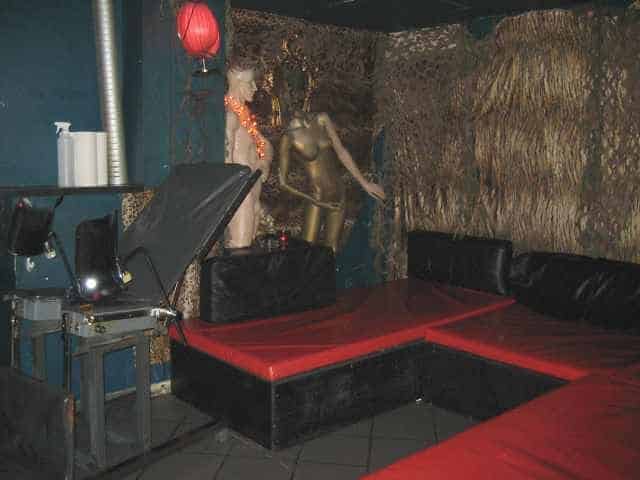
Why gay places remain important
The generation before digital dating platforms and, even more so, the generation before the noticeable onset of liberalisation, which took effect later in rural areas than in university towns, has correspondingly strong memories of their first subculture experiences. At least that's my experience from numerous conversations with gay men. The first trip to the sub, often with excitement and only after shadowing the respective club for several weeks as an initial experience of being gay. Maria visited his first gay pub again later: "I was there again two or three years ago, with Thomas and Dietmar from the Erlkönig bookshop. Nothing was the same as it was back then and I was still on the verge of tears."
It will be exciting to see what kind of gay subculture will be found after corona. However, this will certainly depend more on the financial resources of the often traditional gay bars and less on a direct interplay between the pandemic and being gay. Even AIDS in the 1980s did not lead to the demise of the subculture, despite its massive impact on the sex lives of gay men. Albeit to some changes. In this respect, the desire to meet other gay men and to experience one's own gayness in a space kept as free as possible from heterosexuality remains the same and it remains to be seen in what form it can be fulfilled in the future.
Questions and answers about the gay subculture
Why were gay bars so important in the past?
For many men, gay bars were places where they met other gay men for the first time. They were not only meeting places, but also spaces for self-discovery. Anyone who went there could experience it: I am not alone.
Have dating apps replaced gay bars?
Dating apps such as Grindr or GayRomeo have changed a lot of things. They enable quick contacts, even outside of large cities. Nevertheless, they are no substitute for the direct experience of a real place where encounters, closeness and companionship are created.
What role do darkrooms play in the gay subculture?
Darkrooms are an integral part of many gay scenes. They symbolise desire, freedom and anonymous encounters. At the same time, they show that gay places can always come under pressure - for example due to regulations, urban development or social debates.
Why is it not just about nightlife?
Gay bars, clubs, bookshops and cruising venues have always been more than just places to party. They offered protection, culture, activism, closeness and community. Especially for generations that were less able to live openly, such spaces were often particularly formative.
What does gay subculture have to do with visibility today?
Queer visibility is not only created online. Analogue places make gay life tangible in everyday life: you see others, become visible yourself and experience community directly. That's why gay meeting places remain important today.
What future do gay places have?
The future of gay venues depends on many factors: Rents, audiences, urban development, political climate and community support. When bars, clubs or queer cultural venues disappear, not only is nightlife lost, but also a part of gay history.
Need someone to talk to?
Whether acute or simply for orientation - sometimes it helps to talk to someone in confidence.
Use the Gay Health Chat - the button at the bottom right will accompany you on the page. There you can get anonymous and free of charge:
- Personal live advice in the chat
- Help by e-mail or telephone
- Information on health, law, everyday life and more