In the Berlin scene and on the Internet, a "German laboratory testing service" is targeting customers with exaggerated claims. Genetic characteristics can actually reduce the risk of HIV, but are no substitute for safer sex
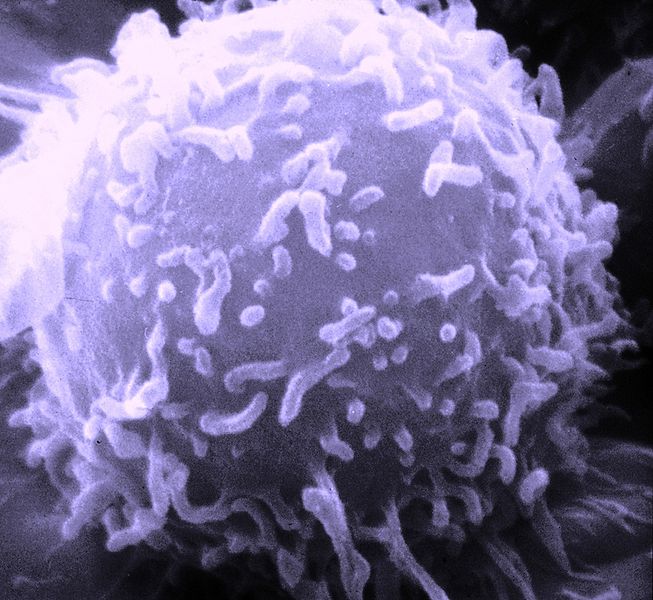
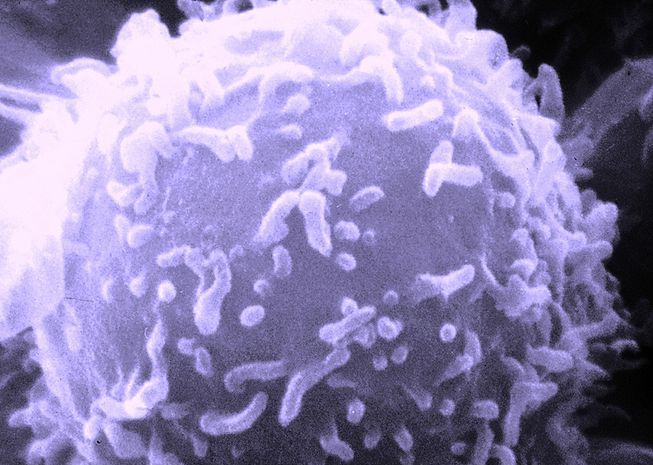
HIV attaches to cells such as this lymphocyte via receptors. Photo: National Cancer Institute/USA
The slogan is intended to inspire hope: "Immune to AIDS - you could be too!" Business cards with this slogan have recently been distributed in the Berlin scene. They advertise a test that is supposed to provide information on whether you are protected from HIV infection by a genetic trait. "15 per cent are," promises the accompanying website in bold letters, followed by the request: "Request test here!"
Only the much smaller text on the page puts the lurid message into perspective: "As astonishing as it may sound to the layman, in Western Europe 10 to 15 per cent of the population are largely immune to the HI virus."
The adverts and website come from a company called "Deutscher Labortest-Service". It offers a genetic test for around 200 euros. The customer sends a swab of the oral mucosa to a doctor and receives the result by post.
HIV cannot enter the cell via faulty connection points
What is this offer all about? Some people actually have genetic characteristics that make infection with HIV less likely. the background: HIV requires receptors on the cell surface in order to penetrate human cells. These are docking sites where the virus binds to the cell. One of the receptors that HIV can utilise is called CCR5. If these CCR5 receptors are defective due to a genetic peculiarity, most HIV viruses cannot penetrate the cells. The likelihood of HIV infection then depends, among other things, on whether the gene for the faulty receptor is inherited from only one parent or from both. In the first case, you simply have fewer cells with functioning CCR5 receptors than other people, in the second case none at all.
Those who have inherited the genetic predisposition from only one parent are therefore probably somewhat better protected against infection than others - it is unclear how much better. Around 10 to 15 per cent of the population in Germany belong to this group. There are fewer people from southern countries, and this gene variant is almost non-existent among migrants from Africa and Asia.
Only around one per cent of the population is really largely protected against HIV
Only around one per cent of the German population has inherited the genetic predisposition for the faulty receptor from both parents. These people are actually almost completely protected from HIV infection. But only almost: some HIV variants do not use the CCR5 receptor, but a different one called CXCR4. They can enter the cells despite the genetic alteration.
In other words: Only one in a hundred is "largely immune" to HIV, but not completely. The test on offer can therefore offer no certainty to anyone. The statement that "10 to 15 per cent of the population are largely immune" is misleading.
The result of such a test therefore does not mean that you can do without protection against HIV during sex. The provider itself also refers to this - but not on the business cards or on its homepage.
(Armin Schafberger/howi)