A trans woman's report on self-determination, trust and solidarity
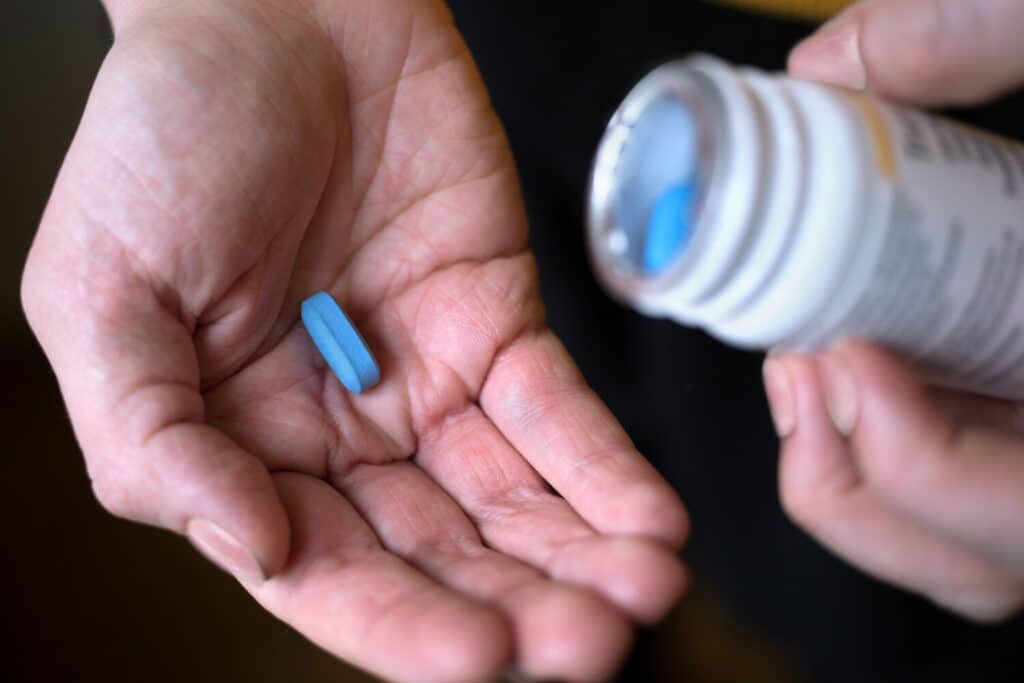
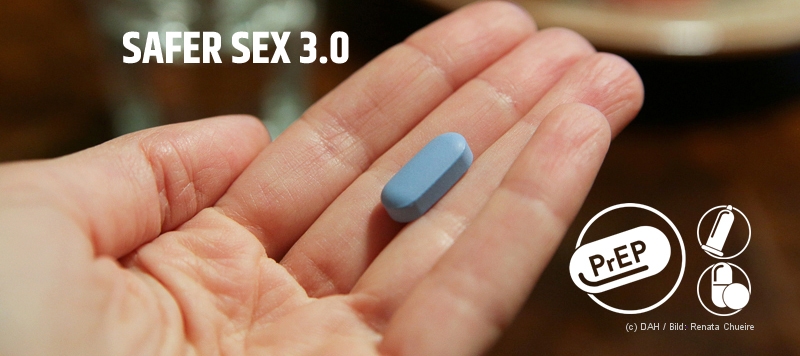
Before I even started PrEP, I wanted to understand what this tablet actually does. PrEP protects the body from a possible HIV infection. The medication blocks the virus before it can settle in the body. It is not a guarantee, but it is an effective precaution.
Medical start with PrEP: HIV tests, values and responsibility
Before I started, my blood values were checked, HIV test, kidney and liver values, hormones. I remember waiting for the results. This silent trembling between hope and fear. The values were unremarkable. Creatinine 0.81, GFR over 60, so stable kidney function. Liver unremarkable. Hormones in the target range, estradiol 141, testosterone 1.80. No evidence of infection. Everything in the green zone. I was ready. Ready to take responsibility, for myself, for my body, for the people I share closeness with.
Everyday life with PrEP: routine, emotions and self-determination
I took PrEP every day for a month. Without exception. I never forgot a tablet. I wanted to know what it felt like, not just medically, but emotionally. As a trans woman who takes hormones every day anyway, this was nothing new. Medication is part of my everyday life. But PrEP was different. Not part of my transition, not a step outwards. But something inward. Something to do with trust. The tablets are big. Honestly, it was a little overwhelming at first. I took a deep breath, swallowed and at some point it became routine.
Something very special. I have experienced so many times that others wanted to make decisions about my body. Doctors, experts, authorities. With PrEP, it was my decision again for the first time. My body, my protection, my trust. For so long, my body was a political terrain. With PrEP, it became a safe place. For me. And for others. Physically, hardly anything has changed. Just a headache now and again. Maybe it was the weather, maybe the medication. I don't know. But the decisive factor wasn't physical. It was something else. Something emotional.
Closeness and care: How PrEP creates security in relationships
I have no fear of contact with people who are HIV positive. Maybe in the past, yes. I grew up in a world where HIV was associated with fear. With guilt, with stigma. But that was a long time ago. I got to know people, listened and learnt. Especially in sex work, where trust, protection and responsibility are so closely intertwined. PrEP has changed this feeling. It has given me security. Not just for myself, but also for the people I was intimate with. If you really think about people, if you take their safety as seriously as your own, then closeness changes. PrEP doesn't just reduce the risk of infection. It takes some of the weight off intimacy. And that is perhaps the real prevention.
Work and risk: Why many trans women need PrEP
Many trans women around the world are in sex work, and that is no coincidence. Discrimination, poverty, rejection on the labour market, lack of documents, lack of security, invisibility, anti-trans laws. All of this pushes many into areas that others avoid. And at the same time, these spaces are often the only ones where trans women are seen, desired, but not always respected. PrEP has a different meaning in this reality. It is not just protection from a virus. It is protection from a system that constantly defines us as a risk. When society tells you that you are dangerous, self-protection becomes a form of dignity. A form of resistance.
Access and care: Hurdles in the healthcare system for trans women
I have seen colleagues who live in this uncertainty. Many want to protect themselves but don't know where they can get PrEP or don't trust doctors because they too often feel that they are not meant to be there. Yet they are the ones who need PrEP the most. And get it the least. I not only had to fight for my gender, but also for my access to protection. My first visit to the doctor for PrEP was friendly but awkward. He didn't know what to do with me. Asked if I was having sex with men despite hormones. „Men.“ Whether that was even necessary. I had to explain that protection has nothing to do with identity. It's about life, about care.
Many trans women do not have doctors who take them seriously. They have to put together their own healthcare, with knowledge from the community, with mutual support. PrEP thus also becomes a symbol. An expression of collective care in a society that often leaves us to our own devices. My current doctor is very different. He is very enlightened, very sensitive, questioning and not overbearing. Apart from the fact that I also get my hormone treatment there. The practice itself is queer and trans, and you can tell. You can feel that you're not a second-class or even a first-class patient. A little unsponsored surreptitious advertising. ViRo Schillerkiez. Thank you for simply being normal.
More than medicine: PrEP as self-determination, solidarity and care
Trans women are often seen as a risk in medicine. As a statistic. As a category. But rarely as people who take responsibility, who care, who protect themselves and at the same time think about others. When a trans woman takes PrEP, it's not just medical. It's also political. It is an I take control of my body. I take what is rightfully mine. I protect myself because I want to live. Not because I'm a risk. I know that many trans women are living with HIV. And that this topic is often hushed up in our community. There are so many who are doubly stigmatised.
For their gender. For their HIV status. Being HIV positive and trans are not mutually exclusive. It just means that you have to fight against prejudice twice. I am HIV negative, but I know how it feels when your own body is seen as a risk. Maybe that's why I understand how much love there is in this little pill. For me, PrEP is also a sign of solidarity. An I see you. An I want you to feel safe. I have never been afraid of HIV-positive people. But I know the fear of my own vulnerability. And PrEP has helped me to turn this fear into confidence.

Thinking PrEP politically: visibility, self-determination and prevention culture
I often think about how PrEP is read politically. For cis gay men, it was a liberating step, a symbol of sexual self-determination. For trans women it is too, but on a different level. It is not just protection, but visibility. We are part of this culture of prevention, even if we are often missing from studies. I would like us to be seen not just as a risk group, but as people who bear responsibility. That our stories of care, love and trust are told in the same way as our statistics.
I see PrEP as part of a larger movement. One that says that caring can be radical. That safety should not be a privilege. And that solidarity sometimes starts with a little blue pill. Today, I often think about how much I demanded of my body. How much it has endured. And that I finally wanted to give it something in return. Maybe that's the real reason why I took PrEP. Not just to protect myself, but to keep myself going. To get closer to myself.
FAQ about PrEP
This FAQ section summarises answers on PrEP for trans women: effectiveness against HIV, intake, tolerability, access and how prevention strengthens self-determination and care.
PrEP is a preventive medication that greatly reduces the risk of HIV infection if it is taken correctly. It does not replace condoms and does not protect against other STIs.
Before starting, a current HIV test, kidney values and other basic checks should be carried out by a doctor. Thereafter, regular checks and tests for STIs are carried out at agreed intervals.
Many people tolerate PrEP well. Temporary headaches, nausea or gastrointestinal complaints may occur at the beginning. If symptoms persist or are severe, the doctor's surgery should be contacted.
PrEP can usually be combined with feminising hormone therapy. However, individual differences are possible; regular medical check-ups are important.
The places to go are HIV centres, checkpoints, AIDS service organisations and queer-friendly GPs and specialists. There you will receive counselling, tests and ongoing support.
About the author Joelina Yavaş

Joelina Yavaş is a trans woman, author and queer Muslim activist. In her texts, she writes about bodies, vulnerability and self-determination and about the ways in which trans and multiply marginalised people reclaim spaces of safety and closeness.
Bluesky: https://bsky.app/profile/drjoelina.bsky.social
Instaprofile: @drjoelina and the public one: @joelina_j
My block - Trans & defiant: https://ko-fi.com/joelina
More exciting articles
Discover further contributions on trans perspectives: from everyday life and visibility, language and media to legal protection, SBGG and healthcare.




Online and print materials
Discover brochures, posters, postcards and other materials relating to Trans* and community topics - to read, share and pass on, whether digitally or in print.
Sexual health and HIV/STI in trans...
„What needs exist in trans and non-binary communities with regard to sexuality and...
Sexual education in trans and non-binary...
This handbook presents the content developed as part of the SeBiCo project...
Need someone to talk to?
Whether acute or simply for orientation - sometimes it helps to talk to someone in confidence.
Use the Gay Health Chat - the button at the bottom right will accompany you on the page. There you can chat anonymously and free of charge:
- Personal live advice in the chat
- Help by e-mail or telephone
- Information on health, law, everyday life and more