The latest empirical surveys show a downward trend in the acceptance of queer diversity. Trans people are particularly affected by this. The „Diversity Barometer 2025“ commissioned by the Robert Bosch Stiftung confirms the trend. Although acceptance is still positive, it is declining. As the study categorises trans as a sexual orientation, specific findings are largely ignored.
Figures and trends - why trans hostility is on the rise
However, two statements have a trans focus and the values here are particularly striking: „Transsexuals should keep to themselves“ and „Changing gender is against nature“. The first statement was rejected by 56 % of respondents, the second by only 34 %, while 23 % agreed with it unreservedly (in between were the gradations „not very true“ with 18 % and „fairly true“ with 12 %).
As far as the downward trend in acceptance is concerned, we are already familiar with corresponding findings from the USA. However, it is not clear from these empirical snapshots why this is the case. But that is precisely the interesting question. There is often talk of the majority of society being overwhelmed by certain issues, as well as of increasing political polarisation resulting in a split in society.
The constant bombardment of right-wing populists and right-wing extremists - flanked by supposedly feminist and religious fundamentalist groups - plays an important role. This is all the more true when anti-trans positions are elevated to a government programme, as has been the case with the renewed Trump presidency in the USA since the beginning of the year. On the one hand, this makes it easy to see how easily attitudes can be manipulated and the tendency to go along with general sentiments.
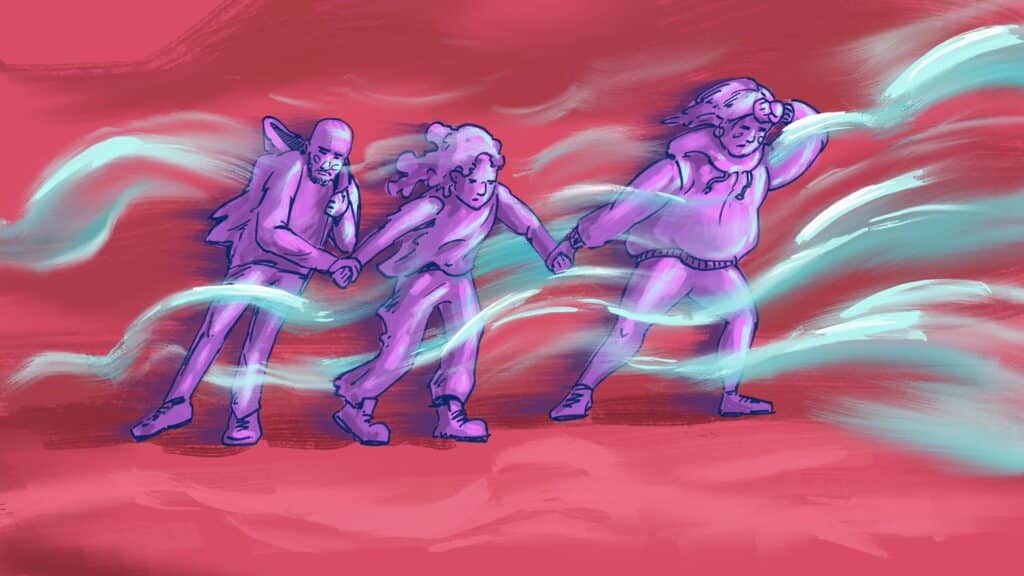
What does trans hostility mean - and who does it affect?
Either way, we cannot ignore the fact that trans hostility is currently on the rise in society. Because this is the case, I would like to take a closer look at the question of what we mean by trans hostility. Because its forms are wide-ranging and not necessarily always recognisable at first glance. However, its overt forms are easily recognisable. Hate and violence are the most visible. Their increase is documented in police statistics, although it can be assumed that there is an unquantifiable dark field, i.e. discrimination that is not even reported and reported, and on the other hand, the increasing number of registered trans-hostile offences in recent times is likely to reflect a growing awareness of the issue.
To come back to the „diversity barometer“. This also expresses trans hostility in numerical terms. If 13 % of respondents agree that trans people should keep to themselves and 8 % largely share this view, then this means nothing other than that around one in five people are against the social visibility of trans people. Even without knowing the specific motives, social exclusion is most likely to stem from a hostile attitude, however it is characterised. In any case, such an attitude jeopardises both equal rights and the social participation of trans people.
For the second statement, the figures in the negative range also speak in favour of a tendency towards anti-trans attitudes. This is because those who consider trans to be unnatural ultimately locate it in the spectrum of illness and perversion. It should be noted here that biology is fundamentally instrumentalised as an objection to trans. However, this is based on an error of reasoning, namely that a narrow, culturally characterised concept of naturalness is invoked. I will go into this in more detail later. Just this much in advance: the biology argument in the context of trans proves to be one of the favourites in the range of anti-trans narratives.
Hidden trans hostility: internal dynamics in trans and queer communities
I want to focus here on the hidden, not always obvious trans hostility that appears through the back door, so to speak. The fact that we also find it in the queer community and even in the trans community may be surprising and alienating, but unfortunately it is part of everyday life. The motives for this are difficult to discern, because when a trans woman describes herself as sick and abnormal and vehemently speaks out against gender self-determination, which she has ultimately claimed through her transition, we may perceive this as a regressive attitude, but the actual motive cannot be recognised. We can only speculate whether this is due to self-hatred, for example, or whether it is an internalisation of negative external attributions.
SBGG in focus: Protection of self-determination vs. the debate on abuse in trans
A broad gateway for trans hostility is the misuse debate surrounding the Self-Determination Act (SBGG) and the fact that those who use it to change their name and civil status (change of gender entry) because they are trans, inter or non-binary and therefore have a comprehensible reason to do so can do so by submitting a low-threshold application to the relevant registry office and providing self-disclosure. This is precisely the essence of gender self-determination.
The SBGG has now been in force for just under a year and seems to be working on the whole. Currently, 22,000 people across Germany are said to have utilised the law to date, although it can be assumed that the number will be lower in the future, as the initial backlog should have been cleared by now. However, there was one obvious case of abuse by a right-wing extremist, an abuse that was announced and for political reasons, primarily to discredit the SBGG.
Categorise cases of abuse: Protect SBGG, strengthen self-determination - against trans-hostile regression
However, despite a heated media debate, it cannot really be claimed that this has caused the rule of law to falter or that the SBGG and thus gender self-determination has been called into question. It is obvious that such abuse ultimately follows an anti-trans impulse. However, the solution cannot be to cancel the principle of self-determination in order to return to, for example, the assessment as we know it from the so-called Transsexuals Act. In my opinion, the solution can only be to penalise obvious abuse. In other words, the SBGG needs to be criminalised.
The creation of the SBGG was already accompanied by an ongoing debate about abuse, which contained a highly trans-hostile potential. It was discussed, for example, that men could use the law to gain access to gender-specific spaces, i.e. access to women's saunas, women's prisons and all places reserved for women, such as toilets, changing rooms, etc. But also to hijack women's quotas or women's car parks. But also, for example, to hijack the women's quota or use women's car parks.
Even if men were always mentioned, trans women also came under the radar of suspicion of abuse, combined with the conclusion that the changed gender entry was on paper but did not apply in reality. Reservations and resentment against trans women took full effect here and ultimately left clear traces in the legal text.
Legal loopholes: Military paragraph, equality principle and de facto trans-hostile effects
This was also the case with the so-called military paragraph, which suspends the change of gender entry in the event of defence, as if trans women would then cease to be trans. Trans men are not affected by this, which violates the principle of equality with regard to trans women, according to which all people are equal before the law.
This is another example of poorly concealed and basically blatant trans hostility that attacks our integrity head-on. Incidentally, the legislator does not seem to be aware of the right to conscientious objection enshrined in the Basic Law. No change in civil status is required to exercise this right. Such scenarios show how deeply reservations about trans people are anchored in legal practice. The prime example is the so-called Transsexuals Act. Its restrictive nature led to several human rights violations, which the Federal Constitutional Court gradually eliminated.
Recognising gender identity: Language, rights and self-determination for trans people
Let us turn to another area of discrimination that has already been briefly mentioned here: This is the talk of so-called biological gender, which is associated with two main statements. Firstly, it is intended to emphasise that there are only two genders. However, nobody in their right mind would deny the fact that there are women and men with distinct physical characteristics.
Where trans people find themselves in a gender binary defined by reproduction remains open, of course. After all, trans cannot be explained by gonads and genes. On the other hand, the existence of trans is also a fact that is supplemented by the findings of ethnology and cultural history research to the effect that there have always been people like me everywhere in the world, i.e. people who have changed gender roles.
The reference to the fact that nature is characterised by a wealth of variants, intended as a defence of sexual diversity, is true when it comes to sexual characteristics or hormonal and chromosomal issues, and is understandable as an objection to strict bisexuality, but is unfortunately not really helpful in answering the question of why trans exists. We cannot find a conclusive answer in it. The fact that this why cannot (yet) be answered makes us - unsurprisingly - easily vulnerable. The broad anti-trans front confirms this.
Ways out of trans hostility: education, legal protection and active self-determination
I had spoken of two different statements in connection with the talk of biological gender. The first statement claims that there are only two genders and leaves out trans people. The second denies gender identity, i.e. what characterises the reality of trans people's lives. It assumes that trans people always remain their birth gender regardless of body-altering measures. The statement is then: a trans woman remains a biological man and a trans man remains a biological woman. Such thinking has far-reaching consequences. Without going into detail here, its traces can be traced right through to current legislation, where a term such as gender identity is consistently avoided. The consequence: trans remains excluded, does not count wherever questions of gender are concerned.
I think it is obvious what is trans-hostile about it. It is a frontal attack on our integrity that casts doubt on our human ‚authenticity‘. The Self-Determination Act allows us gender self-determination on the one hand, but treats the confirmed gender identity as something second-class, not of full value.
Ways out of trans hostility: education and self-determination
There is no doubt that we are still at the beginning - despite all that has been achieved. The SBGG was made for trans, inter and non-binary people, but it looks like society as a whole still has to become gender-fluid.
FAQ on trans hostility
This FAQ section explains trans hostility and shows ways out - with a focus on trans perspectives, SBGG and self-determination. Use this FAQ section to quickly find definitions, figures, legal protection and practical tips.
Trans hostility refers to derogatory attitudes, language or actions towards trans people - from mockery and misgendering to discrimination and violence. It has an individual, institutional and structural effect and reduces visibility and self-determination.
Polarised debates, disinformation and political tailwinds for anti-trans narratives reinforce prejudices. Where emotions dominate and facts are lacking, acceptance declines; influential actors accelerate this effect.
Openly: Verbal abuse, threats, assaults. Covert: Gatekeeping, bureaucratic hurdles, ignoring gender identity and the „biology“ argument. Both restrict participation and self-determination.
The SBGG is the Self-Determination Act. It makes it easier for trans, intersex and non-binary people to change their name and gender entry, thereby strengthening legal self-determination.
It removes barriers and protects dignity. At the same time, it is sometimes instrumentalised in anti-trans debates about abuse. The aim should be to take clear action against abuse without weakening the principle of self-determination.
This refers to discussions that generalise laws or safe spaces as being easy to abuse. They are often based on individual cases, hypotheses or prejudices and can reinforce anti-trans sentiment.
For example, it is claimed that trans women use laws to illegally gain access to safe spaces, „hijack“ quotas or gain advantages. Such narratives stigmatise trans people, although legitimate self-determination is provided for by law and misconduct remains punishable.
The Self-Determination Act (SBGG) regulates how people can change their first name and gender entry on their own responsibility. It replaces degrading assessments, simplifies procedures and strengthens legal protection and self-determination.
A civil status change is the official change of name and/or gender entry in the registry office, registers and ID cards. It ensures that documents and everyday life correspond to the person's actual gender identity.
Respectful language (names and pronouns), intervention in the event of hostility, clear rules in institutions, contact points, training and low-threshold reporting channels. Legal protection through anti-discrimination law and SBGG complements education. Practising self-determination reduces trans hostility in the long term.
Fact-based reporting, categorising disinformation and including trans perspectives. Political: Implement the SBGG fairly, close protection gaps, secure counselling and education services and consistently record hate crime.
More exciting articles
Discover further contributions on trans perspectives: from everyday life and visibility, language and media to legal protection, SBGG and healthcare.



Online and print materials
Discover brochures, posters, postcards and other materials relating to Trans* and community topics - to read, share and pass on, whether digitally or in print.
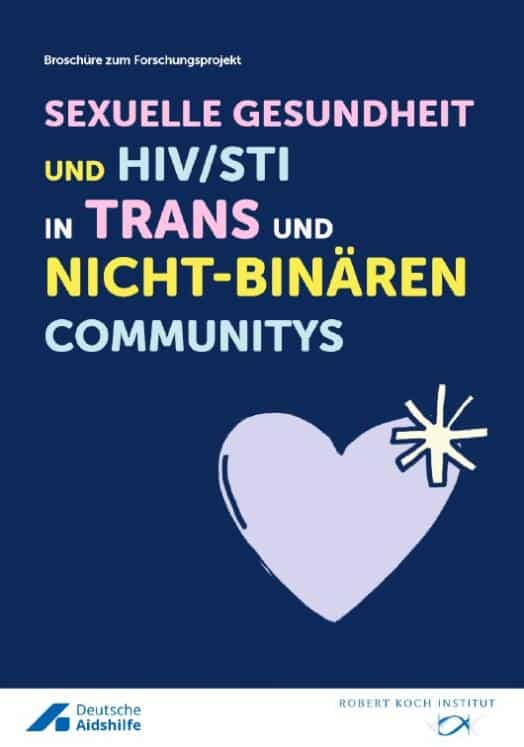
Sexual health and HIV/STI in trans...
„What needs exist in trans and non-binary communities with regard to sexuality and...
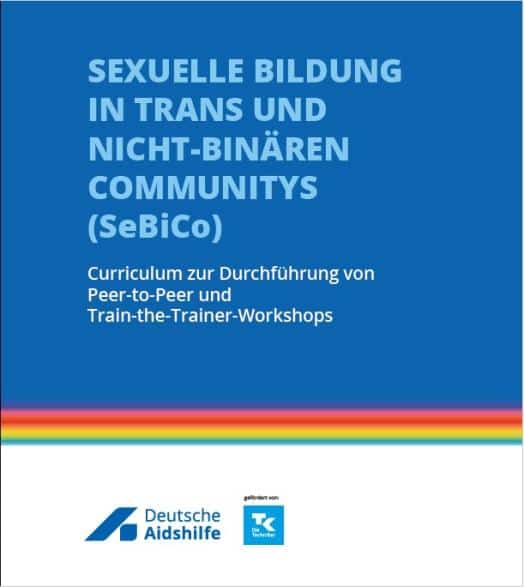
Sexual education in trans and non-binary...
This handbook presents the content developed as part of the SeBiCo project...
Need someone to talk to?
Whether acute or simply for orientation - sometimes it helps to talk to someone in confidence.
Use the Gay Health Chat - the button at the bottom right will accompany you on the page. There you can chat anonymously and free of charge:
- Personal live advice in the chat
- Help by e-mail or telephone
- Information on health, law, everyday life and more