In 2004, a 19-year-old New Yorker begins a career as a porn actor. Six years later, he is dead. Chad Noel died on 17 March 2010, possibly "after a brief illness related to complications caused by HIV". At least that's what it says in a message from a friend on an obituary website. He and the family of the deceased are wondering: How did this happen?
A young porn actor and his early death
Chad Noel gained his first experience as a hardcore performer under the pseudonym Donny Price. He received his first contract with the Cobra Video label, which released "Every Poolboy's Dream" in 2004. A film that later caused a scandal: Chad Noel acted together with the then still underage porn star Brent Corrigan, who had posed as an adult with a fake ID.
Chad moved to Helix Studios and became known there as Craven Cox, later taking part in various fetish videos as Kyle Young.
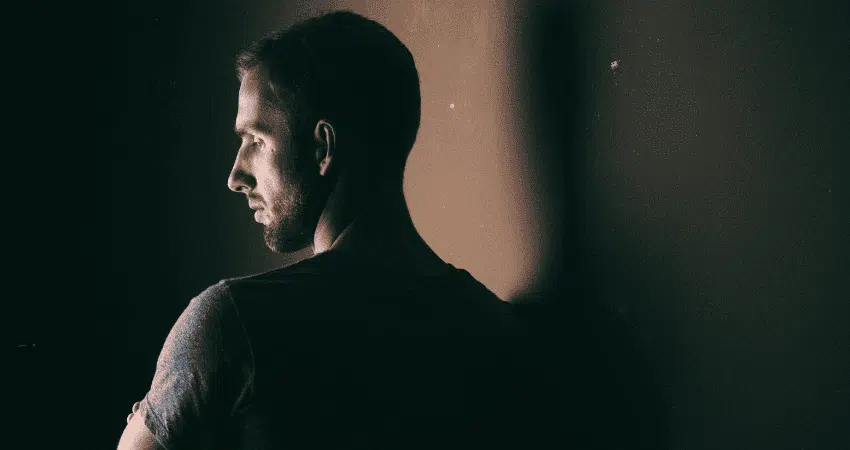
Chad Noel became known as Donny Price and died at the age of 25.
HIV suspicion and risks in the porn industry
The website "Gay Porn Gossip", which first reported the death of the 25-year-old, is now speculating about the possibility that Chad could have been infected while working for Helix Studios. So-called "bareback" films are produced there. Friends of Chad harbour this assumption, but there is no confirmation of this. However, young Helix actors have often told Gay Porn Gossip that they have been diagnosed with HIV.
Who is responsible for the health of porn performers?
Themselves? The producers? The consumers of the films?
A fierce debate has been raging in the US hardcore industry for some time now. The question of filmmakers' responsibility is at the centre of this debate. In a campaign video, producer Chi Chi LaRue appealed to actors and consumers alike not to forget the condom.
In California, there was also a push to extend the rules for potential health hazards via labour law and to introduce a condom requirement in pornography.
For some people, being HIV-positive and living life to the full is a matter of course. For others, this is not always the case. HIV medication, the scene, the circle of friends, one's own psyche and many other factors can have both a positive and negative influence on living with HIV. The scientific study positive voices 2.0 has clearly shown that exclusion, rejection and stigmatisation in particular have a negative impact on the lives of people with HIV.
Current results on living with HIV today
"Prejudice makes me sick! HIV does not!"
The majority of the people with HIV surveyed can now live well with the infection. "But at the same time, many experience discrimination and marginalisation on a daily basis," says project coordinator Matthias Kuske. "People with HIV experience discriminatory behaviour or are confronted with prejudice, particularly in the healthcare system, but also in their private lives, in their sex lives or in the media," Kuske continues.
All of this has a significant impact: As a result of discrimination, many people with HIV have poorer health, less well-being and less sexual satisfaction. In addition, the way they deal with their own HIV infection and their self-esteem are negatively affected by marginalisation and discrimination. Around one in four people surveyed are ashamed or feel guilty about being HIV-positive, or feel that they are not as good as others. A gay man in the study impressively described what this does to people:
"That was on a date in a restaurant. We got to know each other and at some point I told him about my HIV status. And then he just got up and left. And I'm sitting there feeling dirty and worthless - like rubbish. The next date, I didn't tell him until the fifth date, and he was furious and said 'Why didn't you tell me at the beginning? I'm just confused!"
"But I've already had bad experiences, including rejections. A sexual partner had found my medication. Then he quickly wrote a note saying that he had found it and had fled because of it, so he actually apologised a bit. I thought that was really bad at the time. I thought it was a bit exaggerated, he could have just spoken to me." Participants in the study positive voices 2.0 on living with HIV in Germany
Need someone to talk to?
Whether acute or simply for orientation - sometimes it helps to talk to someone in confidence. Use the Gay Health Chat - the button at the bottom right will accompany you on the page. There you can chat anonymously and free of charge:
- Personal live advice in the chat - Help by e-mail or telephone - Information on health, law, everyday life and more
Pleasing others is okay, but it must not become the compass for our own actions. We already have enough flags in the wind, says Björn, who has given his thoughts on the topic of "open relationships".
Most men like to have sex, and in my experience, gay men are no different. A survey from the UK came to the conclusion that 41 per cent of around 1,000 gay men surveyed are in, or have been in, an open relationship. 75 per cent of them think this form of relationship is "great". Even if the results are not completely transferable to Germany, there are certainly a lot of people here who see things similarly. For example, I also live in an open relationship, and I know very few truly monogamous gay men. On the Facebook page of I KNOW WHAT I'M DOING recently appeared under a post on the subject of "open relationships" a lively discussion in which I then took part.
I was quite surprised at how much opinions differed and shocked at how harshly those who live in open relationships were criticised and attacked. "Why do gay people only ever think about sex?" "You don't have to change partners like underwear!", or "Then you don't need a relationship; that completely confirms the stereotype about gay people" I could read.
It annoys me that some gay people argue just as homophobically as some straight people. What struck me was that there is a fear of fulfilling the clichés. It seems that there are quite a few gay men who would rather conform than explore their own needs and live authentically. Studies show around 57 per cent of men and 47 per cent of women cheat. So you can work out the probability of "real fidelity" among gay men (including in so-called monogamous relationships, where they cheat behind the other person's back). What I would really like to see, however, is the number of commentators who criticise me and others but don't act any differently to me ... Nobody has the right to judge other people's relationships!
I met my husband almost five years ago and it all happened very quickly: we were engaged after a year and married a year later. From day one, we had an open relationship - which was always very close. We are open and honest with each other about everything. That's exactly what I think is crucial: not having to hide anything from your partner. We both really value this honesty, even if it's not easy sometimes.
The word "open" also refers to our communication. From my point of view, the sexual needs of both partners don't necessarily coincide, nor do they have to. It doesn't bother me if my husband does things with others that I don't like - on the contrary. In open relationships, this is always discussed and that's an important step. If you don't dare to talk about something, that's a problem. "Open" also refers to our communication.
However, I was really surprised by the sharpness of the criticism. I had the feeling that I was being blamed for the "bad image" of gays in society. Apparently I hit a sore spot. My husband and I don't hide ourselves and our needs, we live them out and are happy with it!
In my opinion, not doing something because others judge it is the wrong way to go. Pleasing others is okay, but it must not become the compass for our own actions. We already have enough flags in the wind. It is important for me to emphasise once again that I am not judging others. Anyone who has decided to live monogamously should do so. Everyone should follow the path that suits their own needs. Compromising just to avoid being single or to fulfil other people's moral standards: No thanks!
(Almost) everyone knows this: you can also set your relationship status on dating portals. (symbolic image)
An article by Dr Dirk Sander, Gay Affairs Officer at Deutsche AIDS-Hilfe. (Editor: Tim Schomann)
Well-trained, broad back, pronounced abs, strong shoulders: this is how "the man" is usually shown to us in gay magazines. Regardless of whether they are editorial articles or adverts. These men - usually in their twenties - are beautiful to look at, they convey an idealised image of masculinity, power and strength. Why is this image of masculinity so dominant? What is behind it and what can these images trigger?
At first glance, this seems to have nothing to do with a prevention campaign like I KNOW WHAT I DO. But if you take a closer look, it raises some questions about our attitudes and respect for each other in the so-called gay or queer community. What effects can mutual exclusion and stigmatisation have on our health well-being and our sexual protective behaviour? We want to talk to you about this!
"Faggots are pointless"
Although the image of men in gay magazines and on many a CSD truck appears quite uniform, the "queer" scene is much more diverse when it comes to physicality: fat and thin, long and short, old and young, hairy bears, chubby blokes and slim shirts, sometimes with rather soft, sometimes with striking features. Nevertheless, many people seem to be fascinated by male bodies that conform to a certain idea of masculinity; they are objects of desire. Men who are more effeminate, i.e. supposedly "feminine", are sometimes mercilessly mocked as "too gay" or rejected as sex partners on online dating portals with the comment "faggots useless". A "female" male model introduced by the Federal Centre for Health Education (BZgA) in a prevention campaign last year led to a storm of indignation in the gay social media, the model was rejected as "too clichéd" and ultimately withdrawn by the health agency due to vehement "public pressure" from the scene.
"Body image stress": Stress with your own body
The longing for masculinity is apparently great, so it's no wonder that you can find all kinds of men who are dissatisfied with their own bodies and who are prepared to do a lot to fulfil the image of the gay archetype that dominates the magazines. And there is nothing wrong with taking care of your body, doing some sport and eating a balanced diet to feel fit and attractive. However, scientific studies from recent years have found that homosexuals suffer more from dissatisfaction with their own bodies than heterosexuals. A British study on the health of gay and bisexual men from 2011 emphasised that almost half of gay and bisexual men are concerned about their appearance and also wish they had to worry less about it. Twenty per cent of respondents were bothered by their weight or eating behaviour. In another recent study, Christopher J. Hunt from the University of Sydney found that gay men are sometimes "torn" between the contradictory ideas of being muscular on the one hand and slim on the other. Psychologists refer to this phenomenon as "body image stress": They say there is a difference between "normal" body awareness and stressful dissatisfaction with one's own body. In any case, it is worth thinking about how much sport and diet control is still "healthy" and when the efforts to achieve a fit and attractive body become a stressful and therefore rather detrimental burden.
A number of theoretical considerations can be found in the literature as to why the longing for a masculine, toned body can become so overpowering in gay men in particular. On the one hand, there are certain fears of being ostracised by others as (too) gay, which is why they try to appear particularly "masculine" in the conventional sense; negative experiences could also act as an amplifier here. Shame" about one's own sexuality, which does not correspond to the social norm, could also play a role here. It is also assumed that for some, the idea of being better prepared and protected against anti-gay violence attacks with a particularly powerful male body could be a guiding factor; here, experiences of violence could also have a reinforcing effect on the desire for "masculinity". Incidentally, such experiences of violence are not uncommon. A recently published German survey by Michael Bochow and colleagues shows that around half of the gay and bisexual men surveyed have experienced verbal and physical violence. A statistical value that, by the way, has not changed in the last twenty years!
Hardly any emotional support and security in gay scenes?
Another assumption for the development of "body image stress" is that gay men may tend to have lower self-esteem due to experiences of exclusion and stigmatisation in society, and that the desire to shape a "masculine" body serves to strengthen self-esteem. Further considerations assume that the dissatisfaction with one's own body could also, perhaps as a reciprocal effect, stem from the expectations of certain body ideals from the gay scenes themselves. Phil Langer, a social psychologist at the University of Frankfurt, found in his 2009 interview study that significant support that could offer emotional and physical security was hardly to be found in the gay scenes. On the contrary, he writes that expectations regarding ideals of youthful age, masculine virility and sexual and physical beauty are clearly formulated within the gay scene(s), and that these can become individual stressors.
Some authors therefore call for more discussion in the gay and queer scenes about these backgrounds, e.g. about experiences of violence and how to deal with them, about ideals and expectations of certain forms of "masculinity", but also about the importance of respect and cohesion within the scene. Last but not least, this discussion seems important in light of the fact that some authors consider it likely that risk behaviour during sex could be encouraged by the conflict between a lack of self-esteem and the desire to appear particularly masculine.
The business of dissatisfaction
However, reflection on such connections can only be found in a few gay and queer circles. Meanwhile, the industry that set out to satisfy our needs has long since recognised our dilemma and developed a huge business out of it. The gay "gym culture" that emerged in the USA and is now also widespread here is just one example. In gay lifestyle magazines, which (partly out of ignorance, partly out of pure cynicism) promote and cement this aforementioned normative male image, all kinds of things are on offer for those who are dissatisfied with their body image. And this goes far beyond fitness programmes: in addition to Botox and other wrinkle killers, tinctures for better hair growth are offered; even "skincare lines" for men that promise "effective solutions" for firming connective tissue and "long-term" improvement of "body contours" seem to be selling. Even surgical procedures have recently been recommended. However, such radical methods of body shaping are, fortunately, only affordable for some of us.
As I said, there is nothing to be said against doing something for your fitness and appearance, thinking about a balanced and healthy diet, but it is also up to us to reflect on the mechanisms and backgrounds for efforts that go beyond this and are stressful, to establish more cohesion in the "queer" scenes and to develop composure in the face of supposed "blemishes".
That's why we want to address this topic and discuss it with you? What ideals and goals are really important to you? Where do you feel pressure to conform to a certain (masculine) image in the scene? How do you deal with it? What do you expect from a gay scene that often describes itself as a community? Does the community and cohesion (still) exist? Or is it all an illusion?
Discuss with us on facebook! We look forward to your suggestions, criticism and food for thought.
Literature
Bochow, M., Lenuweit, St., Sekuler, T., Schmidt, A. J. (2012): Schwule Männer und HIV/AIDS: Lebensstile, Sex, Schutz- und Risikoverhalten 2010. forum volume Deutsche Aidshilfe e.V., Berlin
Hunt, Ch. J. et al. (2012): "Links between psychosocial variables and body dissatisfaction in homosexual men: Different relations with the drive for muscularity and the drive for thinness." In: International journal of Men's health, vol. 11, no. 2, pp. 127 - 136
Pretzel, A./Weiß, V. (eds.): Rosa Radikale. The gay movement of the 1970s. Edition Waldschlösschen, Männerschwarm Verlag, Hamburg 2012
Langer, Ph. C. (2009): Damaged identity. Dynamics of the sexual risk behaviour of gay and bisexual men. VS Verlag für Sozialwissenschaften: Wiesbaden
Halperin, D. M./ Traub, V. (eds.): Gay Shame. Chicago/London: university press 2009
Zuher Jazmati is 30 years old, sign Scorpio and lives in Berlin. In addition to his day job, he works as a podcaster, DJ and campaigner and does political education work, where he aims to raise awareness of the various effects of discrimination from an anti-racist, intersectional perspective.
Zuher, how did you experience the corona period?
Different! I have a complex perspective on it: not everything was great, not everything was mega bad... As I'm very active and invest a lot of energy in my projects, I'm often pretty exhausted and tired. So the lockdown came in handy as an enforced break. At the same time, the situation was also stressful for me because people were dying as a result. Nevertheless, I found it positive and necessary that I could take time for myself, time to unwind. I think that applies to many freelancers and people in the events sector. - Gigs as a DJ and workshops were cancelled, which was also painful. That's what I miss most: partying, DJing, making people happy through music. I don't think there is a simple answer to this question, it was and is a cut in everyone's life.
And what was it like for you when the lockdown was eased again in the summer?
I also thought about the people from at-risk groups who can't enjoy it. That also applies to people I have contact with, like my grandmother and my father. Or people with disabilities, for whom corona is really much more dangerous. People who are not as young, not as sporty or not as healthy as me. I am constantly confronted with the fear of the virus and the thought of what an infection would mean for my family, for example.
It's also getting colder now, so people are perhaps cycling less and using public transport more. I'm also seeing more and more reckless people who don't wear their masks and don't follow the rules. That makes me more afraid of the virus. Because what does this risk mean for my grandmother or my father, for example? That I can see them even less? The contact restrictions that were in place were really painful. When I observe negligent behaviour, my fears become even stronger.
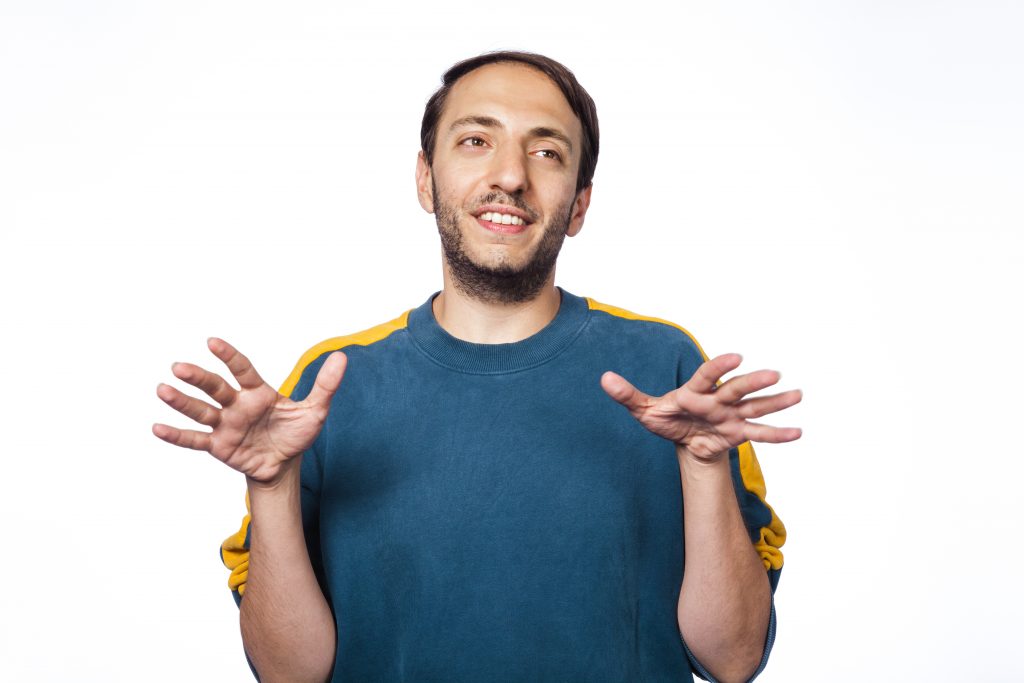
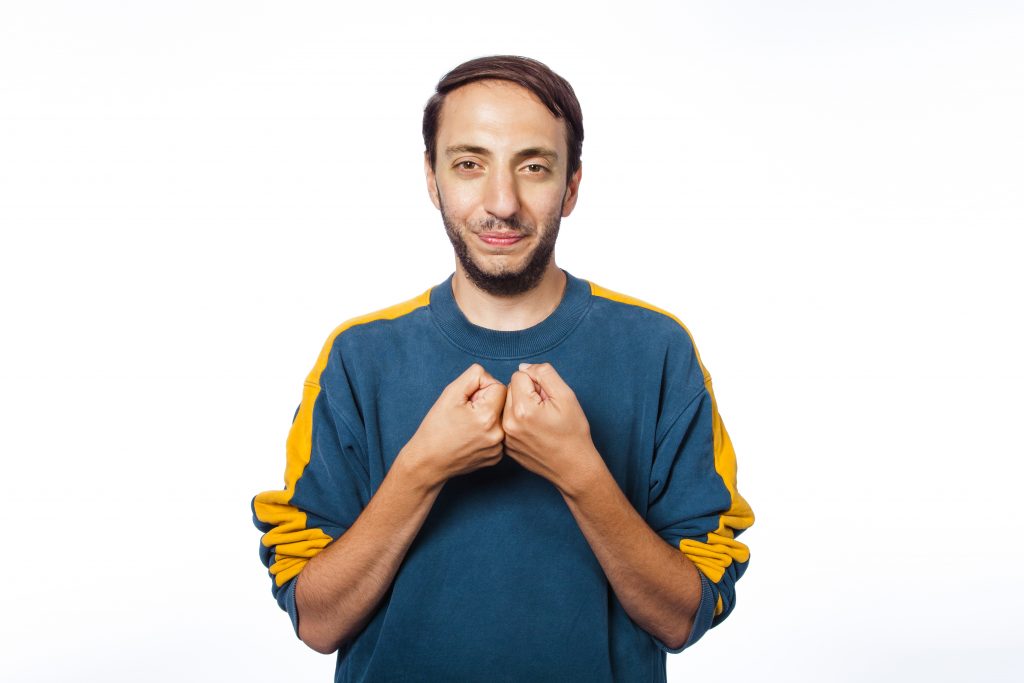
Zuher (below, centre) is part of our print ad on the topic of queer solidarity and #WirFürQueer.
What are important topics for you in the queer scene at the moment?
I see the queer scene in a more differentiated way: in other words, that the so-called 'queer scene' includes many different people who are all confronted with different life realities and forms of discrimination. For example, many people have major problems getting money. For example, if they work as artists or sex workers. Or because performances are made more difficult or banned or they are generally illegalised. Queer places that were created before corona have problems continuing to exist. As an example, I can cite the Queer Arab Party which took place every two months. People with an Arab background used to meet there to celebrate. But partying is no longer possible. If these and other safer spaces disappear, there will also be a lack of opportunities for mutual support and networking. For younger people in particular, this can mean that they have to remain in a queer-hostile environment, such as possibly intolerant families, and are unable to develop.
And on an individual level?
Above all, I see the psychological burden of isolation and loneliness. In addition to the problems of living under difficult conditions, queer people experience this even more. I imagine that being alone is terrible! Especially then, you actually need the closeness that you can have in a community. People in marginalised communities in particular need the closeness, the coming together, the networking, the exchange. It's a big problem that a lot of things can no longer take place.
What does (queer) solidarity mean to you?
That people stand up for each other, are there for each other when problems arise. For me, solidarity starts above all with working on yourself. I mean empathy with and sensitisation to forms of marginalisation that don't affect me. That if I am straight, I show solidarity with people who are not straight. That when I am white I stand in solidarity with people who are not white are. Or that I, as a non-impaired person, am in solidarity with people who are not abled. For me, it's about empathising with the lives of others in order to be able to show solidarity. To scrutinise your knowledge and ideas about people and to expand them from time to time. I would like everyone to reflect on themselves and to check our privileges, to stand up for solidary behaviour.
What do you wish for the queer co-community in the future?
For me, there is not THE queer community, singular. Rather, there are queer communities in the plural, because we are not all the same. It is important to me to recognise the diversity of the groups that are summarised in the term 'queer community' and, above all, to recognise the different power relations that exist in reality. We are not all in the same boat as a queer person from Moria or someone who is threatened with deportation. I would like to have this differentiated from the generic term "queer" so that we can do justice to the existing differences.
Is there a project that you think needs special support at the moment - and if so, why?
Yes, the queer projects in Nigeria that campaign against police violence. When I lived in London, I was in contact with the large Nigerian community there. And here in the black community, many tweets on the topic go viral, but you don't see any of it on the news! Nigeria is the most populous country on the African continent and there are a lot of protests there right now - the media here are paying zero attention to it! That's why my colleague Dominik and I are doing the Black Brown Queer Podcast (BBQ). Black lives matter also applies to African countries!
Is there anything else you would like to say?
(Laughs) Yes: Wear your mask, check your privileges!
The queer scene has also been affected by the coronavirus pandemic, whether through possible loneliness or financial difficulties. Do you want to help or are you looking for help? #WeForQueer lists projects that offer help or are looking for support themselves. Click through and find a suitable aid or solidarity campaign!
Young straight men kiss their boyfriends on the mouth - even with tongue. And they don't think it's gay at all. A good sign, say British researchers: homophobia is on the decline
Male friendship and the kiss on the lips
A kiss on the lips between men? No longer a problem for many straight men. At least that's the conclusion drawn by a sex research study conducted by the University of Bath in England. In a survey, 89 per cent of the young men questioned stated that they occasionally kiss their friends on the mouth. 36 per cent have even kissed intensively with their tongue. Are they all gay? Absolutely not! The kisses are simply an expression of friendship.
"I had my first experience of kissing a man at university," reports Adi Adams. The sociology student helped organise the study. "I was a bit taken aback, but now it feels like a normal friendly gesture." The 26-year-old striker for Team Bath FC does not see his behaviour as gay. "I don't think it threatens my masculinity or my heterosexuality."
Tenderness as a sign of closeness
The researchers led by study director Eric Anderson appear to be on the trail of an astonishing liberalisation. "We had noticed that more and more men were uploading photos to Facebook in which they were kissing their friends," reports Adams. "We then realised that this was a way for men to show that they had made it into their closest circle of friends." In this respect, the men were similar to women, who are known to express their friendships more often with affection.
Tenderness between men can be a sign of closeness, trust and friendship. | Photo: canva.com
Male friendship in transition
Eric Anderson, who is gay himself, sees the results as a good sign: "Friendly kisses among heterosexual men are a consequence of decreasing homophobia," says the 42-year-old sociologist. At the colleges and universities analysed, open homophobia has almost completely disappeared. Being thought to be gay is no longer a catastrophe there.
"The kiss is a sign of affection in student social spaces, a sign of triumph on the football pitch or one of joy in the nightclub. But it never has a sexual meaning. It seems that young people generally become more and more open-minded with each generation."
Less homophobia — or just a small sample?
However, euphoric scientists should not be taken at their word. The biggest weakness of the study: the unrepresentative participants. The study surveyed 145 English pupils and students aged between 16 and 25 who were studying at two universities and one college (equivalent to the German sixth form). This means that only a relatively small number of mainly wealthy and well-educated young men were surveyed.
Why men’s kisses are still provocative
One indication that the kissing English are still an exception is a heated online discussion about the study on the website of the Australian newspaper Sydney Morning Herald. "LOL!" and "BAH!" were the friendlier comments. Tenor: Real men don't kiss other men.
The discussion was so heated that study director Eric Anderson personally intervened: "Although the students in our study know that this type of kissing represents taboo sexual behaviour, they have restructured it in such a way that it fits in with their heteromasculinity."
He is unlikely to have convinced commentator Gilberto. "Try kissing me on the mouth," he noted before the commentary function was switched off. "Then you'd have to pick your teeth up off the floor."
Keith Zenga King is a theatre producer and curator at the Munich Kammerspiele. She has lived in Germany for five years and although she lives in Munich, she travels all over the country for work. I spoke to her on the phone after work. As we had the conversation in English, I'll translate it below:
Keith argues that representations of race, solidarity and communities also offer depth and complexity.
Keith, how did you experience the corona period?
That was difficult. As an artist, I immediately lost six months' worth of work. - But the forced break was also good for me: from the moment I arrived in Germany five years ago, my life was characterised by a constant rush from one commission to the next, it was crazy, I was so driven to always have the next project in sight! Corona hit two weeks before a planned theatre festival and I immediately switched everything to online.
What are important topics for you in the queer scene at the moment?
In the prevailing political climate, the representation of marginalised activists and artists is very important to me. This strange time in particular requires opportunities for participation. Care must be taken to ensure that representations of race, enduring solidarity and communities also convey depth and complexity. As an artist, I bring the activist into my work: Themes such as migration, queerness, etc. shape my artistic representations and thus form the framework for my work.
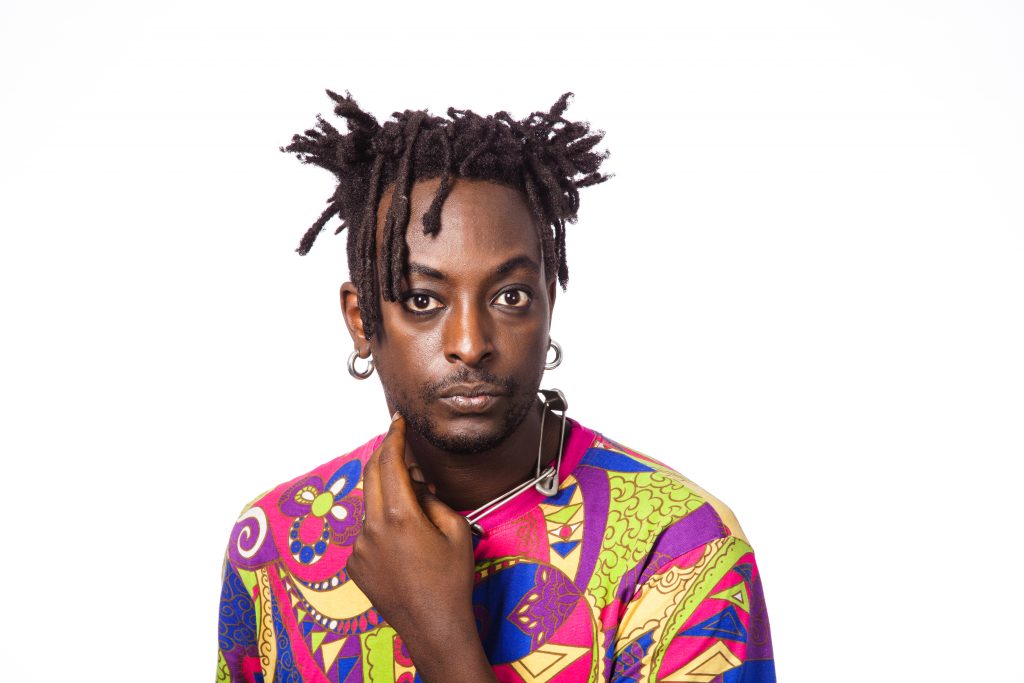
Keith (left, below) is part of our #WeForQueer Campaign.
What does queer solidarity mean to you?
I think you have to understand that it's more about politics than desire and that you don't necessarily have to be queer to be part of it. For me, solidarity is primarily about caring for the community and for each other, and it also includes general care and care work. At the moment, we should concentrate on resting and pausing and prepare ourselves for the worst. I'm thinking of the economic, social and political tensions that will swim in the wake of this global pandemic.
What do you wish for the future?
That the way we work needs to be recalibrated.
Do you have a project that is close to your heart right now?
Yes, I'm writing a book, a collection of poems, it's called "I am other in exile" and I'm already quite advanced with my work on it. Apart from that, I'm preparing for the next season...
The queer scene is also affected by the Coronavirus pandemic affected, whether through possible loneliness or financial difficulties. Do you want to help or are you looking for help? #WeForQueer lists projects that offer help or are looking for support themselves. Click through and find a suitable aid or solidarity campaign!
For many years, the leather guy characterised the image of the gay man. The works of artist Tom of Finland still bear witness to this today. But the leather scene has become outdated and the community is turning up its nose at it. Manuel Izdebski, Managing Director of Aidshilfe im Kreis Unna, spoke to Dirk Killing, who has been involved in the "MSC Rote Erde Dortmund e.V." for years and cultivates his fetish in the club. This is not always possible without reservations.
Dirk Killing: 'As a fetish guy, you're out of the ordinary. (Photo: private)
Dirk, you are known as a leather and fetish man far beyond our region. A few years ago, you were "Mr Fetish NRW". That doesn't meet with undivided approval in the community, does it?
No, many members of the community are simply convinced that we will only get equal rights by adapting. As a fetish guy, you're out of line.
What do you mean?
A CSD organiser once told me that I should keep a low profile, as that would help the fight for equality more. He got to the heart of the matter. Many in the community take offence at our visibility because they fear the reactions of straight people and don't want to be lumped together with us. Yet everyone always talks about diversity.
There is always sex in public at gay events. This is often criticised.
Is leading a slave on a lead already a sexual act? How are we supposed to demonstrate for our world if we are not allowed to show it? No, our mere participation in fetish clothing is enough to make some people gasp. In one city, this once caused a scandal before a CSD. Another group had problems with our presence. We were publicly labelled as freeloaders on the web, saying that the CSD was a family celebration. At the same time, we were urgently warned by the organiser that we should please pull ourselves together as we were about to get married. It was important to make a good impression.
That's a bit crazy, because it was mainly leather guys and trannies who took to the streets on Christopher Street.
Yes, but such reactions are unfortunately not an isolated case. At another CSD, we were interviewed on stage and asked to talk about our organisation. In the preliminary talk, the presenter seriously explained to us that we wouldn't be given a sling on stage. I have no idea what he had in mind. And when it came to the conception of a youth centre, where many different groups were involved, our involvement was not asked for, even though we have a social pedagogue in our ranks who could have made a professional contribution. When it comes to youth work, however, we should not be involved in any way, not even professionally.
How do you deal with such experiences of marginalisation within your scene?
To be honest, we're not really bothered about it now. None of us want a "straight wedding" or to adopt children. But we have always declared our solidarity with the demands of the community. And at CSD, we only march in the parade in Cologne. In Dortmund, we organised our "Lederpott" parallel to the CSD, but we didn't have much to do with the street festival. We also left the umbrella organisation SLADO at the beginning of the year.
And why?
Because we simply no longer felt represented. For the "decent gays", we belong in the darkroom. But that doesn't really exist in Dortmund anymore since the sex tax. Within a few years, it has ruined one shop after another, although it was only intended to curb prostitution. In fact, all businesses that offered the opportunity to have sex were hit with it, including gay bars and saunas. I assume that was the intention in terms of public policy to make the city smut-free. Now it's dull here. No gay man would travel from the Sauerland to Dortmund for three gay bars. Even the CSD is a dead zone. We used to be the main centre for the whole region.
For Dirk, the fetish is part of his identity. (Photo: private)What about marginalisation within the fetish scene?
We don't really ostracise people. On the contrary, we are very welcoming, regardless of whether you are old or young, fat or thin. We don't stress about such things, the fetish takes centre stage for us. However, the organised leather scene is getting on in years.
Don't younger people have a fetish?
Yes, but they're more into sportswear or something like that. And you can live out your fetish more discreetly on the internet, where you can look for a suitable sex partner for your dirty deeds and nobody will find out. You no longer have to do it in an organised way in a club. Sexual activity takes place within your own four walls. That suits many people who want to declare sexuality a private matter.
Then it doesn't matter whether you're straight or gay. The fetish clubs were founded in completely different times. Back then, it was all about the visibility of gay sexuality. They wanted to provoke homophobia in society. We still see this as our contribution to the movement today, but it is no longer in demand. The goals have become more conservative.
You yourself are very open about it. Why is that so important to you?
Yes, I do it quite openly. By being open, I make myself unassailable. I want everyone to know! For me, this is my identity and I need the clothes to feel myself. I feel uncomfortable and disguised in normal clothes. For me, it's a form of self-affirmation. I lived a heterosexual life for many years and I'm the father of a son. Very bourgeois! Coming out as a gay man and as a BDSM'er was an incredible liberation for me.
After all, you've been in a steady relationship for 13 years now.
That's right, we are two SM men in a registered civil partnership, but we have an open relationship. That is also more likely to be condemned today. Marital monogamy is the order of the day, preferably in your own home and with an adopted child. Anyone who wants that should be able to do so. But I'm not in the mood for such a "Knorr family".
Knorr-Family....?
Yes, the ideal family world in adverts, where mum is at home with dinner waiting for her loved ones. Is there a gay counterpart to this? Surely there will be!
Dirk, thank you very much for the interview and for your openness.
So is a first date only possible with a mouth-nose cover and promiscuous, gay sex no longer conceivable for the time being because of corona? Gay sex has been severely restricted by coronavirus. The coronavirus distancing rules have limited our options for physical closeness severely restricted. We spoke to three gay men about their experiences and asked the expert Marco Kammholz asked what impact he sees the coronavirus pandemic having on gay sex. Gay men have already developed creative solutions to reconcile their own needs with the protective measures.
Stefan's His self-diagnosis is clear and unmistakable: "Chronically under-fucked" bangs out to visitors to his dating profile on Planetromeo. Normally, they would read "Looking for sex". Because sex, says Stefan, "is not a leisure activity for me at the weekend, but my daily fun. It's as much a part of it as my morning cup of coffee."
From the "little slut" to the "chaste nun"
The fact that his closest friends affectionately call him a "little slut" is no problem for the man in his mid-twenties. Stefan admits that sex is important to him, and preferably with new men all the time.
Since the end of March, Stefan has been given a new pet name by his friends: "chaste nun". Stefan sighs emphatically and melodramatically and then says very seriously: "I may be a promiscuous slut, but I'm not stupid either. You just have to be realistic: shagging around just isn't possible at the moment."
The coronavirus pandemic has brought the sex lives of some gay men to a standstill. Symbol photo - Photo: Lichtsucht photocase.com
The coronavirus pandemic has not only brought Stefan's sex life to a standstill. During the tense weeks from March onwards and the associated contact restrictions and shop closures, life on the scene was also put on hold overnight. Cafés, bars and clubs were closed, and not just places where you could meet up with other LGBTIQ people. Places where men can have sex with men, such as saunas or darkrooms, were also closed.
At times, corona has turned gay (sex) life upside down.
Tom was in Argentina when the number of infections began to rise around the world. He had to cancel the internship for which he had travelled to South America. When the opportunity arose for a return flight at short notice, he jumped at the chance. It was not an easy decision, as he had fallen in love with an Argentinian shortly beforehand. The fledgling love did not last over the distance. That's why Tom didn't feel like looking for other sex partners straight away.
Since then, he has spent a lot of time alone and without dating apps - and has come to terms with himself.
"It made me realise that a lot of my drive for sexuality came from the need to prove to myself 'I can do it! You desperately try to build up your ego and get self-affirmation by having lots of sex partners. But instead of building up your self-confidence, it only undermines it even more."
Tom was, as he says, "late with everything". He had his first time at 20, "and I put myself under pressure, as if I had to catch up and compensate for something." Looking back, Tom recognises some decisions that weren't good for him.
Many gay men feel the same way as Tom.
Sex educator Marco Kammholz (Photo: Danny Frede)
Tom is not an isolated case in this respect, knows sex educator Marco Kammholz. He has spoken to many gay, bisexual and queer men about the impact of the pandemic on their sexuality at workshops during the summer months. "Corona demands a lot from quite a few gay men, especially when it comes to fulfilling their sexual needs," says Marco Kammholz. "I'm not one of those people who sees an opportunity in every crisis." Nevertheless, he repeatedly observes that participants in his workshops use the current situation to look at how they have organised their sexual life so far with a little distance. "It may then become clearer what function and meaning their own sexuality has. And how important or unimportant frequency, changing partners or a stable relationship are."
So less may be more, but above all, fewer sex partners - at least in theory - means fewer risks of contracting SARS-CoV-2. Corona has forced people back into relationships with two people. And sex is best with a steady partner - if that person exists in your life. Singles are therefore having a particularly difficult time. And people who live their sexuality promiscuously are accused of being "irresponsible".
And singles looking for a steady partner are in just as much trouble at the moment. How much closeness in the truest sense of the word can you allow? How romantic or hot can a date with mouth and nose protection or at least 1.50 metres distance be?
Total isolation is not a solution for Armin either
"There's no social distancing rule for me," says Armin grinning. "Anyone can get as close to me as they like." However, Armin is by no means as guileless as that might sound. For the first few weeks, the student completely avoided dating. There are people in his family who belong to the risk group. He also had to go into quarantine with his parents for a while.
After that, however, he quickly met up with friends again so as not to become lonely or even depressed, says Armin. "Reading crisis news every day, dealing with so many problems and just sitting at home alone: That's not good for the psyche." Armin has experienced a case like this in his circle of friends. Armin is certain that the coronavirus pandemic won't be over any time soon, even if there is a vaccine. "That's why it's important to find a way to deal with it. Everyday life has to go on somehow".
Since the coronavirus measures have been relaxed, Armin is no longer just meeting other boys virtually at dbnathe internet portal for LGBT young people, but also in real life.
Openly address the desire for precautionary measures
"However, I avoid closed rooms on dates and prefer to meet outdoors because I want to protect not only myself but also the other person. After all, I care about them."
Above all, Armin has decided not to play down the coronavirus and the fears and precautions associated with it, but simply to address them openly and honestly.
"If I don't know someone at all, I ask how they are and whether everything is OK. I try to make them feel like they can talk about anything - whether it's a recent cold or HIV, for example. Then we can discuss what we want to do about it in a relaxed manner." Armin also took this approach before coronavirus and has only had good experiences with it. "And if someone coughs now, I keep my distance, but also explain why I'm doing it. I just don't want to be quarantined again."
Gay sex has been severely restricted by Corona.
After dates is Tom He doesn't feel like it at the moment, he's still mourning his broken relationship too much. But when the time comes, Tom wants to take things slowly. So he doesn't go straight to bed with the other person, but first arranges to meet up a few times for coffee and a walk. One of the reasons for this, Tom explains, is to get a feeling from these conversations as to whether the other person is responsible enough to dare to be physically close.
"Physical closeness and sexuality are basic human needs."
Marco Kammholz, sex educator
The weeks and months in which Social or better Physical distancing were the absolute order of the day are fortunately behind us. Human encounters are possible again - albeit still with some restrictions. Be it walks or visits to a café. But how do you satisfy the need for touch and tenderness as well as the desire for sex when there is not (yet) that one - permanent - partner?
People in this situation can quickly get caught up in a maelstrom of conflicting emotions and thoughts when lust collides with fear of infection and unfulfilled longing and desire lead to anger, sadness and perhaps even despair.
"Physical closeness and sexuality are basic human needs," says Marco Kammholz. That's why it can't be morally reprehensible in principle if people look for a way to fulfil these needs - especially as this doesn't automatically mean being unreasonable or thoughtless.
Is a "corona fuckbuddy" the solution?
Some people have decided on a very pragmatic solution that allows protection and sex to be realised even without a steady relationship: an exclusive "fuckbuddy". In other words, a guy with whom you've had sex a few times and whom you trust. The reciprocal deal: we look after each other in everyday life, adhere to the coronavirus safety regulations and only have sex with each other.
Marco Kammholz also sees this model of "corona sex partners" as a special opportunity for introspection: "Anyone who reduces the number of their sex partners to fewer or just one due to the pandemic can ask themselves the question: Who actually remains and what characterises these men? In other words: what happens to your own sexual life during the pandemic?"
However, Kammholz also sees other aspects of how gay, bisexual and queer men are weighing up their sexual needs against the potential risk of infection in the face of coronavirus. "Just like the weekly shop, for some, sex dates or cruising in the park are on the agenda from time to time. Both are associated with residual risk. Why should you allow yourself to do one less than the other? I think that's a healthy attitude," says the sex educator.
Progressive sexual culture
To reduce the residual risk even further, many people skip kissing and cuddling during casual contact and get down to business all the quicker. People get down on their knees or bend over and give the coronavirus less of a chance. But glory holes are also currently experiencing a renaissance and can even be found in some homes recently - sometimes as a cardboard wall or a hole in a curtain.
"I am quite sure that the stubbornness and creativity of gays will help them to preserve this progressive sexual culture even in this pandemic (...)."
Marco Kammholz
"Over the decades, gay men have developed a sexual culture in which it is possible to deal with sex more freely and unhindered," says Marco Kammholz. "That's not so easy to shake. I'm quite sure that the stubbornness and creativity of gay men will help them to deal with the restrictions in this pandemic and at the same time preserve this progressive sexual culture."
Online sex can also be horny...
And yes, the boys and blokes are definitely creative. "Little slut" Stefan may have been objectively chaste in recent weeks, but that doesn't mean he was a good boy. "I've had a lot of fun with my friends," says Stefan in conversation - in keeping with the times via Zoom video conference - and laughs. He then holds a cardboard box in front of the camera and presents his impressive collection of dildos. They are also used in front of the camera from time to time. "Why should I have fun with them alone when others can watch me?".
So when, if not now, is the ideal opportunity to try cam sex or to explore your own erogenous zones and try out new ways to bring yourself to climax.
[Editor's note: The interviews were conducted in September before the rise in new coronavirus infections in October 2020].
The queer scene is also affected by the Coronavirus pandemic affected, whether through possible loneliness or financial difficulties. Do you want to help or are you looking for help? #WeForQueer lists projects that offer help or are looking for support themselves. Click through and find a suitable aid or solidarity campaign!