
Category: Community

  • Age difference in a relationship: When love knows no age

    Age difference in a relationship: When love knows no age

    The "gay generation" is getting on in years. The over-60s are confidently taking advantage of what the gay scene has to offer - as long as their health plays along. A mood report from Hamburg.

    Age difference relationship: Growing older in the gay scene

    "I'm not going to do that scene to myself when I'm 70," Karl-Heinz realises. He no longer wants to wait in a bar for his prince charming. "You just have to realise that: For the scene is You feel old, even if you have a completely different impression," explains the retired vocational school teacher. "If you look at yourself in the mirror every day, you don't realise how you're ageing."

    Avoiding bars is easy for the single man. He prefers to look for sex outdoors, for example in the city park. "I enjoy the chase," says Karl-Heinz and laughs. "The guys I get there wouldn't look at my arse in a bar."

    New ways of meeting in old age

    Cruising can also be very sociable. Almost 20 years ago, Karl-Heinz met a man almost 20 years his junior while cruising the dunes of Ibiza. They didn't have sex, but when they met again in the beach supermarket, they arranged to meet for dinner. This is how Karl-Heinz met a gay trekking group. Since then, he has hiked with them at least once a year through the low mountain ranges and knows the Harz Mountains almost by heart.

    Karl-Heinz no longer goes to gay bars - but is still well connected with other gays. Together with a fellow volunteer from the gay information shop, he is currently organising Hein & Fiete a "Gay History Tour" through St Pauli. Like Karl-Heinz, many older men are present in the community - they are used to it. "There is a lot of interest in specific counselling and leisure activities for gay and bisexual men over 50," says Heiko Gerlach. Together with Christian Szillat, the qualified nurse surveyed gay men in Hamburg and analysed the answers on behalf of the AIDS-Hilfe Hamburg analysed. "Männerliebende Männer 50 plus in Hamburg" is the name of her study, which she published on Radio Pink Channel have introduced themselves. A special generation, according to the two experts: they were the first to live their homosexuality relatively openly. It is not surprising that they are now openly demanding that their circumstances be taken into account in old age.

    When health determines everyday life

    So as long as the body keeps up, gay life continues happily beyond the age of fifty. Eckhard also used to go to the sauna regularly a few years ago. He still knows what's on offer: Partner discount on Fridays, wellness on Sundays and "40up" on Wednesdays with a discount for over-40s. "She could do a '70up' day for me," says Eckhard and smiles. In recent years, the trained electrician has spent more time in hospital than in the sauna. Following a heart operation, Eckhard moved into a retirement home in St. Georg in 2013, in the "Regenbogen" ward. "That doesn't mean anything," says Eckhard, "I'm the only gay person here for miles around."

    For a long time, Eckhard could not imagine that he would ever need help. He even put his HIV infection behind him. Eckhard was diagnosed in 1990 and persevered until the first combination therapies were available. "Now I've been below the detection limit for over twelve years," he says proudly. "HIV doesn't cause me any problems - they only came as I got older." In the meantime, a few have come together. Eckhard's table in the 20 square metre room is neatly lined up: a wristband for measuring blood pressure, a device for measuring blood sugar, an insulin syringe. There is also an asthma spray and a cardboard box of cough sweets. "This variety of complaints is driving me crazy," says Karl-Heinz. "It's always in the back of my mind: what's next?"

    Gay couple with an age difference: Jibben (68) and Philipp (41) in Hamburg
    Jibben (68) has been together with Philipp (41) for 15 years and they got married in 2006. "Philipp is of course also a reason why I stay fit," says Jibben.

    Age difference relationship: Two generations, one everyday life

    Jibben also sometimes worries "that his bones aren't cooperating as well". But he doesn't let that get him down. His antidote: do a lot. The 68-year-old manages three websites, including the gay and lesbian portal hamburg.gay-web.info. „I hope that's one reason why I'm still fit upstairs,“ says the broad-shouldered man with the white goatee, tapping his head. „Philipp is also a reason, of course,“ adds Jibben gently, „as a young husband, that sometimes keeps you on your toes.“

    Partnership across age boundaries

    Jibben has been together with Philipp (41; seen together in the photo) for 15 years and they got married in 2006. Every year at the Hamburg Pride street festival, the two of them sit in the organisation container, take in lost property and use radios to ensure that every stand has electricity and water. Jibben hasn't had enough of the scene yet. „That's also because I went to a gay bar for the first time when I was 50,“ Jibben surmises. „In hindsight, I wish I'd started earlier,“ says Jibben, „because I definitely missed out on a lot.“

    FAQ: Age difference relationship in the gay community

    Relationships with an age difference raise many questions - especially in the gay community. In this FAQ, we answer key questions about partnership, acceptance, challenges and social perception.

    What does a big age difference mean in a relationship?

    A large age difference in the relationship describes partnerships in which there are several decades between the partners. In the gay community, this constellation is comparatively common and often more socially visible than in heterosexual relationships.

    Are relationships with an age difference stable in the long term?

    Yes, many relationships with an age difference are stable and long-term. It is not the years of life that are decisive, but shared values, mutual respect and similar ideas about living together. The article shows that such partnerships can work for many years.

    Why are age differences more visible in the gay scene?

    For historical reasons, many gay men were only able to live their sexuality openly later. As a result, encounters between generations occur more frequently - for example in the scene, in voluntary work or through shared interests. The age difference in the relationship is often consciously accepted.

    What challenges does a relationship with an age difference entail?

    Different life phases, health issues or social expectations can present challenges. At the same time, many couples report that openness and communication help to constructively bridge these differences.

    Does age still play a big role in the gay community today?

    Age continues to play a role, for example in access to the scene or physical expectations. However, it is becoming increasingly apparent that rigid age limits are becoming less important - especially in relationships where closeness and trust are more important than numbers.

    How is the age difference in the relationship perceived from the outside?

    The perception is different. While some couples are confronted with prejudice, others experience a great deal of acceptance. Social discourse has opened up and relationships with an age difference are now viewed in a more differentiated way than in the past.

    Voices from the community

    Reports, experiences and perspectives on love, ageing, health and cohesion in the community.

    Need someone to talk to?

    Whether acute or simply for orientation - sometimes it helps to talk to someone in confidence.
    Use the Gay Health Chat - the button at the bottom right will accompany you on the page. There you can chat anonymously and free of charge:

    - Personal live advice in the chat
    - Help by e-mail or telephone
    - Information on health, law, everyday life and more
  • Max (21): "I'm no different to other gay boys"

    Max (21) about his life with HIV infection
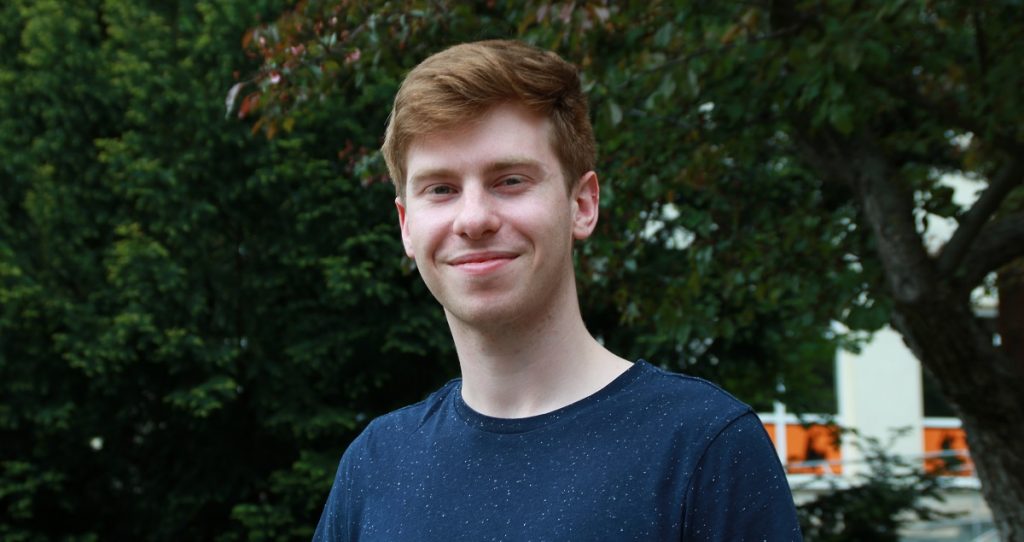
    Photo: Private

    Max is 21 years old, studies in Jena and came out as HIV-positive more than a year ago. He is happy about this decision and would like more positive guys to say that they have HIV. A conversation about unfounded worries, the point at which internet dating becomes unsexy and what a report about the "Testhelden" campaign by ICH WEISS WAS ICH TU triggered in him

    How openly do you live with HIV in the gay scene?
    Quite openly. This isn't the first interview I've given about it and the vast majority of people in my immediate environment know about it. If dating portals offer the option of declaring your HIV status, then I do that too. Or I bring it up when it becomes necessary. But it's also not the first thing I tell people about myself. Although it's strange now when people don't know.

    What do you mean by that?
    Being open about the fact that I am positive simply makes things, conversations and general dealings with others less complicated. The hurdle is removed, everyone knows and that's good. If someone comes along who doesn't know, there is often a need for explanation. This complicates the situation again and the issue comes to the fore. And that triggers unease, which is not really necessary.

    "If I can help others to protect themselves, that's great."

    Was it easy for you to come out publicly?
    My public outing came about like this: I read a report on a website about this "Testhelden" campaign that impressed me. I then contacted the author to tell him about it. He then said: "Could you imagine talking publicly about your infection yourself?" And I could. I wasn't that scared of it. There are far too few people who do that. And that's why many other people don't realise that the lives of most positive people are not much different from those of negative people. And I'm still glad I did it. If I can help others to protect themselves, that's great.

    "I then have to explain that protection through therapy works and that I am not infectious."

    How do other people react when you tell them that you are positive?
    Especially today, when my HIV status has become quite normal for me, I am always surprised by how much some people worry. Not about being infected by me. Most people are well aware of that. But many people still think that I'll get ill at some point and then die far too early or something. And it's not always easy to make them realise that I'm doing really well and that I'm not actually affected by HIV at all. It's annoying from time to time. When dating on the Internet, the matter also comes up at some point and many people react with great naturalness. But some don't either. I then have to explain that protection through therapy works and that I'm not infectious. Unfortunately, that quickly makes things unsexy.

    Fear of stigmatisation among young positives

    Do you know other young positives? How do they deal with their infection?
    I study in a smaller town, the scene here isn't huge. After I came out publicly, some of my friends came out to me. And what I generally notice is that there are now some young positives who are very open. But many others don't want it to be publicised and only talk about it with a few other people.

    "After coming out, you definitely become a topic of conversation."

    Why do you think that is?
    Well, they're afraid of being stigmatised. And that's not entirely unjustified. After coming out, you definitely become a topic of conversation. The general level of information about the lives of HIV-positive people is not great and prejudices and rumours can easily arise that make life more difficult. Many people are also afraid of jeopardising their professional future if it becomes known that they are positive.


    Max (21), student in Jena, Thuringia
    Photo: Private

    "And some negative people could relax when dealing with positive people."

    And what can we all do about it together?
    Good question. If positives are open about their infection, negatives have a chance to learn first-hand that living with HIV in 2017 no longer means being ill. We live completely normal lives and there are no longer any visible differences between positives and negatives. And some negatives could relax when dealing with positives. (laughs) And inform themselves better so that stigma is prevented before it happens.

    How does HIV affect your life today?
    I take two tablets every day, that's it. But that's now also automated, like brushing my teeth, and nothing I think about anymore. Apart from that, I'm probably no different to many 21-year-old gay boys all over the world.


    You can find out more about living with HIV at iwwit.de!

  • Growing old without being alone - multigenerational homes in Berlin as an alternative

    Growing old without being alone - multigenerational homes in Berlin as an alternative

    Germans are getting older and older, and this particularly affects gay men, who are usually left without a family in old age - and without children to look after them. There are still too few housing projects for homosexual senior citizens in Germany. One ray of hope is the first multi-generation house that opened in Berlin in early summer.

    Almost 30 years have passed since Peter was diagnosed with HIV. The Welshman is now 70 and has seen many friends and acquaintances die of AIDS. Until his stroke just over a year ago, he lived in the St. Georg district of Hamburg. But the lift was too small for the wheelchair and Peter had to look for alternatives. He specifically researched gay housing projects because he didn't want to live in one of the usual retirement homes. But he didn't find anything in Hamburg, not even in London. He only found what he was looking for in Berlin. He now has a room in the "Lebensort Vielfalt" care flat share.

    Multi-generation house Berlin - a housing project with diversity and community

    The Charlottenburg multi-generation house was opened just a few months ago. On a total of five floors, there are 24 flats in various sizes - mostly wheelchair-accessible and equipped with barrier-free bathrooms - as well as a shared flat for people in need of care. Men between 31 and 85 live here. In addition to a garden, common room and a café, Lebensort Vielfalt also has Germany's largest lending library with books, brochures etc. on the subject of LGBTIQ; the gay counselling service - the project's sponsor - is also located in the building.

    Growing old together: Experiences of residents in a place of diversity

    The first ideas for such a housing project were already being considered almost ten years ago - but sometimes it failed due to lack of money, sometimes a housing association offered properties in less attractive areas.

    "Nobody wanted to move there!" says 67-year-old Bernd Gaiser, who, like more than 30 residents of Lebensort Vielfalt, has now found a home in the centre of Charlottenburg. The tenant spokesman explains that the multi-generational house is open to everyone: Homos and heteros, regardless of gender. However, the five women here are clearly in the minority, and there is only one lesbian among them. There were also plans to accommodate a flat share for transgender people in one of the larger flats, but the potential residents fell out before moving in. Even a straight family was once interested in one of the flats - it is not known why this ultimately failed. Perhaps they didn't want to leave their 17-year-old son to a horde of gay men, Bernd and his neighbours Klaus and Jürgen speculate smugly.

    Around half of the residents have HIV. Among them are 48-year-old Klaus and his partner. Klaus appreciates the fact that he has very short distances to travel when he needs to talk to someone or obtain information - the psychosocial counselling service is located in the same building. He and his partner only recently moved from Hesse to Berlin. Although there were once plans for a similar project in Frankfurt, the "PfleGAYheim" never materialised.

    Diversity as a place to live is unique - you have to search for something of comparable size for a very long time. A "model project that is unique in Europe", was how Mayor Wowereit described it at the opening ceremony. It took six years to prepare and one and a half years to build. A total of around six million euros was invested, over half of which came from the Stiftung Deutsche Klassenlotterie Berlin.

    Housing in old age: costs, barriers and queer alternatives in Germany

    Rents here are around the neighbourhood average. Bernd pays 611 euros warm for his 47 square metres. However, he also lives at the top in a nice maisonette flat - the flats on the 3rd and 4th floors are slightly cheaper. His neighbour, 67-year-old Jürgen, enquired at various Berlin institutions before moving in. But monthly fees of up to 1,700 euros put him off - not including any care services. But there is also the other side - not everyone can afford to live in a "place of diversity". Many prospective tenants have been put off because of the rents. So Jürgen got his flat quite quickly - he was originally 76th on the long waiting list.

    There are few successful projects nationwide that are comparable. In Dresden, an attempt was made to establish a gay and lesbian housing project. According to co-initiator Horst Rasche, they had to abandon the idea because they couldn't find enough tenants. "Younger people are hardly interested in a housing project, while older people find it difficult. They are often not out or even still married." Today, only three of the building's 14 residents are homosexual.

    Elderly man in an advert for the multi-generation house in Berlin
    Diversity as a place to live in Berlin at its opening on 8 June 2012

    In Cologne there is the Villa Anders. The non-profit housing project is aimed at lesbians, gays and transgender people. Singles and couples are welcome, as are rainbow families. The rosaAlternative, or "rosaAlter" for short, was opened in a central location in Munich in 2010. The shared flat has five single rooms of around 17 square metres and two rooms for couples measuring around 32 square metres. The kitchen and bathroom are shared. The project is run by AIDS-Hilfe, which is located in the same building. This is a great advantage for the residents - currently only men with HIV live here. In principle, however, the project is open to anyone who would like to live here, says Manuel Otten, who works as a social pedagogue at AIDS-Hilfe and is responsible for the residents' concerns as a moderator.

    Berlin multi-generation centre as a model project for ageing with dignity

    In addition to the shared flat, the upper floor also offers assisted living. "In advanced stages of the illness, you can simply move within the building," says Otten. "But it also works the other way round. We once had a resident who made such good progress in the flat with long-term care that he was eventually able to move into the shared flat."

    However, the care and nursing services are not the only advantage Otten sees. Homosexuals often don't have it easy in "normal" retirement homes, as he knows from stories told by residents. "Sometimes older gay men end up in a double room with a less tolerant roommate who screens himself off with a curtain so as not to have anything to do with the other person. One gay senior got into trouble with his roommate when he put a picture of his deceased partner next to his bed. But sometimes it's just the situation when an older gay man is sitting at the table with three old ladies at dinner - if the conversation turns to the grandchildren, he can only participate to a very limited extent."

    To avoid such situations, there are housing projects such as "rosaAlter", which enable people to age with dignity; no one should feel marginalised. The Berlin multi-generational house also aims to offer people a home regardless of gender, orientation and age, and the diversity living space is a particular success story: there are currently 230 names on the waiting list, and the list is constantly growing. Perhaps a second house will be purchased at some point.


    Frequently asked questions (FAQ) about growing old and multi-generation homes in Berlin

    In this FAQ section you will find answers to important questions on the subject of Growing old in community, Multigenerational House Berlin, and Supporting offers, contact points, tips and tricks for queer senior citizens and anyone looking for an alternative form of housing in old age.

    What is a multi-generation house and how does it help people grow old?

    A Multigenerational house is a housing project in which people of different ages live together. It promotes Social networks, mutual support and community, whereby the Growing old without loneliness is made easier - especially when family structures are lacking.

    Who can Multigenerational House Berlin live?

    The Multi-generation centre Berlin (diversity as a place to live) is a housing project with flats, communal rooms, a café and counselling services. It is aimed at people who do not want to grow old alone, and is open to different age groups and orientations, with a special focus on queer lifestyles.

    How can I find free places at the Mehrgenerationenhaus Berlin?

    There are currently waiting lists:
    👉 Interested parties can register directly at Diversity in Berlin and be placed on the waiting list. Demand is high, so it is worth enquiring early.

    Are there any other housing projects for gay or queer senior citizens in Germany?

    Yes - in addition to Berlin, there are/were approaches in cities such as:
    Villa Anders (Cologne) - Housing project for lesbians, gays, trans & rainbow families
    rosaAge (Munich) - Form of housing with assisted living

    Tip: Regional LGBTIQ counselling centres often know about local initiatives and housing offers.

    Which state or social contact points help with living in old age?

    Care support centres Berlin - Advice on care & living arrangements
    Queer counselling centres (e.g. gay counselling in Berlin) - Support for LGBTIQ people
    Senior citizens' organisations - Information on housing projects
    Care counselling from the health insurance companies - Information on forms of living & care
    AWO - Counselling centres for senior citizens
    LGBTIQ counselling networks - Support, networking, project information

    How do I apply for care or support at the multi-generation centre?

    The care services are usually provided via the Care insurance requested:
    1 Submit an application to the health insurance fund
    2 Have a care level determined
    3 Attend a counselling session at a care support centre
    4 Combine services (e.g. care, home help)
    Tip: Many housing projects work with External outpatient care together.

    Is there financial support for people with a low pension?

    Yes, possible aids are e.g:
    - Housing benefit
    - Basic security in old age
    - Care allowance / care services
    - Benefits according to SGB XII
    Advice is available from care support centres, social welfare offices and charities.

    How can I find out about queer offers for older people?

    Recommended resources:
    - On-site gay counselling / lesbian counselling
    - LGBTIQ networks online
    - Care support centres
    - LGBT senior forums
    - Housing project networks

    Related articles on the topic of growing old

    Growing old affects us all - but how we organise this stage of our lives makes all the difference. These articles deal with questions about ageing: from forms of housing and care to social participation. Find out how people find ways to spend their twilight years with dignity, actively and in community.

    Need someone to talk to?

    Whether acute or simply for orientation - sometimes it helps to talk to someone in confidence.
    Use the Gay Health Chat - the button at the bottom right will accompany you on the page. There you can chat anonymously and free of charge:

    - Personal live advice in the chat
    - Help by e-mail or telephone
    - Information on health, law, everyday life and more

  • Reference person and confidant

    Reference person and confidant

    Volunteering: reference person and confidant
    © SP-PIC - Fotolia.com

    Theo (name changed) is 42 years old. He has been a volunteer at the Berlin AIDS service organisation Aids-Hilfe for nine years, providing emotional support for people with HIV. A portrait of Moritz Krehl

    In 1998, Theo was diagnosed as HIV-positive - a shock.

    Five years later, he voluntarily resigned from the church and moved to Berlin to find happiness. However, the separation from his former boyfriend, professional turbulence and few social contacts initially lead him into loneliness. Theo had not imagined the start would be so difficult. But instead of resigning himself and sitting at home until he becomes depressed, he joins the Berlin AIDS service organisation, BAH for short, to do voluntary work - a way out of isolation for him.

    BAH has ten to fifteen areas in which voluntary work is possible.

    Theo decides in favour of the "escort". There are three groups there: The volunteers from "Freunde im Krankenhaus" (Friends in Hospital), or FRIKS for short, accompany Aids patients who have to stay in hospital long-term. Those involved in "emotional support in prison" meet regularly with prisoners infected with HIV or suffering from AIDS. Theo works in the third group, "emotional support". Here too, the aim is to accompany people with HIV on their way out of the crisis, to give them back some of their quality of life and to be a carer and confidant.

    The "accompaniment" was launched in the 1980s, during the worst times of the AIDS crisis.

    Even back then, the volunteers accompanied HIV-positive people, but above all AIDS patients - until they died. In those days, it was often end-of-life care; the end of the accompanied path was predetermined from the outset.

    Even today, companions like Theo take HIV-positive and AIDS patients by the hand and give them a sense of security and familiarity. Unlike in the past, however, the end is no longer predetermined, thanks to modern medication. Today, intensive discussions between the counsellor, the person being accompanied and the AIDS service worker, as well as supervision, determine when it makes sense to end the support. In most cases, this is when the crisis has been overcome or when it becomes clear that the counselling cannot achieve the desired goals. The journey together can be short, but it can also extend over many years.

    What has not changed, however, is that AIDS often leads to social marginalisation.

    The disease isolates the patients, they become lonely. Resignation, depression and lethargy are frequent consequences, although Theo is convinced that an HIV diagnosis rarely creates new problems, but rather reinforces psychological predispositions - as can happen in critical life situations.

    To counteract isolation, the counsellors have contact with their clients at least once a week; preferably in person, but sometimes just on the phone. And although Theo, like most of the counsellors, works and has little time, he even spends the whole Saturday with his current client Benjamin (name changed) every fortnight to take him on an outing, go for a coffee or simply talk to him and listen to him.

    The man with Aids is about the same age as Theo himself - and only his second client in nine years. Theo has been accompanying Benjamin for four years now. You can tell that Theo cares about Benjamin's fate, but also that he doesn't care where he comes from or how he got into this situation. Theo doesn't pass judgement, he is concerned with the person and the path that lies ahead of him. "I want to help him experience his life."

    What did Theo gain from his involvement in the Berlin AIDS service organisation, and why is he still involved?

    He sought and found connections, he says. The supervision group gave him support. And he has found friends at BAH, a good network that he no longer wants to do without. The work also offers him "a social alternative to the cerebral desk life" and gives him the feeling that he is doing something good. And last but not least, he learns a lot about himself. In joint supervision sessions, Theo talks to the others about his personal problems and difficult moments during counselling. "I often get feedback that makes me think and helps me to develop personally."

  • positive voices 2.0

    positive voices 2.0

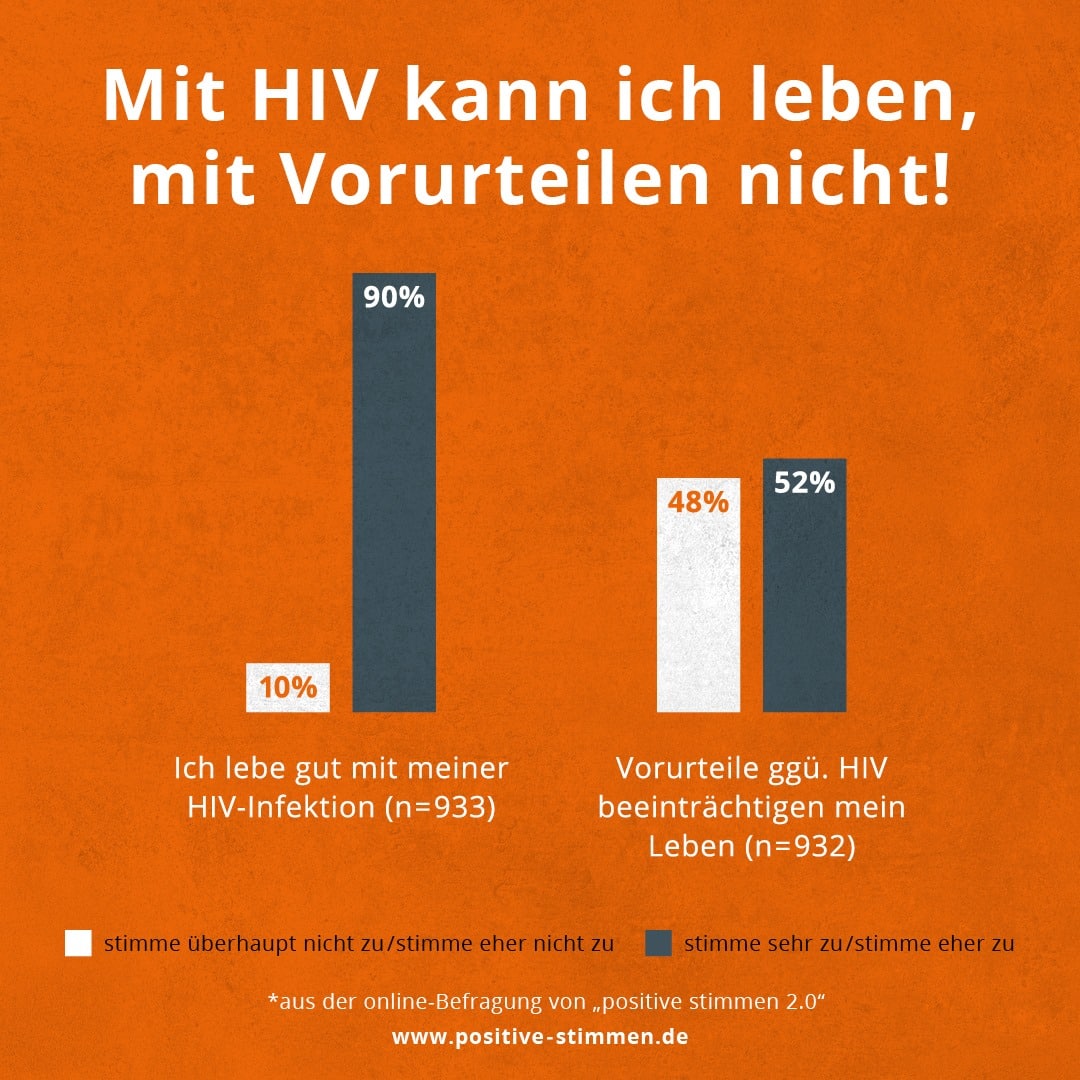
    "Prejudices against people with #HIV affect my life"

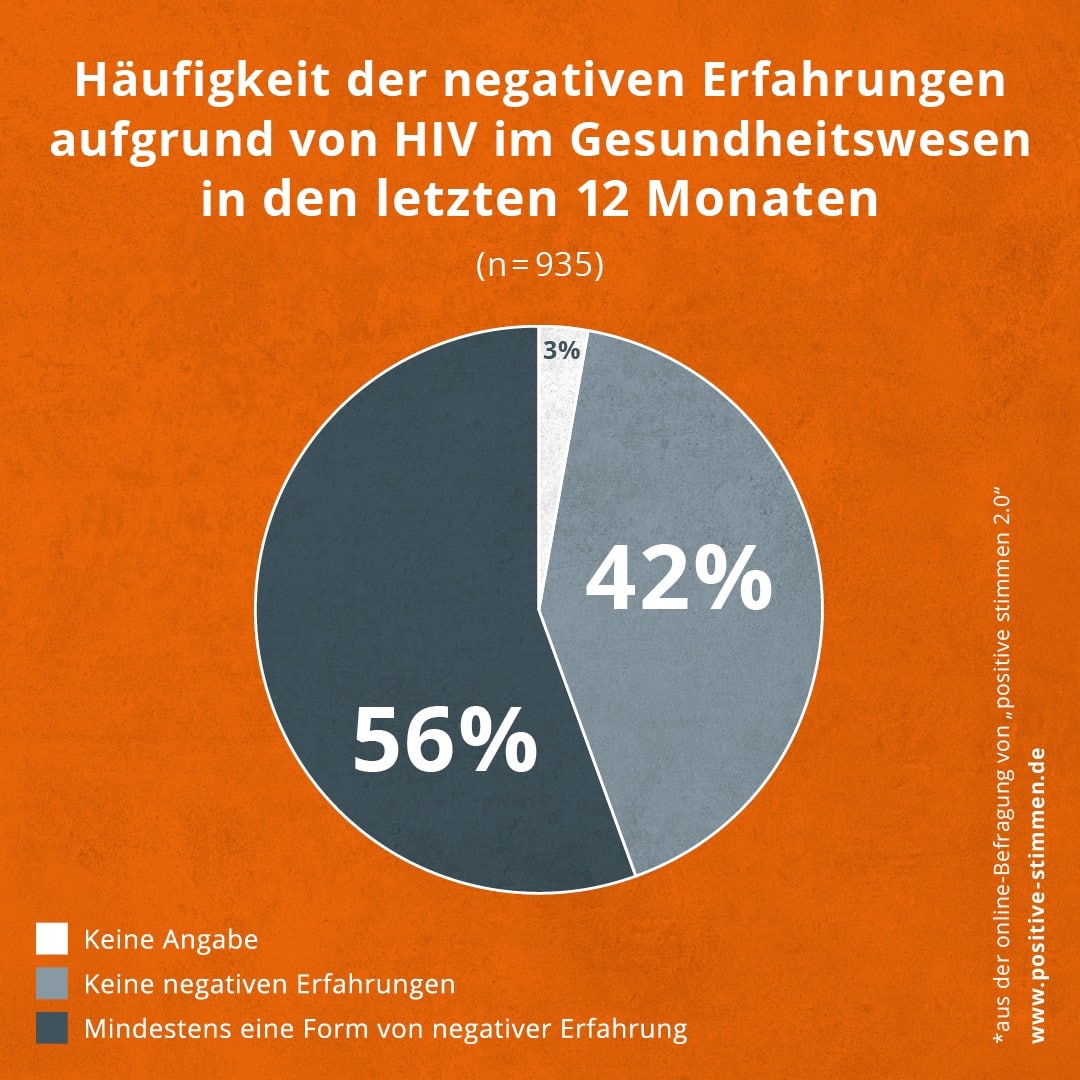
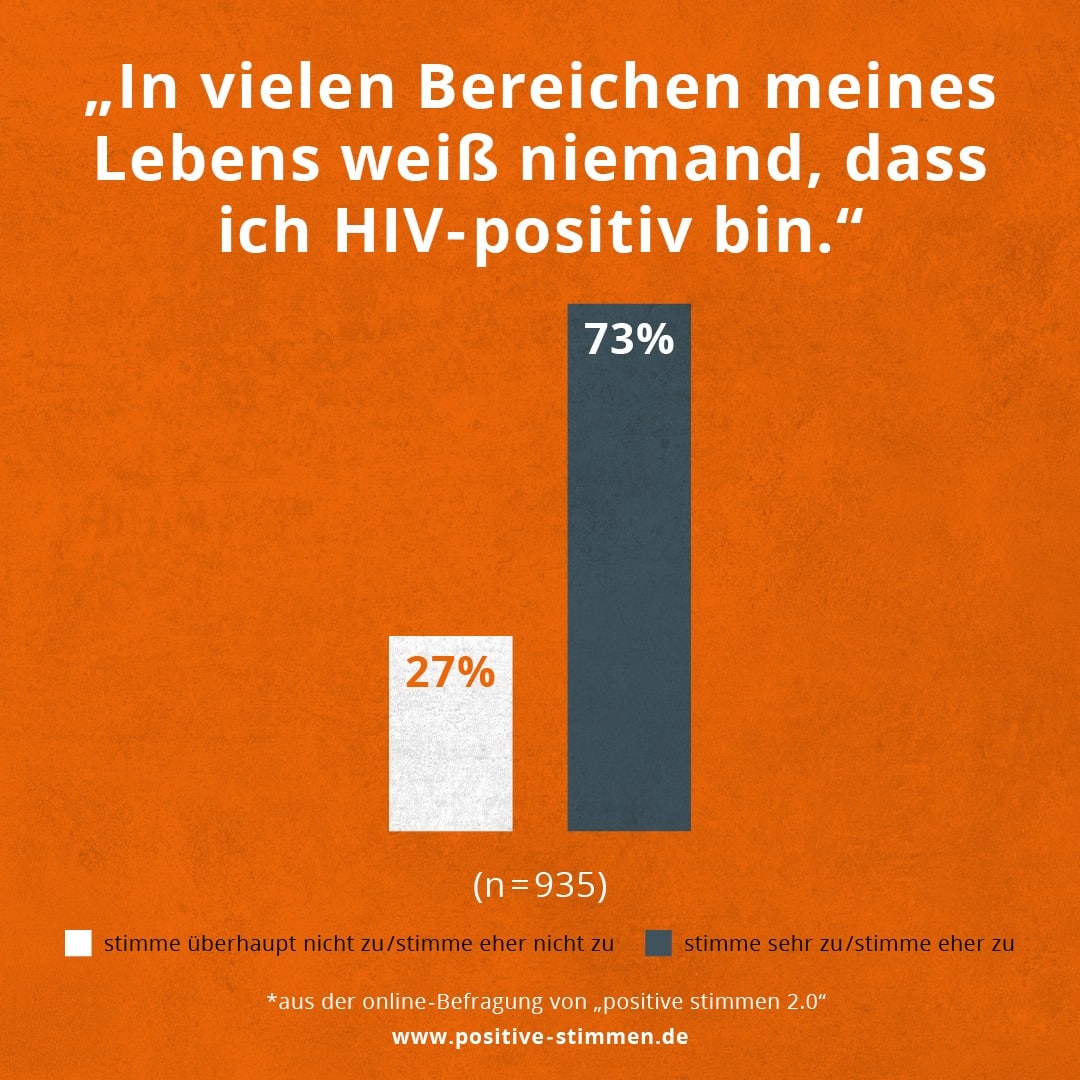
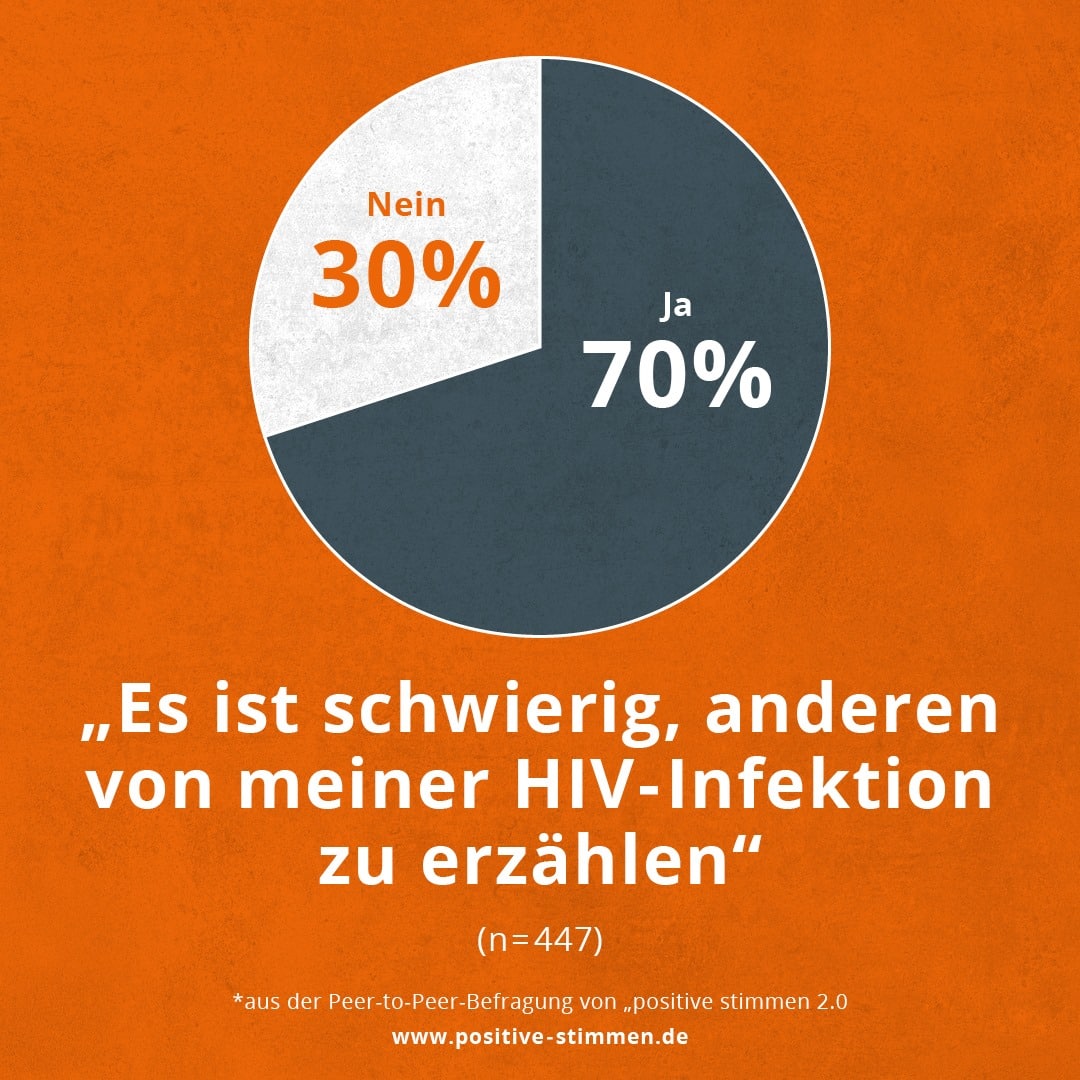
    This statement applies to half of the people with HIV who were surveyed in the "positive voices 2.0" study. Today, we presented the results of the participatory research project. It is clear that the lives and everyday lives of people with HIV are much more restricted by experiences of discrimination than by the health aspects of the infection. Conclusion: A good life with HIV is medically possible - the way society deals with it is lagging behind.

    💡 Further information, the results and recommendations for action based on them can be found at

    www.positive-stimmen.de

    ➡ You can find the press release at https://www.aidshilfe.de/…/leben-hiv-heute-vorurteile…

    People with HIV are often affected by stigmatisation and discrimination.

    For them, the perceived and internalised stigmatisation and the discrimination they experience can have a significant impact on their quality of life and health - the results of "positive voices 2.0" underline this.

    Stigmatisation and discrimination

    At the same time, stigmatisation is the biggest obstacle to HIV prevention. This is because (feared) marginalisation and stigma-based disease theories (e.g. assumptions about so-called risk groups
    and transmission routes) have an impact on the willingness to be tested for HIV and, on the other hand, HIV testing is not recommended for people who are not considered to be at risk - especially women.
    over the age of 40 - are not actively offered. Stigmatisation and discrimination therefore contribute to the fact that even today in Germany around 1/3 of HIV infections are only diagnosed at a late stage and people have to accept significant health disadvantages as a result, as they cannot benefit from timely HIV treatment.

    Intersectional aspects

    Intersectional aspects also play a major role in relation to HIV. From the very beginning, HIV has been made into an infection of the "others". For example, HIV - regardless of statistical facts - is primarily attributed to groups that were already stigmatised even before the start of the HIV pandemic, such as "promiscuous" gay men, sex workers, drug users and black people. In addition, many people with HIV experience stigmatisation.
    not only because of their HIV infection, but also because of other stigmatisation characteristics, e.g. as a gay man, as a trans* person, as a Black or person of colour, as a woman, as a drug user, as a woman, as a woman or as a woman of colour.
    Person or sex worker.

    These stigmas not only overlap, leading to "more" stigma, but also to "more" stigma.
    tisation and discrimination, but they are interwoven and lead to specific experiences of stigmatisation and disadvantage. For example, the life of an HIV-positive young gay cis man who comes from a middle-class background and has a university degree may be less different from that of an HIV-positive gay man who comes from a middle-class background and has a university degree.
    HIV-negative man, while an HIV-positive Black woman without a residence permit and health insurance is likely to have difficulties obtaining vital medication and caring for her health.

    www.positive-stimmen.de

  • "Bisexuals question pigeonholes"

    "Bisexuals question pigeonholes"

    In September, there will be a separate Pride for bi+sexual people in Hamburg for the first time. Co-inventor Frank Thies tells us in an interview why the demo is important - and why he often feels invisible as a bisexual.

    Frank, bisexuals like you should take centre stage at Bi+Pride. Why?

    Because bisexuality is often invisible. When you see two men holding hands in the street, you think: "Oh, they're gay." When two women kiss, you think: "Ah, they're lesbians." When you see a man and a woman like that, you don't think anything at first. But maybe: "They're straight, of course!" But all six of the people we saw could be bisexual. You often don't realise that.

    Why is that the case?

    This is how our society works: we like to pigeonhole people. And if someone loves someone of the same sex, we pigeonhole them as "gay" or "lesbian". That's like straight - just a bit different. Then it fits again. But if someone changes the pigeonholes, it knocks this nice order around your ears, and you don't want that. Bisexuals question pigeonholes!

    What do you demand from the Bi+Pride?

    Many of our demands coincide with those of the CSDs. For example, we are demonstrating for a reform of the Transsexuals Act and for the lifting of the ban on blood donations for men who have sex with men. One specific demand is for more visibility and for bi- and pansexuality to be taught in schools. Other important points: Bisexuality should be better researched scientifically and projects for bisexuals should be promoted.

    What do you want from your allies in the queer community?

    It would be great if the "B" in LGBTIQ was always taken into consideration. It often falls by the wayside. For example, on the International Day against Homo-, Bi-, Trans*, Inter* and Asexual Hostility, which was initially called IDAHO, then IDAHOT, and later IDAHOBIT. But then suddenly a term like IDAHIT appears - and the B is dropped again. Many organisations react very constructively when you point this out to them. But this year I've also heard: "We're not going to change that now!"

    Maybe homos think you're almost heteros who are less discriminated against...

    Yes, I do often hear: "You're not really part of the community. When things get difficult, you'll flee back to the hetero island." There are always such and such. It's not a competition to see who is discriminated against the most, but bisexuals and pansexuals get it from two sides: Rejection from heterosexuals, but also from their own queer community. It is not without reason that statistics show that bisexuals have even more health problems. Many are afraid to come out of the closet.

    Frank Thies hoists the flag of bisexual people on a flagpole on a green field.
    Frank Thies hoisting the bisexual people's flag. (Photo: private).

    You yourself are not only out privately, but also as a teacher at your school. How did that come about?

    A few years ago, a Year 6 pupil asked me directly on a school trip: "Are you gay?" When I asked her where she got the information from, she replied: "Everyone says that behind your back." In that situation, I said no at first. That was true, but it was only half the truth. After consulting with a few people, I officially came out as bisexual to this class a few weeks later.

    How did you put that into words?

    "I've heard that people are whispering behind my back. That's not okay. I can fall in love with different genders - but it has nothing to do with you. That's the end of the matter for me."

    How did your class deal with the information?

    One pupil reacted very harshly. She shouted: "That's disgusting!" and wanted to leave the class. That was good, because it meant I could react directly and show everyone where the boundaries were. I told her that I didn't want to experience anything like that again. The good thing about this scandal was that I've had a better relationship with the pupil than ever before since the clear discussion.

    What do you base that on?

    Just one example: half a year after I came out, there were vicious insults against me in the grievance box. When I made this public, this pupil came to me with some friends to distance herself. They wanted to tell me of their own accord that they were on my side.

    Do your colleagues at the school also stand by you?

    I didn't realise it for a long time because I didn't come out to everyone at a conference. I don't know if the news spread like wildfire from my class at the time. As I was eventually married to my wife and had two children with her, I wasn't recognised as queer for a long time. But after I came out in a Contribution for The time when I came out as bisexual, various colleagues told me how great they thought it was that I had taken this step. The school management is also behind me and has promoted me to Diversity Officer.

    The #teachout campaign wants to encourage teachers to come out too. You are also involved in this. Why are you doing this?

    The more teachers are confidently out, the easier it will be for all those who are still very afraid of coming out. Everyone has to decide for themselves - that's quite clear. But teachers also have a role model function and an educational mission. That's why it's important that they are out. It has also been proven that people who are out - in a safe environment - are healthier and happier because they no longer have to hide.

    How did #teachout come about?

    It all started with the #actout campaign, in which many actors* came out of the closet. A primary school teacher reacted to this and took to Instagram with the hashtag #teachout came out as gay. Two teachers took up the word. When I read about it, I wrote to them asking whether we should make something bigger out of it. The lesbian teachers Gun and Annika and the asexual, non-binary, bisexual teacher Julia joined us. That's how the four of us became the founding team. The inventor of the hashtag agrees, but no longer wants to be in the front row. A group of over 20 people is now active.

    How has the response been so far? 

    After #actout, the media response was naturally great. Well-known actors and actresses attract the media. NDR, ZDF and Time have reported on us. Of course, it would be great if this could continue in the coming school years. After all, we are only at the beginning.

    Back to you: was it good that you came out?

    Yes, definitely. A lot has happened at our school since then. We have set up a "Diversity" working group and organise "Respect Weeks". It's not just about LGBTIQ rights, but also against racism and hostility towards women and people with disabilities. On 17 May, I was at the Rainbowflash in front of Hamburg City Hall with students from the Diversity Working Group. The queer education projects soorum and Team Plietsch have offered workshops in several years. The demand is now greater than the supply. And I myself organise workshops and training courses on the topic of LGBTIQ for other teachers.

    Impressive. Did you experience school as a queer-hostile place in the past?

    Yes, of course. School is a place of crisis for LGBTIQ people because that's where many prejudices first emerge. Fortunately, people find themselves in the upper school and become more tolerant. But in the lower grades, children often bring prejudices into the classroom without thinking about them, for example those of their parents.

    Don't the teachers oppose this? For example, in sex education lessons?

    Yes, of course. But traditional sex education is mainly about hormones, reproduction and heteronormative lifestyles. And even that goes too far for some well-organised opponents of sex education. They are campaigning against sex education in schools and claim that it sexualises children. What rubbish! It's not about forcing children and young people to do something, on the contrary! It's about informing them, making them self-determined and strong so that they can also say no! Some watch unfiltered hardcore porn on their mobile phones from Year 6 onwards. And the school should keep quiet about this? I see it differently! We need to educate young people in an age-appropriate way. This also includes how they respect boundaries - their own, but also those of others! But there is already good, inclusive education, some of it interdisciplinary.

    Frank Thies smiles into the camera - portrait of a bisexual teacher and activist.
    Frank comes out as bisexual - and empowers others

    Finally, a personal question: do you have any sexual experience with men? Or is that just theory? What does your wife say?

    My wife fully accepts me for who I am - from the very beginning, because I told her straight away. Trust and honesty are very important to me. Basically, I personally think that you're missing out if you only have experiences with one gender in your entire life. But everyone has to know that for themselves. I myself also like diversity when it comes to sex.


    Frank Thies is a bi activist, co-initiator of the #teachout campaign and spokesperson for the first Bi+Pride, which will take place from 23-25 September 2021 - with workshops and a demonstration in Hamburg and bi flag-raising ceremonies throughout Germany. The 46-year-old teaches maths, physics and theatre at a district school in Hamburg. He lives with his wife and two children in the neighbourhood of the Hanseatic city. You can find out more about Frank on his Website.

  • Three men, three methods - safer sex 3.0

    Three men, three methods - safer sex 3.0

    Flo, aged 40, is HIV-positive and has been taking medication for more than 15 years. The treatment also protects his sexual partners: HIV cannot be transmitted during sex.
    PrEP had barely become available in Germany when Alex prescribe this method of protection against HIV. Even after a year and a half, the 32-year-old still swears by this solution to protect himself from infection.
    Florian likes the protection that the condom offers him - against HIV and other STIs. The 45-year-old even sees the condom as an enrichment during sex.

    What does your safer sex method mean to you?

    Alex (PrEP)Many men use PrEP because they want to do without condoms. For me, that is not the main reason. Rather, PrEP gives me security in situations that would be risky without it. Before I was prescribed the tablets, I was on the verge of fucking unprotected more than once. One beer too many and I really had to pull myself together. Now the protection is in my hands: with PrEP, HIV infection is ruled out even if my sex partner doesn't wear a condom. Thanks to PrEP, I can enjoy sex in a much more relaxed way.

    Flo (protection through therapy)Ten years ago, I mostly went to parties for HIV-positive people when I wanted to have sex. Only in a safe space did it seem possible for me to skip the condom without coming under pressure to justify myself. The gay scene as a whole was pretty divided: we positives here, the negatives there. That has now changed. More and more gay men are informed about the newer safer sex methods. They know: Positives can't infect other people if they take their tablets regularly. I can go to the Lab or Kitty in Berlin and have fun with men who now live out their sexuality naturally and without fear. It feels like a liberation for me.

    Florian (condom)I continue to use a condom, even though others may see it as a kind of "icon of discomfort". This safer sex method is as safe as it is simple for me: I use it exactly when I'm having sex. On the other hand, I would have to take tablets every day, even if I don't have sex for weeks. I don't need a prescription for condoms and I don't have to get regular confirmation that my kidneys can still tolerate PrEP.
    I'm not one of those men who are bothered by condoms during sex. On the contrary. I find it a stimulating part of foreplay to put on the condom. Then it's clear to both of you that the fun is about to begin.

    Florian uses a condom. He explains what this means for him here.

    How do you deal with users of other methods?

    Florian (condom)Everyone has the right to choose the method that suits them. I also understand that many PrEP users and HIV-positive people on treatment want to have sex without a condom. For example, a number of HIV-positive people have told me that they feel liberated from old shackles now that the protective effect of the therapy has been proven. Flo feels the same way. I, on the other hand, see it as freedom to be able to do without tablets. That's why the condom is still my first choice. If someone tells me "I take tablets. We can also fuck without a condom", then I kindly decline. A person's personal need for protection generally takes precedence over the other person's desire to experience sexual pleasure.

    Alex (PrEP): I don't mind the condom. I usually leave it up to the other person whether they put one on or not.

    Flo (protection through therapy): I only use condoms if the other person insists and looks too hot to send him away. Otherwise you wish each other a pleasant evening and flirt with another guy.

    Alex uses PrEP. You can find out what this method means for him here.

    What questions arise in connection with your protection method?

    Alex (PrEP): As I travel a lot, I notice regional differences in the use of PrEP. It is well established in Berlin, Hamburg and Cologne. Many gay men are just as open about it as I am. In smaller cities, on the other hand, few people dare to talk about PrEP or mention it in an app. The protection method also requires more explanation there. When we were recently in Kassel with "I KNOW WHAT I DO", younger gay men were virtually bombarding me with their questions. Unfortunately, there are still not enough specialised doctors everywhere.

    Flo (protection through therapy)It has long been proven that HIV therapy prevents the transmission of HIV. In my view, however, the new serenity towards us positives is mainly due to PrEP. Only this new method has brought the alternatives to condoms to the centre of attention. The many negative people who see condoms as torture are now finding out more. They are happy to take on board the message that condoms are no longer the only method of choice and are spreading the word. The media are also more interested in PrEP than in protection through treatment. I think that's fine. The target group is simply larger: HIV-negative people who take a tablet every day and thus block the virus' access.

    Florian (condom): A few times I have encountered a lack of understanding. In other situations, I've received explicit encouragement for using condoms. It all balances out.

    Flo: Safer Sex 3.0
    Flo uses protection through therapy. He explains how he does this here.

    Does your protection method occasionally trigger conflicts?

    Alex (PrEP)Facebook and the like are sometimes the scene of fierce arguments between some condom supporters and PrEP activists. I find aggressive proselytising immature and intolerant. At the end of the day, it's up to every adult to decide for themselves how they want to live out their sexuality.

    Florian (condom): I rarely experience more than disappointed looks in the real world when I put on a condom. But I can confirm what Alex says about the Facebook discussions. It's disgraceful what goes on there sometimes.

    Flo (protection through therapy): Conflicts only arise in smaller towns because of my attitude. There I sometimes feel looked at the wrong way when I want sex without a condom. But nobody has ever insulted me in real life.

    What does online dating actually look like?

    Flo (protection through therapy): In the relevant apps, I state that my sex partners are protected by my therapy. Strangers take this as an opportunity to doubt my honesty. No one could be sure that I was really taking tablets. One person even once wrote that I should stop spreading my 'AIDS'. I don't get involved in discussions at such a low level. I like to educate people about HIV risks when I'm out and about for the AIDS service organisation. But I don't use dating platforms to fill other people's knowledge gaps. I simply reply that everyone is free to refrain from having sex with me. But let's be honest: it's in my own best interest that my therapy is successful. The idea of stopping the tablets wouldn't even cross my mind.

    Alex (PrEP)I thought it was right and important that the AIDS service organisations and other organisations persistently put pressure on the gay dating apps. Until recently, condoms were the only safe sex method used by these companies. Now the three methods are on an equal footing. This sends a clear message, especially to younger gay men, that they should inform themselves and then decide. I myself truthfully state in dating apps that I take PrEP. So potential sexual partners know where they stand from the outset. No one has ever mocked me for it. On the contrary. Some tops get in touch straight away to ask if we can fuck without a condom. I think that's ok. I'd rather be direct than beat around the bush.

    Florian (condom): In dating apps, conversations generally end quickly if the other person doesn't like certain details. Many people probably have a kind of mental cinema going on in the chat, and anyone who doesn't stick to the other person's script is out. This can affect all sorts of things, including my safer sex method. "No rubber" is a request that I often come across on the internet.

    Safer Sex 3.0
    In August 2019, Florian, Flo and Alex advertised for Safer Sex 3.0 in the major gay magazines in Germany.

    How do you feel about other sexually transmitted diseases such as syphilis, chlamydia or gonorrhoea?

    Alex (PrEP): It cannot be denied that the risk to the individual increases. I myself, for example, have had to take antibiotics twice while on PrEP. However, it is just as true that PrEP users are obliged to undergo regular examinations. Four annual routine tests for sexually transmitted diseases - nothing goes undetected.

    Flo (protection through therapy)Men who fuck without a condom are statistically more likely to catch syphilis or chlamydia than condom users. However, I believe that everyone should deal with risks according to their own personality. For example, as part of my HIV treatment, I get tested every three months for everything that can be contracted during sex. Because timely treatment protects me from the consequences of the infection and my sex partners from infection.

    Florian (condom)Of course there is medication against syphilis or chlamydia. But why should I put my body through chemicals when I can reduce the risk by using a condom? As far as the tests are concerned, it's a cliché that condom users are test-hungry. I myself complete the full programme of four routine tests a year, just like Alex and Flo. But I also realise that many people get tested much less often. That's why I think it's right that the AIDS service organisation focuses its prevention work on testing. And that they organise regular tests regardless of the Safer sex methods recommends.

    Florian (condom), Flo (protection through therapy and Alex (PrEP)
    3 men, 3 methods (from left): Florian (condom), Flo (protection through therapy) and Alex (PrEP)
  • Queer pride

    Queer pride

    The six-part documentary series "Pride" is more than just a journey through the history of the LGBTIQ* movement in the USA. It also points out little-known aspects and what can be learnt from them for today's fight for rights.

    New PRIDE series
    Series Pride © Disney+

    This series is simply entitled "Pride". But what is LGBTIQ* pride actually based on? And what paths had to be travelled, what battles had to be fought before waving the rainbow flag could become a sign of self-confidence and self-assertion?

    The six-part US documentary series, which can now also be seen in Germany on the Disney+ streaming service, explores these questions, among others. Each episode is around 45 minutes long and is dedicated to a decade, starting in the 1950s, when homosexual civil servants were dismissed en masse during the McCarthy era, and ending in the 2000s, when LGBTIQ* are experiencing growing acceptance and diverse representation in the media.

    But "Pride" is anything but a chronological history lesson on the history of the LGBTIQ* movement in the USA based on dates and events. The renowned and committed film producer Christine Vachon ("Carol", "Boys Don't Cry", "Dem Himmel so fern"), who has been making innovative queer films since the 1990s, has also focussed on new and individual forms here: Different filmmakers were responsible for the episodes, all of whom were also given full artistic freedom.

    A rousing tribute to the LGBTIQ* emancipation movement

    It was important to her to tell the story in a way that is just as chaotic and personal as the story was. When there is a lack of documentary material, you sometimes make do with animations, drawings, re-enacted scenes or, like Yance Ford in the episode about the 1990s, have queer people from today recite homophobic speeches by politicians.

    There were LGBTIQ* protests as early as 1965

    What is far more important, however, is that the directors set their own individual focal points and focus on aspects that have so far received less attention in general queer historiography. The legendary uprising on Christopher Street in 1969, for example, almost becomes a side note, as "Stonewall" was not the beginning of the LGBTIQ* movement in the USA.

    For example, there were similar protests in Philadelphia in 1965 and in San Francisco the following year, but these were not documented or reported in the media.

    The HIV and trans activist Felicia "Flames" Elizondo campaigned in particular for the rights of Black LGBTIQ people. © Disney+
    The HIV and trans-activist Felicia "Flames" Elizondo campaigned in particular for the rights of black LGBTIQ people. on. © Disney+

    "Stonewall" was not the beginning of the LGBTIQ* movement in the USA

    And "Pride" makes something else clear: this early phase of the LGBTIQ* civil rights movement was primarily a protest by Black activists, many of them trans* people who had been inspired by the Black Power movement. The slogan "Black is beautiful" quickly became "Gay is good".

    As different as the six episodes are, there is one thing that the makers have decided on: They tell history primarily through personal stories. In doing so, they draw on material from private archives, some of which is extraordinary, and allow contemporary witnesses to have their say.

    Telling history with personal stories

    In the episode on the 1950s, for example, directed by filmmaker Tom Kalin ("Wild Innocence", "Swoon"), the private photos and Super8 recordings of a gay couple's exuberant private parties and beach trips are juxtaposed with an exemplary case that shows how homosexuals were dismissed en masse from the civil service during the McCarthy era. Photographer Arthur Tress tells the story of how his lesbian sister Madeleine fought back. (Image: Disney+)

    A seemingly endless treasure trove from an amateur filmmaker provides an authentic look at the club scene in New York in the 80s, including footage of RuPaul - long before he became a world-famous drag icon.

    The African-American actress and director Cheryl Dunye portrays her two personal heroines - the filmmaker Barbara Hammer and the poet Audre Lorde - in the episode about the 1970s. They are exemplary not only for the growing self-empowerment and visibility of LGBTIQ*, but also for the development of intersectional feminism.

    The HIV and trans-activist Felicia "Flames" Elizondo campaigned in particular for the rights of black LGBTIQ people. on. © Disney+


    Political and social change is only possible through alliances

    In any case, "Pride" shows that it is only through the alliances of the various groups such as the Black and trans* communitythe women's movement or the Aids-activists and the solidarity between them made political and social change possible.

    Many of the conflicts mentioned in "Pride" may be very US-specific, such as the culture war against queer art in the mid-1990s, which was stylised by right-wing and Christian fundamentalists as a question of national survival. But if you look at developments in Poland and Hungary today, for example, or recall some of the statements made by the right-wing conservative camp in Germany, it becomes clear how this form of culture war has long since taken on threatening proportions in Europe too.

    Decades of new beginnings

    The last two episodes about the 1990s and 2000s depict decades of new beginnings. The portrait of the male couple Robert Compton and David Wilson, who fought for the right to marry and thus set an important milestone for equal rights, is touching.

    And of course, the growing media representation of LGBTIQ* in show business, films and TV series is not left unmentioned. However, the two young trans* and non-binary directors Yance Ford and Ro Haber take the opportunity to give a voice to the Black trans* community, which is still marginalised in the queer scene.

    With images of "Black Trans Lives Matter" demonstrations, "Pride" thematises one of the current debates and with the black actor Marquise Vilson we get to know a charismatic and impressive protagonist.

    Liberating and vital

    Among other things, he talks about how liberating and vital it was for him to have found not only a community but also a home in the New York ballroom scene. Only then was it possible for him to live his masculine identity and - now a successful TV and cinema star - to come out publicly as a trans* man. This required not only courage, but also queer pride.

    All six episodes of the documentary series "Pride" are available to stream on Disney+.

    Everything about the gay lifeon living with HIV and many other topics, you can also find iwwit.de!

    New PRIDE series
  • The life of a young Arab gay man - the novel "Guapa"

    The life of a young Arab gay man - the novel "Guapa"

    In his novel "Guapa", Saleem Haddad tells of the life of a young Arab gay man caught between revolution and resignation, shame and self-assertion.

    From another, selective perspective, Rasa would have to be a happy person.

    He has set up his own business with fellow students and interprets for American reporters abroad; he has a reliable circle of friends with whom he can not only party and drink, but who are also there for each other in times of need. And he has a man in his life with whom he shares his nights, his love and his longings.

    But from the perspective of the young first-person narrator Rasa, life increasingly turns into hell. What began as the Arab Spring, the mood of optimism and change, the hope for a freer life, has long since turned into the opposite.

    The - never named - country in the Middle East is sinking into chaos and violence. And bad enough that his relationship with his lover Taymour has to be kept secret, there seems to be no future for them.

    The novel "Guapa" offers a complex panorama of the Arab world

    "The morning begins with shame." Saleem Haddad has placed what is probably the most important word in his debut novel in the very first sentence. The German terms Scham, Schmach and Schande (shame, dishonour and disgrace) only barely outline the complex and therefore flexible social rules, prohibitions and expectations that the Arabic word "eib" encompasses.

    The novel "Guapa"

    For Rasa's traditionally minded grandmother Teta, a man lying with another man is clearly eib. And that morning, she caught her grandson in flagrante delicto with his lover through the keyhole and banged on the door, screaming at the top of her voice.

    In the 400 pages that follow, Haddad describes the next day in his hometown, which could equally be Amman, Algiers or Damascus. 24 hours in which not only the events in his own life, but also in the lives of his friends and not least the situation in his country come to a head.

    Saleem Haddad, born in Kuwait City in 1983 and raised in Jordan and Cyprus, studied in Canada and now lives in London with his partner. In his first novel "Guapa", he not only deals with his own coming-out experiences and how his family and society deal with homosexuality. Rather, he creates a complex panorama of the Arab world, which is being shaken by the revolt and freedom movements, but also by growing religious fanaticism.

    Self-hatred, self-doubt and the desire for a freer life

    In skilfully inserted flashbacks, Haddad not only reveals a number of secrets in Rasa's family that have been kept secret out of shame, as it turns out, but also unfolds her search for her own identity, driven by self-hatred, self-doubt and the desire for a different, freer life.

    A poster of George Michael, pop music and American TV soaps thus become ciphers for such a life outside this inner prison in which Rasa finds herself.

    However, the start of his studies abroad in the USA coincided with the attacks of 11 September. Suddenly it was "not my being gay, but my Arab origin that seemed contemptible", and Rasa felt "assigned to an anonymous mass: Arab. Muslim".

    He was now one of "them" again and suspicious per se. "I wanted to scrape off my skin, my name, my accent, everything, just to avert these suspicious glances." Saleem Haddad succeeds in portraying the consequences of such generalisations and the clinging to one's own roots - even to the point of radicalisation - in a plausible and impressive way.

    As the son of a German-Iraqi mother and a Lebanese-Palestinian father, Haddad combines so many perspectives and conflict issues in his novel that he sometimes threatens to reach his narrative limits. But this abundance is also the great advantage of this book: it enables an equally broad readership to gain access to these worlds.

    "Guapa" is a coming-out story, love story and family novel and also scrutinises Arab and Western (American) social structures with an equally critical and sensitive eye. Of course, Haddad offers a sobering, disillusioning outlook for his main character and her home country.

    The novel "Guapa"

    Threatened freedoms of the LGBT community

    And yet "Guapa" is not a depressing or even discouraging novel. The freedom that the LGBT community has created for itself - in the novel, the eponymous bar Guapa stands for this - may be under threat, but the principle of hope still prevails. And the will to no longer let things get them down. If the bar is closed down, says the lesbian owner Nora, then she will just reopen somewhere else.

    Maj, the tough amateur drag queen (with a niqab in Marylin Monroe design), was arrested by the police together with others while cruising in a cinema, beaten up and humiliated.

    The beating may have left Maj with bruises, but it didn't break him - on the contrary. In the end, Maj is as self-confidently queer - his blue violets covered with kohl, his lips painted red - as a young gay Arab can be.

    Translated from the English by Andreas Diesel. Albino Verlag, 392 pages, 16.99 euros

    Website of the author: www.saleemhaddad.com