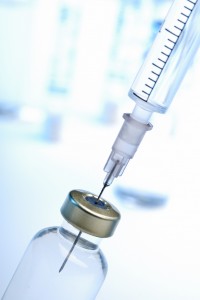
More and more gay men are turning to needles to inject drugs and sexual enhancers (slamming). Many do not realise that they also run a high risk of HIV and hepatitis. So it's high time to practise the safer use rules in order to reduce the risks when injecting. By Florian Winkler-Ohm
For many gay men, alcohol and other drugs have always been part of (sex) parties. Recently, however, needles and cannulas - which are "traditionally" associated with heroin addicts - have become increasingly common in places where men have sex with men.
Splashing is now called slamming
When slamming, many users inject themselves with methamphetamine - also known as crystal meth, tina, ice or tweak. The drug was developed in Japan at the end of the 19th century. During the Second World War, German soldiers used it en masse under the name Pervitin. It was intended to wake soldiers up and suppress their fears in battle - it became known as "Panzerschokolade" or "Stuka-Tablette".
Crystal meth has been on the rise again in the party scene for around two years - at least according to media reports. More and more people are consuming it by syringe, i.e. intravenously. In the past, it was usually smoked, swallowed or vaped. The reason: more desire, more intense sex, staying "fit" for longer. But this often leads to insomnia for days on end.
A study by the Centre for Interdisciplinary Addiction Research at the University of Hamburg is currently investigating the spread and consequences of meth use on behalf of the Federal Ministry of Health.
Crystal is quickly addictive. It can severely damage the body and mind in the long term. But there are also risks apart from the direct effects. The drug lowers pain thresholds and increases the willingness to take risks. This leads to long, hard sessions - often without condoms. Mucous membranes are heavily contaminated. This increases the risk of HIV, hepatitis and other infections.
According to studies, up to 75 % of crystal users are HIV-positive. HIV medication is often forgotten during long sessions. This can lead to resistance and make a new therapy necessary.
When the syringe is cheaper than Viagra
But it's not just drugs that are increasingly being injected. More and more gay men are also injecting drugs such as Caverject or Androskat into their penile erectile tissue to achieve reliable potency; this is now cheaper than Viagra and comparable substances. The effect is an erection lasting one to two hours - if used and dosed correctly. Overdosing and hypersensitivity to the erection-promoting active ingredients can lead to a painful permanent erection. If this lasts longer than four hours, there is a risk of damage to the penile tissue, which can lead to permanent loss of erectile function, among other things.
But these are not the only risks associated with potency injections. As the contents last for up to three applications, it is not uncommon for syringes to be passed on to one or more partners during a sex session. Tibor Harrach, pharmacist and drug expert, warns urgently against this "needle sharing": "A small amount of bleeding can occur at the injection site during the injection. This can increase the risk of transmitting the infection to a partner in patients who suffer from a blood-borne infectious disease. With hepatitis B and C in particular, even an invisibly small amount of blood is enough to cause an infection."
Never share your syringe with anyone else
Harrach calls for clear prevention messages - just as they have been for years for heroin users. The most important sentence for him: "Never share your syringe with anyone else."
Instead of focusing on accusations and moral condemnation, he pleads for education, counselling and an accepting approach to the scene.
He also advises vaccinations against hepatitis A and B as well as regular tests for hepatitis C. If hepatitis C is recognised early, chronicity can usually be prevented - and the infection of other people can also be avoided.
You can find information on minimising risks when using drugs and important rules for dealing with various substances on our Drugs topic page. You can find instructions on how to do this in the "Safer Use" brochure. You can download this download here.
Tough times for fans of adult films. Scientists warn of side effects. How much porn is unhealthy? Does porn actually cause impotence and addiction? A report on the right amount and surprising similarities between teenagers and prisoners.
Bad news from Great Britain. Sexit looms after Brexit: More and more young Brits can't get it upThe psychotherapist Angela Gregory from Nottingham University Hospitals warned in August 2016 that this is triggered by the very films that make many men so hot in the first place. Angela Gregory fears that porn causes impotence, or in medical terms: erectile dysfunction. More and more male teenagers and men in their mid-twenties are coming to Gregory's practice complaining of lulls in bed, a condition that previously only occurred in old age. "Now the first thing I ask about is porn and masturbation habits," Gregory told BBC Newsbeat. "They may be the reason why these young men can't maintain an erection when they're with a partner."
Porn and porn consumption: How often do people watch it?
If there's any truth to this theory, things look bad for gay men. Watching porn is part of everyday life for them. This is confirmed by a survey published by the gay health magazine FS in the summer, appropriately enough in England. The results are not representative, but provide an indication of how naturally gay men consume pornography. 52 per cent of respondents indulge in sex videos several times a week. Almost a third even click on Redtube & Co. every day. The vast majority stay on for a maximum of half an hour. Only 7 per cent watch more than 60 minutes at a time. The biggest difference compared to the last survey: 60 per cent of users now watch porn on their mobile phones, compared to just a quarter in 2012. This means that porn is even more readily available.
Porn is the most natural thing in the world
Hannes from Hamburg also watches regularly and has not noticed any health side effects so far. On the contrary: "Porn is the most natural thing in the world," says the 51-year-old. He watches porn three to four times a week - on his mobile phone or tablet, less often on DVD. "It can go on for an hour," reports Hannes. "I watch very consciously and enjoy it." In his favourite genre, men and women come together. Because more men are involved, they fuck each other. "I have a tendency towards slightly more dominant videos where one person is used," confesses Hannes. The freelancer makes a clear distinction between fucking and fiction: for him, real sex experiences and porn are fundamentally different things. "Of course, the porn is subconsciously inside me, but I don't act out scenes. When I have sex, it's totally dependent on the situation and my partner. It's often very surprising."
Porn consumption: Where does the pleasure end and when does porn addiction begin?
Marcus Behrens also considers porn to be harmless to health. The qualified psychologist works for the Mann-O-Meter, a Berlin information centre for gay men, among others. "Pornography and sex are first and foremost a private matter for everyone," emphasises the 48-year-old. "If it's okay with me and I'm not harming anyone, then it's not a psychological problem - and it's nobody else's business either."
So far, at least, porn has not caused any complaints among the men who ask the Mann-O-Meter for advice. If it comes up at all, it is in connection with online addiction. "Some of our clients have the feeling: I can't get my head out of the computer," reports Marcus Behrens. "It starts with Facebook and doesn't stop with Gayromeo." However, the number of cases has not increased over the past ten years - despite smartphones and flat rates.
Where does the pleasure end and the addiction begin? It is also difficult to draw a clear line when it comes to porn consumption. "One possible sign is when I can no longer jerk off without porn."
Porn consumption in check: When does porn become addictive and harmful in everyday life?
Even if it rarely occurs in Marcus Behrens' day-to-day counselling: porn has the potential to become a narcotic. As early as 2014, the Max Planck Institute for Human Development announced that porn videos change the brain. The scientists scanned the brain activity of 64 men and found that the brain's reward system was conspicuously small in the test subjects who regularly watched sex films. "This could mean that the regular consumption of pornography wears out the reward system to a certain extent," explains study author Simone Kühn. The researchers suspect a similar effect as with other addictive substances: The user has to constantly increase the dose in order to achieve a pleasurable effect.
But where does the pleasure end and the addiction begin? It is difficult to draw a clear line when it comes to porn consumption. "One possible sign is when I can't get off without porn," says Marcus Behrens. Another indication: Is the fun already harming me in everyday life? For example, do I risk a warning by accessing porn sites on my office computer? As with all addictions, the same applies here: As soon as colleagues, friends or family members are affected, you should take a close look at your consumer behaviour.
According to Marcus Behrens, excessive consumption of sex films - as well as real sex - is often caused by feelings of loneliness and inferiority. In the case of gay men, these are often exacerbated by self-hatred, which experts refer to as internalised homophobia. "Those affected have the feeling that something is not going right with me," explains Behrens. "Then they - consciously or unconsciously - look for a solution and try out various remedies." Porn consumption is just one of many. Several usually work together. "It depends very much on which addictive substance is available and works for me," explains Marcus Behrens. "For one person it's shopping, for another it's porn."
Categorise porn consumption: No automatism to porn addiction
But that doesn't mean that everyone who watches porn is in danger. "It makes sense to help people who are suffering from their sexuality," emphasises Marcus Behrens, "but when it comes to porn consumption and sexuality in particular, people are always quick to say: Uiuiui, that's either sick or criminal. This moralisation is wrong." Most men could easily regulate their porn consumption.
The Berlin psychologist also considers the warning about porn-induced impotence to be exaggerated - even though his British colleague pointed out an interesting phenomenon: Erectile dysfunction caused by too much fantasy sex. Psychologists are familiar with this effect from prisoners. They often can't get it up either when they are finally allowed to sleep with their boyfriend or girlfriend again after a long prison sentence. They have forgotten how to feel pleasure with someone they can not only see, but also smell, taste and feel. "The brain is then polarised to fantasy," explains Marcus Behrens. "The only thing that's hot is what's going on in my mind's eye - a kind of porn that I'm directing." The young Brits are probably facing similar adjustment difficulties: They have to switch from two-dimensional porn to three-dimensional sex - with a flesh-and-blood partner. But don't worry, says Marcus Behrens: "You can always relearn sexuality."
FAQ on pornography and porn consumption
In this FAQ on porn and porn consumption, we answer frequently asked questions: What is porn, when does porn consumption become porn addiction, what role does the brain play and how do I recognise that it is harming me or my everyday life?
What is porn actually?
Porn refers to deliberately sexually arousing images or videos. They show staged sex, are edited, illuminated and often follow certain fantasies or clichés. They only depict parts of sexuality and are not a realistic guide to real sex.
Is porn consumption fundamentally unhealthy?
As things stand today, normal porn consumption is unproblematic for many people. The decisive factor is not so much whether I watch porn, but how much it occupies me: Do I still feel like having real contact, can I control my consumption?
When do you become addicted to porn?
There is no fixed number of minutes or videos. We tend to talk about problematic porn consumption when several points come together: I lose control over frequency, can hardly masturbate without porn, neglect sleep, work, relationships or other interests and suffer from it myself.
Can porn change the brain?
Studies show that intensive porn consumption can be associated with changes in the brain's reward system. Similar to other habits, the system can become accustomed to strong stimuli, so that some people need more and more or increasingly extreme content. This does not automatically mean addiction, but it does show that dose and context are important.
What are the warning signs of problematic porn consumption?
Warning signs can be: I need stronger and stronger stimuli to arouse me; I feel ashamed or empty after watching; I use porn mainly to combat loneliness, stress or self-hatred; I continue watching despite negative consequences, such as conflicts in relationships, problems at work or less interest in real encounters.
What can I do if I feel like I'm watching too much porn?
It can be helpful to observe your own porn consumption for a while: When, how often, in which situations and how do you feel before and after? Small experiments such as porn-free days, alternative strategies to combat stress or consciously being more physically close in real life can provide clues. If the level of suffering or loss of control is high, counselling or therapy is a good option.
You might also find this interesting
Further articles, topics and resources on health, sex, identity, community, politics, culture and queer life. Discover relevant articles, leaflets and information materials to read, explore in more depth, download, order and share.
At the moment, eleven days after the early symptoms, I'm doing well again and have almost recovered. I already felt better on the third day, luckily it passed quickly for me.
You are the first MPX, or "monkeypox" case in the Rhein-Erft district. How did you realise that something was wrong?
On the night of 25 May, five days after my return from my holiday in Maspalomas, the symptoms appeared: Lymph node swelling in the groin area, a fever of 39 degrees and a smallpox in the genital area. In my case, it took about two weeks from the suspected infection in Gran Canaria for the first symptoms to appear. I realised that it was MPX, or "monkey pox", because an acquaintance of mine - who I met by chance on holiday - had tested positive three days before me. He told me about the symptoms and advised me to look out for something similar. So when I had the same symptoms, I went straight to the emergency department at Cologne University Hospital, where they carried out a smallpox smear and PCR. On Friday 27 May, I got the call that I had tested positive.
Would you like to tell us how you got infected?
Probably at the Maspalomas Pride. I met my German friend by chance at a party there. We both had close physical contact there, but also afterwards with others at private sex parties. There were lots of people from different European countries there. Among them was a Berliner who also got infected in Maspalomas.
How did your infection progress?
The fever went away quickly in two days, but the swelling of the lymph nodes persisted for a week. Now they are only slightly swollen, not as much as before. I had four smallpox, one on my genital area, one on my right upper arm, one on my bum and the fourth on my head under my hair. At first they looked like normal pimples, then they had a whitish crust with fluid inside, about a centimetre in size. Three of them are now barely visible. The one in the genital area will take some time to disappear. I didn't have to take any medication, they heal on their own.
"21 days of isolation is very hard for me."
It sounds hard, being alone in isolation with a virus that only a few people in Germany have.
But I'm not afraid of the disease, because fortunately I have a very mild course. However, 21 days of isolation is very hard for me. I feel very lonely and alone during this time: I write and phone a lot with friends, family and acquaintances. That helps me.
And how was the communication with the health authority?
Immediately after my positive test result on 27 May, the public health department called me and told me that I had to go into quarantine for at least 21 days. They also asked who I had been in contact with. They also call me regularly and ask about the development of my symptoms. In my case, the quarantine ends automatically when everything has healed without me having to be examined by a doctor again, but the health authorities take different approaches here.
"I believe that there could always be individual cases due to the contacts, but that a pandemic will not occur."
Do you think there could be an outbreak in Germany?
The virus is not at all easy to transmit, you have to make an effort: We had very close physical contact. I believe that there could always be individual cases as a result of contact, but that there won't be a pandemic.
"It's true that we are severely affected, but I don't like the idea of talking about a risk group."
Some expressions are used in the media that could promote stigmatisation and discrimination against gay and bisexual men. How do you perceive this discussion now?
It is partly stigmatising. It's clear that more gays are affected by MPX, but it can affect anyone. The information that we are severely affected is correct, but I don't like talking about a risk group. The use of language is very reminiscent of the 1980s, when HIV broke out and there were very stigmatising media reports. Words such as risk group should be reformulated and replaced by, for example, "frequently affected people".
How do the people around you react? Are they happy to help you or do you have the feeling that there are prejudices or fears?
The people around me reacted really cool and immediately offered me help with shopping, for example. I didn't notice any fears or prejudices.
"There's no point in being afraid during sex. Fear takes the fun out of sex. I really enjoy having fun!"
With what you know and experience now: Would you have wanted to do your Maspalomas holiday differently?
I wouldn't have spent my holiday any differently and would have done exactly the same. There's no point in being afraid during sex. It can always happen that you catch something. Fear takes the fun out of sex. I really enjoy having fun!
What should be done now?
Watch out for the spread, educate people! I, for example, got the symptoms all at once. But my friend's symptoms came on gradually. So the symptoms can vary from person to person. You should always look out for symptoms and get tested if you suspect something. It is also important to build up your testing capacity.
Most cases were reported from Berlin, with others from North Rhine-Westphalia, Bavaria, Baden-Württemberg, Brandenburg, Hamburg, Hesse, Lower Saxony and Saxony-Anhalt.
The European health authority ECDC has registered 704 cases of MPXV infection in European countries as of 8 June (statistics excluding the United Kingdom and Switzerland). Worldwide, 1176 cases have been confirmed so far.
So far mainly gay men affected
As in other countries outside Africa, "monkeypox" (MPX) in Germany currently mainly affects gay and bisexual men. So far, the pathogen has only been detected in men in this country, and many of them have also been found to have had sex with men.
But it is also clear: In principle, monkeypox can affect anyone. It is not yet clear how the virus entered the gay community.
According to the Robert Koch Institute, the first cases were reported at the end of April - i.e. before the Maspalomas Pride in Gran Canaria and the Darklands Festival in Antwerp, where numerous cases were apparently transmitted.
No need to panic, but be careful
The outbreak of monkeypox in more and more countries is unusual. The causes are not yet clear. The fact is: This disease has hardly ever occurred in Europe. When people were infected while travelling, the disease did not spread. This is obviously different now.
Experts do not expect a pandemic like Covid, but fear that the infection will spread further.
"There is certainly no reason to panic," says Holger Wicht, spokesperson for Deutsche Aidshilfe. "The overall number of cases is still low and the risk of infection is not particularly high. Although the disease can be very unpleasant, it usually heals on its own. We recommend that you keep yourself well informed and pay particular attention to any signs of the disease."
The RKI is also calling for increased vigilance: Men who have sex with men in particular should have a medical examination if they notice skin changes such as pustules or nodules. The best address for this are infectiological facilities such as an HIV specialist practice.
Vaccination still in June
A vaccination for people at particularly high risk could still be available in June. The Federal Ministry of Health has ordered 240,000 doses of the Imvanex vaccine. 40,000 should be available by mid-June and distributed via the federal states. The BMG is currently exploring further options for procuring vaccine. The Standing Committee on Vaccination (STIKO) is working on a vaccination recommendation.
Imvanex is already authorised against MPXV in the USA, but not yet in Europe. With a recommendation from the Standing Committee on Vaccination, the vaccine could nevertheless be used in the near future. Two single doses are required for a complete vaccination.
Among other things, the following are under discussion vaccination of people who have recently been in contact with infected persons. The reaction of the immune system after such a vaccination shortly after a risk of transmission can still prevent an infection or mitigate the course of the disease.
Gay and bisexual men with many close contacts as well as healthcare workers who come into contact with MPX-infected patients could also be vaccinated first. Various committees are currently discussing who exactly should be recommended to be vaccinated.
"We are in constant contact with the Federal Ministry of Health, the Robert Koch Institute and the Federal Centre for Health Education," says DAH spokesperson Holger Wicht. "We coordinate closely and ensure that new information reaches the people it affects quickly."
Always up to date
Deutsche Aidshilfe provides information about MPX at aidshilfe.de and the website of their campaign ICH WEISS WAS ICH TU for gay men and via their social media channels. Posters and flyers for the gay scene locations will also soon be available.
Stefan is HIV-positive. Fucking with a condom is not for the 46-year-old journalist from Saarbrücken. Fortunately, thanks to successful HIV therapy, he can do without the rubber. A conversation about protection through therapy and sex without worries.
Stefan, what does "protection through therapy" mean? Thanks to the successful HIV treatment, there are no more viruses detectable in my blood - so I can no longer transmit any during sex.
Hard to believe. I always use my own case to explain it: when I started treatment, I had 93,000 HIV viruses per microlitre of blood. After one month, it was only 20,000. Two months later, the value was below 2,000. Today, my viral load is no longer detectable. If I have a piece of paper and pen with me, I draw a nice curve. Then people suddenly realise that where there are no viruses, none can be transmitted.
Protection through condoms or protection through therapy - which do you prefer? I have to be honest: I think sex with a condom sucks! The moment you know "I'm below the detection limit!", you're totally relaxed because you know that practically nothing can happen. When you wake up at night and you're horny, you don't spend a lot of time looking for condoms, you just start having sex.
Your boyfriend is negative. Did you do without condoms from the start? No. We used condoms for the first two or three months. My boyfriend knew about the principle of "protection through therapy". But it took a while for the information to get from his head to his stomach and then to his cock. We've been together for a good two years now, have sex without condoms - and he's still HIV-negative. Logically enough.
How do you protect yourself during sex with other men? Our rule is: outside of the relationship, we use condoms so that we don't bring diseases like syphilis into the relationship. We are immunised against hepatitis A and B. The open relationship wasn't that important to me. I'm now at an age where I don't have to have sex all the time. (laughs) But my friend said that would be good.
As a role model for ICH WEISS WAS ICH TU, you often travel around Germany and meet lots of gay men. Do they know that therapy protects as well as a condom? In my experience, a third know about it, a third have heard about it - and a third are clueless. Perhaps the facts are a little more present in large cities than in smaller ones, but the difference is not huge.
Is that the end of the matter? No, not everyone has got the message yet. In the last 20 years, there has been a huge leap forward medically. General knowledge lags behind this reality. This is a shame because it prevents normal, fear-free sexuality. This message must out, because that is an enormous relief. Especially for couples where one is positive and the other negative. That's why I'm a role model, because then others see it: Oh, they do it like that too - and it works.
What is your message to the gay community? Don't be afraid to practise protection through therapy! It is an enormous relief. Sometimes you hear the argument that protection through therapy promotes carefree sex. Then I ask: What's the problem if I can have carefree sex? Sex without worries - that's a wonderful thing!
Does the community know about 'protection through therapy'? In Stefan's experience, a third know about it, a third have heard of it - and a third are clueless. (Photo: iwwit.de)
The "positive voices 2.0" study has shown: The majority of people with HIV surveyed can now live well with the infection. But at the same time, many experience discrimination and marginalisation on a daily basis!
All of this has a significant negative impact on health, well-being and sexual satisfaction. Added to this are feelings of shame and guilt.
The study also shows that more than 50% of respondents have been rejected at least once during sex in the past 12 months. And this despite the fact that there is protection through therapy.
Watch our video now:
The good news is that since Protection through therapy 40 per cent of those surveyed experience less discrimination. The HIV medication suppresses the multiplication of HIV in the body. HIV can then no longer be transmitted during sex.
So if you have already asked yourself what you can do to combat discrimination against people with HIV, then this would be the first step. Pass it on: HIV is not transmissible under therapy. Tell your friends, family or work colleagues.
And there's more you can do.Show solidarity wherever people with HIV are marginalised or discriminated against! And find out more at iwwit.de! Here you will find lots more information about living with HIV. And you will find information on how you or others can defend yourself against discrimination and marginalisation.
We also show in our Campaign authentic images of people with HIV, because they are an indispensable part of our community.
You want more? Then get in touch with IWWIT - and tell us what you think! Or tell us about your ideas or wishes on the topic of living with HIV: On Facebook, Instagram or classically by e-mail. We look forward to seeing you!
The Robert Koch Institute has recorded a continuous increase in syphilis cases in Germany since 2010. More than 80 per cent of these cases can be traced back to sexual contact between men. To what extent are these figures also reflected in everyday medical practice? An interview with the Berlin general practitioner and infectiologist Dr Christoph Schuler
„We see new cases of syphilis every week“ – Interview with Dr. Schuler from Berlin
Syphilis in gay men: a persistent problem in practice
Christoph Schuler, your patient base also includes a large percentage of gay men. To what extent does syphilis play a role in your everyday practice? We certainly have a new case in our practice every week on average, and have had one for several years. The number of cases has not necessarily increased in recent months, but it has remained very constant at a high level over a long period of time.
From your practical experience, can you identify certain patient groups that are particularly affected? We discover a lot of syphilis infections in our HIV patients, if only because they are regularly screened for sexually transmitted infections (STIs).
How gay men can become infected with syphilis
This means that new infections are detected automatically and at a very early stage. Correct. On the other hand, there are many non-positive patients who come to us because of suspicious symptoms or who have had a routine STI test done on their own initiative.
Some have also been tested elsewhere, for example at testing facilities in gay counselling centres, and then visited us after being diagnosed. And last but not least, there are also men who have learnt from their sexual partner that they have been diagnosed with syphilis and have therefore had themselves tested.
Does it also happen that the same patient gets infected again and again? This is indeed the case, but with syphilis in particular it is very difficult to distinguish whether it is a new infection or a flare-up of an inadequately treated infection.
Could the fact that the number of infections is so consistently high or even rising possibly be due to a change in sexual behaviour? Namely that gay men are having more sex without condoms again? I don't see a direct connection. Of course, condoms are dispensed with more often because HIV treatment is effective.
... and therefore the virus can no longer be transmitted. Secondly, safe sex with a condom is not a practice that can completely rule out syphilis infection. You can also become infected through kissing or oral sex.
In our practical experience, however, there are certainly scenes in which syphilis infections are more likely to occur, for example in men who are sexually active or go to sex parties. If new infections occur here, they are also passed on quickly. This makes it all the more important to inform your sexual partners if you have been diagnosed with an infection so that your partner can be treated.
Stigmatisation of syphilis among homosexual patients
Syphilis appears to be more morally burdensome than other sexually transmitted diseases. Is it really easier for patients to go to the doctor for gonorrhoea, for example? That is indeed the case. Patients in particular who have never had to deal with an STI before and only have occasional sexual contact feel quite offended and are sometimes a little shocked. This is clearly due to the stigmatising character that syphilis still has. Even if syphilis is treated: a scar remains visible in the blood for life. But the treatment also differs from that of many other STIs: The injections can be quite painful and - depending on how late the infection was discovered - may need to be repeated at weekly intervals. If you have allergies, daily infusions or several weeks of tablets may also be necessary. The treatment of gonorrhoea or chlamydia, on the other hand, is much simpler and less complicated.
Diagnosis and progression: How syphilis is documented in practice
Why syphilis is particularly common among gay men
Unlike with hepatitis A, for example, once you have recovered from syphilis you are not automatically protected from a new infection. How do people deal with it if they catch it more than once? Recently, I have seen more and more patients who are very frustrated and say: "I'm not going to do anything anymore". Not only has the number of syphilis cases increased, but gonorrhoea and chlamydia are also more widespread. Some people have obviously lost their desire to have sex, at least when it comes to sex in public places.
Early HIV treatment enables you to live a good and long life. It is important that you find the treatment that suits you together with a specialist. It's not just about the medication, but also about trust: You should feel that you are in good hands at the practice and that you can discuss anything that is important to you.
Protection through therapy
If you are taking HIV treatment as an HIV-positive man and no viruses can be detected in your blood in the long term, HIV can no longer be transmitted during sex. We call this Protection through therapy.
It is important that you take your HIV medication reliably. This is the only way the therapy can have a lasting effect. Your doctor will regularly check whether this is working - usually every three months.
Choice of doctor
If you have received an HIV-positive test result, you should get a medical examination and counselling as soon as possible. It is best to contact an HIV-focussed practice or a doctor who specialises in HIV.
Starting HIV treatment early can enable you to live a long and good life. In order to find the best treatment for you, counselling from experienced experts is particularly important. They can discuss with you when the right time is to start treatment and which treatment is best suited to your life situation.
If you live in a village or smaller town, there may not be a specialised practice or local AIDS service there. In this case, it may make sense to travel to the next larger town to seek advice from specialists there.
A few more tips
Listen to your gut feeling: Do you feel comfortable with your doctor? Can you talk openly about the issues that are important to you? This is crucial, because HIV doctorsaccompany their patientsoften over a long period of time.
Before starting HIV therapy, discuss everything that is important to you - for example, the different forms of therapy, the effect of the medication and possible side effects.
HIV medication must always be taken at set times. Side effects such as diarrhoea, headaches or nausea can occur, especially at the start of treatment.
If these symptoms do not disappear after a few weeks, talk to your doctor. They can often check together whether the combination of medication should be adjusted. There are usually several options for combination therapy. This makes it easier to avoid side effects or resistance.
Does poppers consumption destroy your eyes? French researchers warn against the gays' favourite sex drug, other experts plead for serenity
Sniffing poppers can go in the eye. At least that's what a team of doctors from France fears. The sex drug can damage the retina, the researchers write in the New England Journal of Medicine.
The reason for the warning: The eye specialists had treated four people who could no longer see clearly after consuming poppers. The patients also complained of a bright spot in their field of vision. In fact, the experts were able to detect damage to the retina in all patients, precisely at the point that transmits high-resolution images to the brain („visual pit“).
One episode: The victims could only read with difficulty. Fortunately, the symptoms subsided in two of them after a few weeks.
The researchers then searched for and found further cases. Some of them had not been diagnosed by previously treating ophthalmologists because the retinal changes only affected a very small - albeit important - area.
What is poppers?
Poppers is a collective term for certain nitrites that are inhaled. The effect sets in very quickly and only lasts for a short time. Many people use poppers during sex because they have a relaxing effect, trigger a brief feeling of intoxication and loosen up the body. This can make anal intercourse easier, for example.
Effects and possible side effects of poppers
Poppers are inhaled through the nose or mouth. The effect starts almost immediately and only lasts a few minutes. Many describe a brief feeling of intoxication that intensifies perception and makes the body more relaxed. This can feel particularly pleasurable during sex. Poppers typically cause the blood vessels to dilate. This briefly lowers blood pressure, while the pulse can increase. At the same time, the muscles relax - including the sphincter muscle. This is one of the reasons why poppers are often used during anal sex. In small quantities, users often report a stronger sense of pleasure, more intense body sensations and general relaxation. The effect is short, usually subsides quickly and leaves no after-effects for many.
The situation can be different with larger quantities or frequent topping up. This can lead to dizziness, nausea or a sharp drop in blood pressure. In rare cases, circulatory problems and even unconsciousness are also possible. Some also experience erection problems - especially when poppers are consumed together with alcohol or other drugs. The effect of poppers is based on temporary vasodilation, including in the brain. This makes the high feel intense but short. However, poppers do not alter consciousness in the sense of hallucinations. Important: The strength and severity of the effect depends on the quantity, frequency of consumption and possible interactions with other substances. Therefore, the following also applies here: stay informed and assess the risks realistically.
Poppers are widely used in the gay scene - but little is often said about possible risks, side effects and interactions.
How dangerous is poppers?
This raises the question: How dangerous is poppers? Is there really a risk of permanent eye damage? After all, the colourful mini bottles with beguiling names such as „Jungle Fever“, „Hard Wave“ or „Rush“ are very popular with many gay men. The nitrites they contain have an intoxicating and sexually stimulating effect. Above all, however, they dilate the blood vessels and thus relax the smooth muscles - including the sphincter muscles. This makes anal intercourse easier. However, poppers also have undesirable side effects such as cardiovascular problems and the death of brain cells. Germany tolerates the sale of poppers, although the ingredients are only available on prescription.
"Poppers are widely used," says Rainer Rybak from Check Up, the gay health agency in Cologne. "Many people have these bottles in their fridge."
Eye damage from poppers? The study situation is thin
With regard to the warning call from France, Rybak advises calmness. "Only four individual cases are known so far. With many medical reports, the excitement only boils up until the next pig is driven through the village."
Rybak has been travelling in the gay scene for 15 years and provides information about sexual health. „I'm not personally aware of any cases where someone has suffered serious damage after using poppers.“ Only once at a sex party did a guest pass out after sniffing poppers. „But whether this was due to the poppers, the tight latex bodysuit or a lack of fluids after a night of dancing the night away - it's impossible to say for sure.“ According to Rybak, physical problems such as a racing heart or unconsciousness can rarely be attributed to the drug alone. The first sign of an overdose is hard to ignore with poppers: a stabbing headache when sniffing. „It's such a turn-off that it usually prevents worse things from happening,“ says the party drug expert.
The French research team themselves point out that two of their patients had not only consumed nitrite shortly before losing their sight, but also „half a bottle of high-proof alcohol“ in each case. Nevertheless, the researchers suspect a direct link with the drug. However, this has not yet been proven: although poppers can activate an enzyme that is important for the photoreceptors of the eye, this has - as the researchers also admit - a completely different effect than in the four cases investigated: The enzyme reduces sensitivity to light, but the patients complained of bright, blinding spots.
Interactions problematic
Armin Schafberger, medical officer at Deutsche AIDS-Hilfe, sees a particular danger in interactions: "Poppers are often combined with other drugs such as alcohol, which can lead to health problems much more quickly."
The combination of poppers and Viagra is even life-threatening: It can lead to a sharp drop in blood pressure and even fatal cardiovascular failure. Equally dangerous: taking medication for angina pectoris or high blood pressure at the same time.
In the end, the realisation remains: If you take poppers, you should be aware of the possible consequences and proceed with caution.
(Philip Eicker)
Important tips on poppers consumption
Never combine poppers with sexual enhancers or nitrates (e.g. in antihypertensive medication): Danger to life!
Do not drink poppers and do not put them directly into your nose or mouth. Contact with mucous membranes can lead to chemical burns and poisoning.
If Poppers gets into the eyes, nose or on the skin: rinse thoroughly with water immediately and seek medical attention.
Do not consume poppers together with alcohol or other drugs. This increases the risk of circulatory problems, dizziness or unconsciousness.
Always put on a condom before using poppers. After that, it can be more difficult to put on a condom correctly.
If you have a heart or circulatory condition, it is better to avoid poppers altogether.
Poppers are often consumed casually, but there are some important points about their effects, risks and safer use. In this FAQ, we answer frequently asked questions about poppers - in a compact and understandable way.
What happens in the body when you take poppers?
Poppers briefly dilate the blood vessels. This lowers blood pressure, increases the pulse rate and relaxes the muscles. Many people experience a brief feeling of intoxication and more intense physical sensations. The effect usually only lasts a few minutes.
Is poppers dangerous?
Poppers can have side effects, especially in higher quantities or in combination with other substances. Possible side effects include headaches, dizziness, nausea and circulatory problems. Interactions with certain medications are particularly risky.
Why is the combination with sexual enhancers so dangerous?
Both poppers and sexual enhancers lower blood pressure. Together, this can lead to a sharp drop in blood pressure, which can be life-threatening. Therefore: never combine them.
Can poppers damage the eyes?
There are reports of visual disturbances following the consumption of poppers. A clear connection has not yet been conclusively established. What is clear, however, is that direct contact of the liquid with eyes or mucous membranes can lead to severe irritation or burns and should be avoided at all costs.
Are poppers addictive?
Poppers are not usually physically addictive. However, some people get used to using poppers during sex and find sex without poppers less intense.
How can I reduce consumption risks?
Stay informed, do not experiment with mixed consumption, pay attention to the body's warning signals and never combine poppers with sexual enhancers or certain medications. Less is definitely more here.
Exciting articles and voices from the community: find out more about everyday life with HIV, prevention methods and personal experiences.
Materials to inform and share
Here you will find various materials on HIV, AIDS and queer health - digital or printed, to read, look at and pass on.
Need someone to talk to?
Whether acute or simply for orientation - sometimes it helps to talk to someone in confidence. Use the Gay Health Chat - the button at the bottom right will accompany you on the page. There you can chat anonymously and free of charge:
- Personal live advice in the chat - Help by e-mail or telephone - Information on health, law, everyday life and more