
Category: Health

  • Crystal meth & sex dates against bad thoughts

    Crystal meth & sex dates against bad thoughts

    Who dares to open up about their sex and love life on stage in front of an audience - from their first wet dream in their cot to bad experiences with crystal meth? Ben Strothmann has done it - and the world can currently watch him do it online. In his one-man show "Coming Clean", the 42-year-old talks about his life, first as a gay teenager in Milwaukee, then as a drug-addicted escort in New York.

    [Editor's note: This article contains discussions about alcohol and drug use, as well as sexual transgressions].

    Ben clutches his heart with his right hand as he speaks. A photo of Ben as a little boy is projected onto the wall in the background.

    It's funny at first: his first great love for a cartoon rooster, his artistic contortions to blow himself - and his gay rebirth as an actor in New York. But suddenly his play becomes more serious. The audience still has plenty to laugh about, but Ben talks about how his previous life has gradually worn him down. Out of curiosity and a need for money, he starts working as an escort. He talks about how he exploited his clients and how they dumped him in return. Drugs increasingly dominated his life. The title hints at it: "Coming Clean" ends on a conciliatory note. Ben has overcome his addiction because he has made peace with himself. A conversation about drugs, sex and loving yourself.

    Ben, in "Coming Clean" you talk openly about your life, including sex work and drug use. Were you sometimes afraid of shocking your friends while writing?

    Ben Strothmann: Very often, in fact! In my show, I even say to the audience once: "Listen, not everyone knows about this. Please don't tell anyone what you're hearing here tonight." At first I thought that I would only perform the play once and then never talk about it again. The funny thing is that this first performance was in a church, the Judson Memorial Church in New York. The church sees artists as messengers of God. That's why they are allowed to perform there. They don't tell you what you can or can't do there. Their only rule is: please refrain from hate speech!

    At the beginning, your play seems like comedy. Everything is hilarious. Then it gets more serious and drastic. For example, you describe how you, as an escort, blow one of your clients and burst into tears. Even back then, you thought: "Some time this will sound funny like a scene from 'Showgirls'." (Editor's note: "At some point, this will sound as funny as a scene from 'Showgirls'.")

    When I went on stage with the show for the first time, I had no idea it was comedy. I spoke to the audience, people laughed and I thought to myself: "Oh, this is obviously funny..." I realised from the first draft of "Coming Clean" that it was going to be a play about radical self-love. Accept yourself as you are - come what may! For no reason at all. Because: what else can you do with your life? I wanted to show people how I did it.

    I realised from the first draft of "Coming Clean" that it would be a piece about radical self-love.

    In some stark scenes, you interrupt your play and speak to "little Ben", the child inside you. A photo of you as a child then appears on a screen.

    The idea of talking to my inner child and saying "I love you, Ben!" came about organically. For example, I remember a person I dated twelve years ago. I was going through withdrawal for the first time at the time. I told him on the phone that I had started talking to my inner child. As if I was his father. That's when I realised that he was crying on the other end of the line. That's when I realised: Oh! I've discovered something that helps others learn to love themselves.

    Ben pulls his T-shirt over his mouth and nose and looks anxiously to the left in his theatre play about crystal meth consumption.

    Did you find it difficult to love yourself in the past?

    Yes, very much. When I wrote the play, I was very interested in how people come up with the idea: "If anyone knew what I was really like, he or she could never love me". Why do people become like that? And how can you help someone who has got caught up in these thoughts? That's why I open up like this in the play, to say to people: "Listen! I'm standing here on stage talking about how I wet the bed and do other things I'm ashamed of. But I'm certainly not the only one in this room who has experienced something like that. The only difference is that I'm prepared to talk about it." I want everyone to know that you can be open and honest with the world - and still be loveable! I want to show people step by step: this is how I learnt to love myself. For example, because I can tell really good stories.

    One of these stories is your first time - with crystal meth and "Rich, the dealer". Not only did he supply you with drugs, you also had great sex. Why do you remember this encounter so well?

    I'm certainly not going to proclaim here: "Sex on drugs is so much better!" (laughs) But the good thing about this experience was that I managed to switch off the bad thoughts that usually buzz around in my head. Before that, I had never looked in the mirror and felt attractive. I describe this special moment in my piece: I go into the bathroom, look in the mirror and am amazed at what I see! I just think: "There's this hot guy next door who I'm about to go to bed with - and he gets all this. Namely me! What a lucky guy!" Although the feeling was artificial, it liberated me. I could enjoy the sex and felt physically and spiritually connected to Rich - without the stupid feeling that I wasn't good enough. That's how crystal meth works. A doctor once explained to me, "On crystal meth, you could have sex with a horse and think it's great fun." It removes the ability to feel bad. But only up to the point when you come down again. Then suddenly everything is terrible and terrifying.

    Crystal meth removes the ability to feel bad. But only up to the point when you come down again. Then suddenly everything is terrible and terrifying.

    It took you several attempts to be able to live without crystal meth again. The "Twelve Steps" helped you with this. You also abstained from sex for a year. How did that come about?

    There is no one right way to get clean. And the "Twelve Steps" don't say: "You mustn't have sex!" But I had an experienced "sponsor", a mentor at my side. He was a Californian surfer dude with a huge beard. One of his first pieces of advice was: "No dating and no sex for a year." I said to him at the time: "Eh...? You don't know me at all. What makes you think I even need that?" And he said: "You'll be very busy with your relationship with yourself. You can't concentrate on it if you're distracted by other relationships."

    Did you go through with it in the end?

    Yes, because I realised at some point during my withdrawal attempts: Sex dates are the only thing I could replace alcohol and other drugs with. There were nights when I was just about to go to bed and thought: "Hm. I could actually ask someone out quickly." So I arranged a date, the guy came round, we had sex and he left. Afterwards, I thought again: "Hm. If I'm going to bed straight away anyway, I can quickly ask someone else out." So sometimes I had three men in a row. I don't want to complain about it, but I gradually realised: Just like alcohol and drugs, I was using another person as an escape to avoid being alone with my thoughts.

    I treat my sexual partners much more sensitively these days.

    What did you take away from your sexual fasting period?

    I think I treat my sex partners much more sensitively these days. After the "#MeToo" debate, I hate to admit it, but I only invited many of my sex partners over to use them. That's how my brain was conditioned back then after seven years of pills, alcohol and trying to run away from myself. In the end, I realised: I have no right to do this to a person! Everyone exists for their own sake, everyone has their own needs. That's why I actually took some time off sexually to change my relationship with sex and intimacy.

    A useful experience for surviving the corona lockdown...

    Yeah, it seems like I've been training for the pandemic, doesn't it? Let's add another 14 months! (laughs) But seriously, the past year in lockdown has been a great opportunity for me to realise that I can actually enjoy being alone. It feels like having a good friend of mine over. But it's been hard work getting to this point.

    Ben is kneeling and looking up to the right. Behind him on a virtual blackboard are various scribbles, such as "BEN + DOUG" in a heart, "I LOVE DOUG", "1 + 1 = BEN LOVES DOUG", or "GURL!" in a circle.

    What helps you to feel okay?

    Just one example. I used to think that my circle of friends was constantly changing. That's why I literally made myself a spreadsheet so I wouldn't forget my best friends. It reminds me that gives People who love me and have always loved me! Sometimes I still feel lonely, but no longer in a sad way. I now appreciate my own company.

    Your play is still online. But can we see you live in Germany?

    Well... it's hard to say. I actually wanted to go to the CSD in Constance and before that at the "Animal Pride", a festival for animal rights. After that, I wanted to tour Germany. I've already had my first dose of the vaccine, but of course I know that I could still pass on the coronavirus, even if I don't fall ill myself. It would be irresponsible to start travelling around. Animal Pride is on 3 July and it's already March... I'm afraid our immunisation won't work that quickly.


    Ben Strothmann (42) lives in New York and works as a theatre photographer, actor and drag queen. As Honey LaBronx, he hosts the podcast "Big Fat Vegan Radio" and in his "Vegan Drag Queen Cooking Show" on YouTube, he cooks good food without animal ingredients. A recording of his theatre piece "Coming Clean" is currently available online (ticket: 18 dollars):

    www.vegandragqueen.com/coming-clean-a-play-by-ben-strothmann


    You can find information on drugs and chemsex at IWWIT at iwwit.de/drugs. In the Gay Health Chat we will also answer all your questions live and anonymously.

    Do you use crystal meth or other chems for sex? If you're happy and everything is going well, we don't want to talk you into it! If things aren't going well, you're no longer horny and you want to change something, we are here for you! Simply click on aidshilfe.de/chemsex-support-quapsss

    Ben takes a bow on stage in his theatre play about crystal meth use in front of an audience that gives him a standing ovation.

  • "Crystal almost broke me"

    "Crystal almost broke me"

    Florian, 37, has been reporting on his drug experiences on ICH WEISS WAS ICH TU for four years. He wants to help other drug users to reduce their risks. To mark the current debate, we spoke to him about crystal meth.

    Florian, do you have any experience with Crystal?

    Yes, I did. I nearly broke it.

    You don't reject drug use in principle, but give tips on how to control your consumption and reduce risks. That obviously didn't work with crystal?

    No, not at all. Drug use is never without risk, and in principle you can become addicted to any drug. But with crystal, the threshold is crossed so quickly that I can only advise you to stay away from it.

    You were addicted?

    Yes, the feelings on this drug are just so good that you want them back. And then you're powerless. The trap snaps shut damn quickly.

    What did you experience at Crystal?

    An unprecedented feeling of happiness. The reality with all its problems is immediately completely faded out. All fear simply disappears. Performance and sexual sensation are increased explosively.

    That sounds dangerously attractive.

    Unfortunately, it is. And that's exactly why you very quickly can no longer imagine living your life without this drug. And then the negative effects set in very quickly.

    What are they?

    I had severe depression and delusions. I thought there were people in the room and I felt extremely persecuted. Many consumers experience something like that. A friend of mine smashed the walls open in his paranoia because he thought there were cameras behind them. Suicidal thoughts are also common.

    And yet you still find it difficult to stop?

    Yes, because you know that you can't have the feelings you have on crystal without the drug. You have to be honest, that's the way it is. Nevertheless, crystal does not make you happy. At sex parties where crystal is consumed, everyone usually ends up sitting around on their mobile phones looking for the next date.

    So the feelings of happiness you experience at the beginning don't last?

    No, you're not getting the deep fulfilment you're looking for. On the contrary, you search more and more frantically and desperately. In the end, the drug makes you quite lonely.

    What made you decide to quit?

    At some point, I just couldn't take it anymore. It starts with you not being able to go to work on Monday because you're still totally high. Then the drug gradually wears you down. You lose friends, you lose touch with your life. I ended up sitting at home alone and I just felt like shit.

    And how did you get out of it?

    I was very motivated to regain control of my life, partly because I was in the public eye when it came to drugs. Therapy and a strong circle of friends helped me. I realised that I had lost control and was able to admit this to others. The psychologist was initially unsure whether it would work without inpatient detox, but I was spared that.

    And today?

    I am more aware of the dangers than ever before. I now get my kicks and my lust for life in other ways.

    You can find more information on the topic of drugs and safer sex here.
    If you can no longer cope with your drug use, let yourself advise!

    I KNOW WHAT I DO_Florian_Crystal Meth
    I KNOW WHAT I DO Florian about crystal meth
  • HIV test: know earlier

    HIV test: know earlier

    Have I been infected with HIV? In the past, you had to wait three months after a risk situation to have an HIV test to rule it out. Martin Obermeier explains in an interview why modern laboratory tests now only take six weeks.

    Mr Obermeier, you work in a Berlin laboratory where blood samples are also tested for HIV. To give you an idea: How many tests do you do per month? And how many infections are detected?
    We carry out around 6,600 tests a year, that's around 550 tests a month. And of these 550, perhaps 15 or 16 are reactive on average, i.e. around three per cent. Most of the blood samples that we analyse come from HIV specialist practices, which explains the high rate of reactive tests, because a certain pre-selection has already taken place when people get tested there.

    If you look at all HIV addiction tests carried out in Germany, the majority of tests are carried out as part of blood donations and before operations.

    We have learnt the following: if you want to be sure that you are not infected after an HIV risk situation, you have to wait three months before taking an HIV test. Why three months?
    These three months are based on recommendations that were adopted in the early 1990s: During the development of HIV antibody tests at the time, it had been seen that it took up to eight weeks for individual patients' immune systems to produce enough antibodies for the test to detect them. And in order to maximise safety, especially for blood donations, it was agreed that the test should be carried out at the earliest three months after the last risk situation.

    The so-called diagnostic gap - i.e. the time in which an antibody test would not produce a result even though an infection is actually present - in the laboratory tests used today has halved to six weeks. Why is that?
    The fourth-generation laboratory tests have been available since 2002 and 2003, and have been used almost universally since 2006 and 2007. These combination tests not only search for antibodies, but also for the p24 antigen. This virus component can be detected in the blood at an earlier stage, as the p24 level usually rises to a measurable level from the 14th day after infection.

    An infection can then be ruled out after six weeks - if the antigen-antibody test does not "hit the mark", there is neither p24 antigen nor antibodies in the blood and you are almost certainly not infected.

    What does "with a high degree of certainty" mean?
    A high degree of certainty means that there are rare exceptions that have no real relevance due to their low incidence, or that certain constellations must be specially assessed.

    At least for post-exposure prophylaxis after HIV contact, the time window until HIV infection can be safely ruled out only begins after the end of prophylaxis. However, no data is available for pre-exposure prophylaxis (PrEP). In this case, if an infection should actually occur despite the prophylaxis, an extension of the diagnostic window is also conceivable.

    If you want to be on the safe side, wait another twelve weeks after an HIV risk until you are tested.

    Fotolia_angellodeco_bloodserum-750x350

    For most people, this information on the shortened diagnostic gap is new. Can you read about it somewhere?
    Yes, the current European guidelines on HIV testing were published in 2014 and this information can be found on page 5. The German recommendations are currently being revised. I am also involved in this as a member of the Writing Committee, and I am optimistic that we will be able to publish the recommendations in the first quarter of 2015.

    Okay, three months after the last HIV risk situation at the earliest, that was easy to remember. So now it's six weeks - but only for laboratory tests. The three-month rule still applies to rapid HIV tests, where you get the result after 30 minutes at the latest. Why is that?
    The rapid tests used in some health authorities and testing projects are purely antibody tests, i.e. they do not react to p24. Rapid tests that can detect both antibodies and p24 would simply be too expensive at present.

    One final question: Does this shortening of the diagnostic gap have any advantage at all?
    Well, from conversations with test candidates, I know that for many it is a major concern to shorten the period of uncertainty. It does make a difference whether I have to wait three months or just six weeks before I can rule out an infection with a test, for example after a needlestick injury. Or after a high-risk HIV contact outside of my partnership - if I usually don't use condoms with my partner, it's easier to go back to using a condom or abstaining from sex for six weeks than for three months ...

    Thank you very much for the interview.

  • Conversion therapies: "Nobody should have to experience this!"

    Conversion therapies: "Nobody should have to experience this!"

    Klemens Ketelhut is fighting for a complete ban on conversion therapies that supposedly "cure" gays. The 45-year-old knows from his own experience that this does not work. As a teenager, he fell in with Christian fundamentalists who wanted to free him from his "demon". A true story without a happy ending.

    With the dating show "Prince Charming", gay life has arrived in the mainstream. But the self-confident (and handsome) TV homos obscure the view of real life. And not every coming-out story ends with a happy couple in their dream villa.

    Klemens Ketelhut, for example, is not particularly happy - and doubts that he is the only one who has "not arrived well in the gay world". "There are many coming-out stories like mine - not all of them end well." That's why the Leipzig native has decided to tell his story here, with all its contradictions and a chapter that still burdens him to this day. As a fairy tale, it would begin like this:

    Once upon a time in the 1990s, when most people didn't have the internet and a Bavarian Minister of the Interior announced that gay marriage was no more a topic of discussion than "devil worship". Back then, Klemens was a teenager in the Swabian Forest and searching for the meaning of life. His family were believers, or at least more religious than most. Klemens and his two brothers went to the children's service every week, later became involved in the youth group and spent their holidays on Christian youth camps.

    Religion as rebellion

    Klemens sought God even more intensely than the rest of his family. He learnt about free-church Christianity through the school Bible study group. He immersed himself in the Holy Scriptures and attended worship services. At these services, people sing and pray so intensely that they feel they are filled with the Holy Spirit. "I went against my parents and their Protestant church," recalls the now 45-year-old. "If you're a young person looking for your own approach to the world, charismatic faith is always more attractive than a small church in the Swabian Forest."

    Klemens travelled with friends from this fundamentalist environment to a youth camp on an island in the North Sea for a fortnight. The volunteer counselling team came from an evangelical-charismatic church - and followed an evil plan. "They had obviously colluded," says Klemens looking back. Shortly after arriving, the group leader took Klemens aside for the first time and told the 15-year-old that he was possessed by a demon. He had already looked "lustfully" at another boy on the bus. "They kept telling me that I had to be cured. Otherwise I would go to hell." Until then, Klemens had only spoken to one person about his sexual orientation, very carefully. Now the charismatic clique forced him to come to terms with his sexuality - even before his own coming out.

    Demon on the North Sea island?

    On one of the following days, the boy is the only one who has to stay at the holiday home while everyone else goes on an excursion. "There was a kind of decision that I wanted to exorcise the demons with their help," admits Klemens. But what freedom of choice does a teenager have who is being pressured by adult carers? Travelling without his brothers for the first time, on a remote island? "You no longer have a choice, especially if you believe in it."

    So Klemens submits to the treatment. He doesn't want to reveal any details because the event still upsets him three decades later. "I don't have a complete memory of it either." Klemens can only reconstruct this much: He was locked up for a whole day, always surrounded by five to seven adults. "At certain times, I didn't know whether I would get out of that room alive."

    "It wasn't therapy, but psychological, physical and sexual violence."

    After Klemens had survived the day of horror, he was euphoric: the demon had been banished and he was part of the group again. It was only after a few weeks that he began to have doubts. He still finds boys more exciting than girls. But he doesn't confide in anyone. His panicked thought: what would happen if his parents complained to the travel organisation? "I was so afraid of coming into contact with the group leader again. He was a threatening person. Today I just hope that the old man died miserably."

    Every coming out is a good experience

    Klemens rarely puts it so harshly. As a university lecturer, he is practised at giving lectures. He also usually speaks objectively about the abuse he had to endure. His conclusion: "Back then, I wanted to belong. Today I say: it wasn't therapy, but psychological, physical and sexual violence. It's crass to isolate a 15-year-old and make him believe he's a danger to everyone. That's evil!"

    As a teenager, however, Klemens did not yet recognise evil as clearly as he does today. He continued to be involved in his church: "It wasn't a break, but a process of detachment. But today I would say that the abuse was the beginning of the end of my charismatic career."

    Encouraged by the example set by his superior, Klemens came out at his job at the time.

    After Klemens moved to a larger city for his training, he gradually made peace with his sexual orientation. If his life story were a fairy tale, a fairy godmother would have come into play: his first supervisor. He not only trained him in curative education, but also set an example that you can be openly gay and happy at the same time. "We were in a staff theatre group together and did music and cabaret," Klemens remembers. "That was just great. He took me by the hand a bit." Encouraged by his role model, Klemens came out at his job at the time. Many more coming-outs followed, with family and friends, and they all went well: "I never had the experience of people rejecting me afterwards."

    Activism against prejudice

    As committed as he was as a teenager in the church community, Klemens is now committed to the queer community. In his early 20s, he organised summer camps with the Lambda youth network. The big difference: young people are not manipulated there, but encouraged to respect themselves and others.

    Later, after moving to Leipzig, Klemens worked with the "Rosa Linde" association, particularly on the educational project "Love shows its colours". It helps young people to overcome prejudices against queer people, especially through personal encounters with people of the same age who are already out.

    Klemens Ketelhut smiles, wearing a jacket with a rainbow pin. He is campaigning against conversion therapies.

    Today, the doctor of educational science researches gender and queer studies, among other things. Together with the Magnus Hirschfeld Federal Foundation Klemens is developing a counselling service for other "survivors" of conversion therapies that are supposed to "cure" queer young people. "Many want to make their homosexuality go away when they are young and don't yet know any positive role models," surmises Klemens. "Our aim is to provide a prevention programme that helps anyone who wants to leave a total community - whether that's evangelicals, Salafists or Nazis."

    Bundestag bans "polarity reversals"

    Just recently, Klemens' story took another fairytale turn. His personal commitment - and that of his many allies - led to an important victory in the fight against fundamentalism: in May 2020, the Bundestag banned conversion therapies and made it clear that such "polarity reversals" cause severe suffering, both physically and mentally. The new law is intended to better protect minors in future from what happened to Klemens when he was 15. "This partial ban would probably have helped me back then," Klemens surmises. "Queer children and young people today shouldn't have to experience something like that! That's why I'm getting involved."

    Klemens Ketelhut smiles against a forest backdrop. He is campaigning against conversion therapies.

    After this political success at the latest, Klemens' life story is suitable as a template for a streaming series. The plot: a teenager is abused by evil adults. But after coming out, he fights with the help of his queer community until a law prohibits such behaviour. In the meantime, he falls in love with a fellow campaigner, the two get married, and if they haven't died...

    Creating a better world

    But Klemens wouldn't recognise himself in such a modern fairy tale: "I haven't found a friend to support me," he explains. "I've been single for 17 years and have to help myself out of everything." It can't be due to a lack of contacts that Klemens can't find a man for life. "I get to know a lot of people through my commitment," reports Klemens, "but when it comes to flirting or having sex, I often don't feel safe enough. For me, the gay community remains a dangerous place." The abuse still characterises his life today, although the evangelical exorcism was only a short chapter.

    "We also have to look after those who are not happy after coming out",

    demands Klemens Ketelhut.

    "Such experiences are like landmines in the psyche," explains Klemens, "they can explode decades later." Klemens was diagnosed with post-traumatic stress disorder two years ago. He is now undergoing specialised psychotherapy - and is talking about his experiences for the first time in interviews. His not at all fairytale life story is intended to encourage everyone who is in a similar situation to him. "We also have to look after those who are not happy after coming out," Klemens demands. Even their difficult stories are part of reality in a free Europe.

    For Klemens, his latest coming out is also an appeal to all gay men to be more lenient with each other: "It would be nice if we stopped putting each other down just because someone doesn't shave their bum," says Klemens. "Instead, we could think together about how we can make the world a better place for our younger brothers and sisters." Klemens has to laugh because it sounds so pathetic. But every good story needs a moral - a happy ending, on the other hand, is unnecessary.

    Philip Eicker

    Klemens Ketelhut gazing thoughtfully against a forest backdrop. He is campaigning against conversion therapies.

    More information about Klemens' story

    Continue listening: In the Podcast "Y-collective" in the ARD Audiothek, Klemens and others talk about how they were cured of their homosexuality.


    Background to the ban on conversion treatments in Germany and worldwide

    In Germany, there has been a legal ban on conversion treatments for people under the age of 18 since 2020. The law "applies to all treatments carried out on humans that are aimed at changing or suppressing sexual orientation or self-perceived gender identity" (§1, para. 1, Law to protect against conversion treatments).
    It is not only prohibited to carry out such treatments, but also to advertise, offer and broker such services. In addition, a Special counselling service under the umbrella of the Federal Centre for Health Education are created.
    In particular, the restriction of the ban to under-18s is also criticised in this country.

    This makes Germany only the fourth country in the world - after Brazil, Ecquador and Malta - to ban conversion treatments nationwide. Other countries have such a ban, at least in certain regions.
    You can find an overview of the current status worldwide at ILGA World (Information in English and Spanish).

  • Long-term consequences of HIV therapies

    Long-term consequences of HIV therapies

    Around 20 per cent of people infected with HIV have difficulties with their HIV therapy. Berlin-based HIV specialist Gerd Klausen has been talking about the risks and side effects of HIV medication for the past few days. informed in the previous blog post. Today Dr Gerd Klausen reports on the long-term effects of HIV therapy.

    What are the consequences for patients who have been taking HIV medication for many years?

    In the last five to ten years, we have observed damage to the liver and kidneys in particular in individual cases, as well as changes in the blood lipid metabolism, i.e. an increase in cholesterol levels. This is associated with an increased risk of heart attack or stroke. Some medications are also suspected of causing premature bone loss. Doctors must therefore pay particular attention to these issues. However, other long-term consequences, such as fat redistribution disorders, can now be largely avoided thanks to new medications.

    What exactly is lipoatrophy and lipohypertrophy, the medical terms for these fat redistribution disorders?

    Lipoatrophy is the very marked loss of fatty tissue in the face, arms and legs. Lipohypertrophy is the increase in fatty tissue, usually in the abdomen and neck. In my view, the drugs that most probably caused these highly stigmatising symptoms were a blessing at the time, despite these side effects, because they saved lives immediately and there were no alternatives. Fortunately, we are no longer reliant on these drugs today.

    Mental health problems have also increased among long-term treatment patients in recent years. How can this be explained?

    Not only depression and sleep disorders have become a major issue for people with long-term infections, but also organic brain changes. Medication can also play a role here. It is therefore important to always investigate such symptoms more closely in order to be able to react in good time in case of doubt. However, it is sometimes not so easy to convince a patient to change a medication that they have always felt they tolerated well and that may have saved their life.

    Does this mean that there are other potential triggers for the psychological problems of an HIV-infected person besides medication?

    Yes, because the long-term effects of the infection can also be a cause. This is also one of the reasons why we now treat the virus as early as possible: This prevents it from multiplying unhindered in the body for so long and causing damage. In this way, for example, organic brain changes and diseases of the peripheral nervous system can be largely prevented.

    Recipe
    However, long-term consequences, such as fat redistribution disorders, can now be largely avoided thanks to new drugs. (Photo: fotolia.de)

    In addition, the psychological processing of the HIV infection and the life changes caused by the illness still play a role that should not be underestimated, for example in terms of sexuality, body image and self-esteem. Even for people who retired early 10 or 15 years ago due to their infection or suffered other social consequences, HIV infection means a massive cut in their biography that has to be processed and coped with.

    Medical research and the associated HIV therapy have made immense progress over the past two decades. Can newly infected people who start HIV treatment today hope to grow old without having to suffer from severe side effects and long-term effects?

    I actually believe that! And I very much hope that experience over the next decade or two will confirm this. Fortunately, HIV medicine has changed incredibly. The effectiveness of the drugs is better than ever before and today we hardly have any problems with resistance. At the same time, however, the issue of side effects remains very important in medical counselling. In order to prevent the helpful therapy from causing damage at the same time.

    Thank you very much for the interview!

    More on this topic:
    HIV therapies today: from "very good" to "sucks"

  • PrEP launch: From zero to one hundred in three weeks!

    PrEP launch: From zero to one hundred in three weeks!

    The PrEP-Start under the magnifying glass: What does it involve? And how long does it take?

    You have decided to use the PrEP to take? And would you like to start right now? Well, you can't just get PrEP at every corner. We asked prepsters, doctors, a checkpoint and a pharmacist what exactly is involved in starting PrEP and, above all, how long it can take from deciding to take PrEP to taking your first tablets. We also give you tips on what you need to think about before you can start PrEP.

    A little patience is required when starting PrEP. We'll tell you what to look out for and how long it takes.

    What do the PrEPsters say?

    Volker

    Volker comes from Berlin. He is 45 years old and has been taking PrEP since April this year. The decision has slowly matured for him. He heard about PrEP for the first time in the scene. "I then attended an information evening with the Berliner AIDS-Hilfe organisation and did some more research on my own," he says, describing his approach. He went to his GP in Berlin, who also looks after him otherwise. "I spoke to him again," he says. The detailed consultation encouraged Volker to start PrEP. He waited a week for the appointment. This was followed by the tests prescribed or recommended for PrEP: HIV, hepatitis B and sexually transmitted infections such as syphilis, chlamydia and gonorrhoea. After all the results were available a few days later, he received his first prescription for the blister PrEP and went to the pharmacy with it. After another two days, the time had come. Volker held his first blister with 28 PrEP tablets in his hands. "All in all, it took me 10 days before I was able to start PrEP"he summarises.

    Marc

    Marc is 47 years old and comes from Göttingen in Lower Saxony. The biggest difference to Volker, who can choose between several practices and pharmacies in Berlin, is that Marc does not have this choice in Göttingen. "A single doctor in Göttingen, who otherwise specialises in caring for patients with HIV, takes care of the PrEPsters in and around Göttingen," says Marc. Despite this somewhat difficult starting point, Marc only had to wait a week for his first appointment. And the time until the test results were available and he received his first prescription was also around 10 days for him. Marc doesn't have a pharmacy in Göttingen that can get him the blister PrEP. Marc therefore only has the option of choosing a more expensive product from another manufacturer. The advantage of this option is that the product is available immediately. All in all, it took Marc about two and a half weeks.

    In order for a pharmacy to offer the blister PrEP, the pharmacy must participate in the blister pilot project. There are currently around 65 pharmacies in Germany that are also members of the German Association of HIV Competent Pharmacies. The pharmacy staff must also undergo additional training.

    Marcel

    Marcel had to make the greatest effort. He is 35 and comes from Karlsruhe in Baden- Württemberg. "There's not a doctor for miles around who looks after PrEPsters here," reports Marcel. He would have had to travel to either Stuttgart or Mannheim. Too much effort. Marcel finally approached his family doctor. "I literally spammed him with information," he describes his approach. "But my doctor responded really well and was willing to familiarise himself with a subject he wasn't used to." His doctor did some research and Marcel was back with him after 48 hours. Marcel has been able to take PrEP since this spring. And the family doctor also takes over the PrEP checks that are prescribed every three months. If you factor out the week it took Marcel to find a doctor, it also took two weeks from the first check-up to taking the first pill.

    First stop: The doctors

    Dr Kümmerle (Cologne)

    "We also plan half an hour for an initial consultation."

    Ebertplatz in the centre of Cologne. This is where Dr Tim Kümmerle She runs a joint practice with six colleagues. "A total of 150 patients who take PrEP come to us every quarter," says Kümmerle. Anyone who needs an appointment for an initial consultation waits between two and three weeks. "We also schedule half an hour for an initial consultation. And experience has shown that this is realistic." Kümmerle explains that the men who want to take PrEP are already quite well informed, but that one or two questions still come up during the consultation.
    The consultation is followed by the usual tests for HIV and other sexually transmitted infections. Dr Kümmerle usually receives the results from his laboratory after three days. Only three times in the past two years has it not been possible to prescribe PrEP to a patient. "The first check revealed that two were already HIV-positive and a third had acute hepatitis," Kümmerle explains. The Cologne-based doctor sees his patients regularly, as the routine PrEP check is scheduled every three months. If everything is OK, the prescription is issued for the next three months.

    "We also plan half an hour for an initial meeting. And experience has shown that this is realistic."

    Dr Kümmerle (Cologne)

    A waiting time of two to three weeks for an appointment for initial PrEP counselling is also possible in the practice of Dr Roger Vogelmann is the standard in Mannheim. There are two other practices in the city that offer PrEPster counselling. Dr Vogelmann shares his Cologne colleague's observations regarding the level of information and the need for advice among his patients.

    Dr Vogelmann (Mannheim)

    Dr Vogelmann cooperates with a checkpoint for PrEP.

    The biggest difference to his colleagues in Cologne is that Dr Vogelmann cooperates with a checkpoint. "For capacity reasons and because it is more favourable for the PrEPster, we recommend that our patients have the prescribed checks there. We only determine the creatinine level, which provides information about the condition of the kidneys, here at the practice. The checkpoint cannot do this at the moment," he explained. This is so important because the active ingredients contained in PrEP can put too much strain on the kidneys in a few cases. So far, there have been no cases in his practice where he has been unable to prescribe PrEP.

    Tip: On iwwit.de you will find two linked Lists of doctors in Germany who can advise you on PrEP and prescribe it.
    In order for doctors to prescribe PrEP, they must have the official training materials on the PrEP active ingredient.

    Second stop: The checkpoint

    Max-Josef-Straße in Mannheim's Neckarstadt district is one of the most beautiful streets in Mannheim. Old stately houses and lots of trees. Here has KOSI.MA the competence centre for sexually transmitted infections in Mannheim. Every second Thursday and now every fourth Wednesday of the month, people can get tested for HIV and STIs here and receive comprehensive advice on all questions relating to safer sex and sexual health.

    As with all counselling offered at the KOSI.MA checkpoint, PrEP counselling is anonymous.

    "Since the beginning of the year, we have also been offering the PrEP check. We work with the PrEP check booklet developed by the Hamburg counselling centre Hein und Fiete. The blue booklet was reissued for our federal state in Baden-Württemberg in the working group for men who have sex with men (MSM) after consultation with Hamburg," reports Marc Fischer, head of the KOSI.MA checkpoint. As with all counselling offered here, PrEP counselling is anonymous. "We therefore work with the RKI code, a combination of numbers and letters of the first and last name," Marc explains the procedure. He and his team then forward the results from the laboratory directly to the treating doctors. This procedure has proven its worth.

    Third station: The pharmacist

    Ralf Busch is a pharmacist in Mannheim. In addition to a second pharmacy in the city, he is also authorised to dispense PrEP in blister packs. As described above, this is because he participates in the blister pack programme as a member of the DAHKA. A total of 60 PrEPsters come to him regularly. The vast majority of them buy the blister PrEP.
    With the Blister-PrEP, the tablets are shrink-wrapped in small disposable bags (so-called blisters). At around 40 euros, the Blister-PrEP is cheaper than products from other manufacturers. However, unlike the blister PrEP, these are available immediately. If no weekends or public holidays delay the order, his customers have their Blister-PrEP within two days. He and his team do not usually have to spend a lot of time advising customers. "The guys are all well informed," says Busch, describing his impression. "If there are any questions, they usually relate to possible interactions with other medications that are also being taken."

    The Blister-PrEP

    PrEP: A final outlook

    In autumn 2017, thanks to the commitment of a pharmacist in Cologne, PrEP was made relatively affordable and at the same time legally accessible to many people for the first time. One year on, many things are still not ideal. In some cities, the cheaper blister PrEP is still not available in pharmacies. Or there are no doctors who can provide it. The costs that everyone has to pay for a PrEP check at a doctor's appointment also vary: Depending on the practice, they can range from €30 to €75. And some people certainly wait longer than three weeks for an appointment for an initial PrEP consultation. But especially in larger cities, PrEPsters in Germany are quite well catered for.

    Our tips to ensure that everything runs smoothly for YOU too:

    • Remember, it takes an average of two to three weeks between the first call to the doctor to arrange a PrEP appointment and the day you receive your PrEP tablets.
    • Find out which doctors can look after you and what costs are involved! Find out more at iwwit.de
    • Of course, it is important that you have not been in a high-risk situation for 6 weeks before the HIV test at the doctor. Keyword "diagnostic window" from HIV tests.
      All info about all checks before and during PrEP is also available at iwwit.de.
    • Once you've had your first appointment with the doctor, make an appointment for your next PrEP check as soon as you leave to avoid longer waiting times!
    • Allow around two days for your tablets to be ordered - if you opt for the blister PrEP.
    • Keep an eye on your supplies - get a repeat prescription in good time and take it to the pharmacy!
    • Have fun having sex! 😉

    Editor's note: The title of this article explicitly does not claim that the safer sex method PrEP offers 100 per cent protection against HIV. The same of course also applies to the other two safer sex methods, condoms and protection through therapy. This is why regular checks for HIV and other STIs are a must for everyone. More about the test on iwwit.de

  • Tips and assistance: When porn consumption becomes problematic ...

    Tips and assistance: When porn consumption becomes problematic ...

    Pornography is an age-old cultural technique. But it has never been as easy to access as it is today. Thanks to Wi-Fi and smartphones, gay men no longer have to go to dingy railway station cinemas to watch sex films. That's cool. Now the question arises: How much porn is good for us? Is that already porn addiction?

    Checklist: How much porn is too much?

    "That's the wrong question," said Peer Briken, Director of the Institute for Sexual Research and Forensic Psychiatry at Hamburg University Hospital. The decisive factor is not how often a man masturbates, but how much it bothers him. "If the patient doesn't suffer from his desire, a doctor shouldn't make a diagnosis," emphasises Briken in the Süddeutsche Zeitung. Porn or sex habits only become a problem when they severely affect your everyday life and your social environment: your partner, friends, work colleagues. But where exactly is the line drawn? It's not that easy to say. The following questions can help you Porn consumption put them to the test:

    • I rarely get it up without porn.
    • I also watch porn on my office computer from time to time.
    • I'm often late for work because I've been up all night on the computer.
    • When I'm stressed or bored, I distract myself with porn.
    • I no longer care about my hobby. Everything revolves around sexuality.
    • My smartphone is always next to my bed. I don't want to miss out if a nice guy writes to me on Gayromeo.
    • Before I start fucking, I first have to give myself a good shag - and then have sex that I find awful afterwards.

    Too much porn: how to control your consumption

    Make it honest. The difficult thing about addiction is that it hurts the ego. Because it means: I have lost control. And men in particular are reluctant to admit this. Denying the problems is part of the illness.

    Keep a logbook. Check when you watch porn and for how long. It's best to note this down in a logbook over a longer period of time. This awareness often leads to initial improvements. Because then you automatically ask yourself: Do I really need to watch porn now, or can I go longer without it?

    Set goals. Develop a personal exit plan to enjoy porn and sex so that it no longer takes up all your time and energy. The important thing is:

    • When do I start giving up?
    • How quickly can I reduce my consumption?
    • What is allowed? What is not? Clear boundaries are very important.
    • Do I want to be completely abstinent, or are there exceptions ("Saturday porn is okay")? Exceptions are tricky when it comes to addictive behaviour. Because they require extreme discipline.

    Expect relapses. Every addiction therapy involves relapses. You have to learn to deal with these disappointments and then start again.

    Hypersexuality - a real illness?

    However, addiction to porn is often not the only addictive behaviour. Different types of addictive behaviour are usually mixed together: Frequent porn watching. Compulsive masturbation. Many sex dates that leave a stale feeling after sex, often in combination with other addictive substances such as alcohol, poppers or methamphetamines. The big thing they have in common is that the men affected find their sex life a burden. The medical diagnosis is hypersexuality. Studies estimate that up to six per cent of the population suffer from it at times. Three quarters of those affected are men. But the phenomenon is controversial. The World Health Organisation has not yet included hypersexuality in its catalogue of impulse control disorders (ICD). This is why health insurance companies do not always cover the costs of treatment.

    Self-help: the anonymous sex addicts

    Self-help groups are a good support for all addiction problems. Attendees share their experiences and support each other in becoming "sexually sober". The good thing is that the meetings, which are organised on a voluntary basis, cost nothing and are available in all major cities. Rather difficult: the groups are autonomous. You don't know in advance what methods they use and whether they welcome gay people. Just go along and try it out to see if it works.

    Most of the programmes are based on the twelve principles of Alcoholics Anonymous. The most important one is: Nothing gets out! Participants can talk openly about their addiction. Another principle is the trust in "a higher power". You should be able to relate to this transcendental, often religiously understood approach. You can find more self-help information here:

    Beware of charlatans

    Pornography is a morally explosive topic. Some offers of help with pornography addiction lead straight to organisations such as the DIJG. This organisation considers homosexuality per se to be a mental illness and promises to cure not only your porn addiction, but also your homosexuality. This is pseudo-scientific humbug that can even exacerbate psychological problems.

    Therapy options for porn addiction
    Porn and sex are so hot that - like drugs - they give you a kick. In rare cases, they lead to addiction. If this is the case, they should be treated in the same way as other addictions. Medication is rarely used. Psychotherapies are particularly promising. There are several treatment phases.

    Regain control. It usually starts with practical behavioural therapy. The patient and therapist discuss how the patient can better control their sex or porn consumption. The measures are often simple, for example by the user installing filter software that stops their favourite sites on the internet.

    Find alternatives. The patient also learns to react differently to negative feelings such as fear or loneliness. Sport is a proven "substitute". Breathing and mindfulness exercises are also relieving.

    Find out the causes. Psychotherapy often takes years, but the chances of success are good. Patients find out how problematic behaviour patterns can be explained by their own life history - and how they can live well with them.

    Psychotherapeutic support for porn addiction or sex addiction:

    • Nationwide: You can find a therapist specialising in sexuality in your area via the website of the German Society for Sexual Medicine, Sexual Therapy and Sexology (DGSMTW): www.dgsmtw.de
    • Hanover: Sexual Medicine Competence Centre: www.smk-hannover.de
    • Hamburg: Institute for Sexual Research and Forensic Psychiatry: www.uke.de
    • Berlin: Institute for Sexology and Sexual Medicine at the Charité: sexualmedicine.charite.de

    More on the topic:

    How much porn is unhealthy?

    MyGaySex: Seven things to remember when watching porn

  • "PrEP is just a tool and you have to learn how to use it"

    "PrEP is just a tool and you have to learn how to use it"

    Milan (26) takes part in the PrEP study DISCOVER part. The aim is to find out whether the combination drug Descovy is just as good for the HIV pre-exposure prophylaxis can be used like its predecessor Truvada. Milan reports on his motivation and experiences in the IWWIT blog.

    Photo: Symbolic image

    A lot of money is at stake for the pharmaceutical manufacturer Gilead. For a long time, its HIV drug Truvada was the only one approved for PrEP - in the USA since 2012, in Europe since the summer of 2016. In the meantime equivalent imitation products on the market in Germany as well even if Gilead does not consider this to be lawful . However, if Descovy proves to be equally or even better suited for PrEP (because it has fewer side effects) and is approved for this purpose, Gilead would again have a market advantage.

    In order to prove the suitability of Descovy for PrEP, the large-scale comparative study DISCOVER was launched at the beginning of this year, in which around 5,000 HIV-negative men and trans* women with an increased risk of infection are taking part in the USA and Europe. The medication is free of charge for the participants, as are the study-related examinations and laboratory tests.

    This means that for the first time in Germany, a small number of interested parties have free access to Truvada. However, the participants do not know whether they will receive the proven HIV-protective drug or its successor Descovy.

    One of 5,000 participants in the DISCOVER PrEP study

    Milan found out about the study in a rather unusual way: An acquaintance of his happens to work in one of the five HIV focal point practices that are taking part in the study in Germany and providing the participants with medication and medical support for at least 48 weeks.

    Milan first heard about the possibility of protecting himself against HIV with PrEP around two years ago: during a visit to the doctor.

    "The medication alone would have cost me 800 euros a month"

    "At the time, I was having sex where there was a risk that I could have been infected," says Milan. The doctor treating him prescribed a precautionary HIV treatment, known as PEP (post-exposure prophylaxis)and also informed him about PrEP in this context.

    As ideal as this variant of HIV prevention seemed for Milan: "The medication alone would have cost me around 800 euros per month, which I didn't want to and couldn't afford." Participating in the DISCOVER study, on the other hand, offered the prospect of receiving PrEP medication free of charge for one, maybe even two years. Without further ado, he applied.

    A year of waiting for the start of the degree programme

    His friends, whom he had told about his application, kept their fingers crossed for him - and now had to endure his impatience at times. After all, patience was particularly important in the run-up to the study.

    The start and thus also the selection of participants was postponed several times, The applicants were repeatedly put off. For almost a year, Milan heard nothing more from the practice he had contacted as an applicant. Then he finally phoned to enquire.

    As it turned out, this was just in time, as the list was closed just a few days later. Milan got one of the last places.

    Secret hope for sex without a condom

    And if it hadn't worked out? "I don't know what I would have done then," says Milan.

    "When I wasn't so sexually experienced, I always used a condom, but then skipped it more and more often. In my dating profile, I had clicked on 'always have safe sex', but I always dated with the secret hope that sex would perhaps be without a condom after all. It was kind of exciting not knowing until the last moment whether this wish would be fulfilled."

    Always a guilty conscience

    Milan tried to eliminate the risk of infection as far as possible. "The safest thing was to have sex without a condom with HIV-positive men below the detection limit. But there were always situations that made you feel guilty later on."

    An example? Milan laughs sheepishly. "You get a bit high, go home with someone, and as soon as you sober up again, you ask yourself: 'What actually happened? And then you have good reason to worry."

    "How much longer should I go on like this?"

    Milan experienced such situations three times in two years and then had a PEP prescribed to be on the safe side. "That's crazy, isn't it? How much longer could I go on like this? That's why I absolutely had to get PrEP."

    Before he could actually start PrEP, Milan underwent a comprehensive medical examination, was checked for sexually transmitted infections including HIV and informed about the study. A week later, he underwent another rapid HIV test and was given his first month's supply of tablets at this appointment.

    Two pills a day, one of which is a placebo

    Milan now has to take two pills every day. One looks like Truvada, the other like Descovy. But one of the two pills is a placebo. So Milan will only find out which medication he is actually taking at the end of the trial. Does this matter to him?

    "Not at all. We've been told that both drugs offer effective protection. As long as I'm protected, I don't need to be worried."

    "I was aware that this was a turning point in my life."

    And then the time had come. Milan no longer questioned his decision in favour of PrEP. No flinching, no hesitation, no uncertainty.

    "Of course it was clear that I would take it, after all I had been waiting for it for over a year. But it was definitely a special moment. I was aware that this was a turning point in my life. I will now take two tablets every day for perhaps several years and have the medication in my body."

    It is important that the medication is taken at the same time if possible. Milan's pill time is every day at 6 p.m., and apart from once on holiday, it has always worked so far.

    Physical side effects: none

    And what about the side effects? After all, these are at the centre of interest in the DISCOVER PrEP study.

    Milan doesn't really know how to answer this question. He hasn't had any physical problems such as those listed in the package leaflet for Truvada - diarrhoea, nausea and vomiting, skin rash and itching. Not even before, when he was taking Truvada as part of the PEP.

    "But I felt a bit depressed for the first two weeks. I can't say whether it was because of the tablets. Maybe I was just in a bad mood?".

    After two weeks, says Milan, this phase was already over and after 14 days of taking the tablets regularly he was officially protected.

    Sex without psychological stress and the regret afterwards

    Until then, I had to promise my doctor that I wouldn't have sex without a condom. But I didn't feel like having sex at the time anyway, with or without. So the timing was perfect," says Milan. "We went on holiday straight afterwards: to Tel Aviv for Gay Pride."

    From now on, sex was possible without a condom, without the fear of having exposed yourself to an HIV risk. Without the psychological stress and regret afterwards.

    "It gives you something, but it also takes something away from you."

    And what was it like to finally reach your destination? Milan is silent, searching for the right words and then, contrary to expectations, becomes very serious. "It gives you something, but it also takes something away from you".

    He tries to explain: "I can now have as much sex as I want without having to think about it, and that's what I do now. Without a guilty conscience. My sex life has been wilder since then, but on the other hand I feel that I'm no longer easily satisfied. I see myself as quite picky and spoilt, not to say arrogant."

    Learning to deal with PrEP freedom

    He can't really explain this development, he can only surmise "I believe that the freedom that PrEP gives me has brought me to this point. However, this is not the fault of PrEP, but rather my own inability to deal with this freedom. PrEP is just a tool and you have to learn how to use it. And that involves more than just taking the tablets regularly."

    Milan was not surprised that PrEP and the associated opportunities for sexual experience would have a lasting effect. In fact, this was one of the reasons why he wanted to take part in the study.

    "I'm curious to see what it does to me."

    "I wanted to have sex without a condom, without the fear of the lifelong consequences of an HIV infection. And I wanted to experience first-hand what it's like for HIV-positive people to have to take tablets every day. I am curious to see what these sexual experiences will do to me. Whether this time on PrEP will help me in my personal development, whether my attitude to life and my attitude to sexuality will change."

    Hope for change

    Milan is not only curious about this, he is also hoping for these changes. At the moment, sexuality is taking up a lot of space in his life, he says openly. Even more than he would actually like.

    "Actually, I don't always just want to deal with sex, I want to concentrate on more serious things. Some people will certainly laugh about it, and maybe I'm just naive. Let's see how I feel about it in maybe a year's time."

    But for now, Milan is making the most of his new sexual freedom. He is hardly ever online anymore. "Going to a sex club is much more effective," jokes Milan. "I don't want to waste so much time chatting to get laid."

    Regular check-ups

    Milan has to attend a check-up at regular intervals as part of the study. On the one hand, he is tested for HIV and other sexually transmitted diseases. He is also checked to see if there are any noticeable changes in his kidney values and bone density - both of which are possible side effects of PrEP. Milan has now even experienced close friends having to discontinue treatment because they were unable to tolerate the medication.

    "I hope I don't have to stop the study."

    Milan's next visit to the practice isn't actually for another four weeks, but now he's due to come in earlier. The results of the last check-up are available and there is something to clarify. Milan doesn't know what this means.

    Has he caught something and needs treatment? Or have he been diagnosed with lasting side effects from the medication? "I just hope that I don't have to stop the trial because of this," says Milan. "But I don't want to drive myself crazy unnecessarily. It won't be anything bad."

    Further articles on the topic:

    "Pills to protect against HIV: DISCOVER study now also in Germany" (magazin.hiv, 10.4.2017)

    Interview: "My sex has been much more relaxed since I started taking PrEP" (IWWIT blog, 3 July 2017)

    "PrEP? We don't do that here!" (magazin.hiv, 1 Aug. 2017)

  • Crazy - and what else? Results of the Chemsex study from England

    Crazy - and what else? Results of the Chemsex study from England

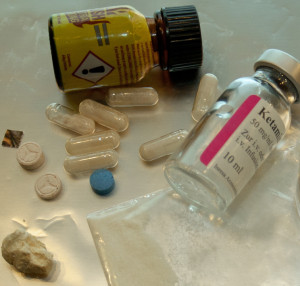
    GHB/GBL, cocaine, ketamine, crystal meth and mephedrone - the range of sex drugs, i.e. chems ['K:ems'], is not small. Chems intensify lust and increase feelings of happiness. However, they can also lead to consequential damage.

    Chems2
    GHB/GBL, cocaine, ketamine, crystal meth and mephedrone - the range of chems on offer is not small. (Photo: iwwit.de)

    In order to find out more about drug use by gay men, British researchers conducted a study in three London boroughs with an above-average gay population. This included a survey of 30 men who had used chemsex during sex in the previous year. The recently published results of the chemsex study are therefore not representative, but nevertheless allow conclusions to be drawn about drug use in major German cities. The most important facts summarised here:

    Effects on sexual sensation and sexual performance:

    A large part of the 30 respondents ...

    • increases lust with Chems and has longer, more varied and more daring sex, sometimes with several men.
    • takes Chems to overcome difficulties with her own self-esteem/sexual confidence.
    • is not satisfied with his sex life despite the increase in sexual experience.

    Some of the interviewees said that they ...

    • can no longer have sex without Chems.
    • were worried about having overstepped their own sexual boundaries with Chems, which they in turn regretted.
    Old addiction+drug report
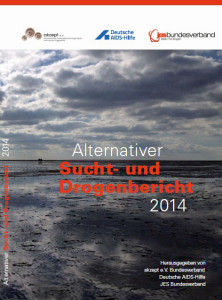
    The 1st Alternative Drug and Addiction Report was published on 2 July 2014. (Photo: DAH)

    What else?
    "Slamming", i.e. injecting drugs - especially crystal meth - occurs much less frequently than expected, namely in 3.5 per cent of the 1,100 or so gay men from the three London boroughs surveyed for which current data is available. By contrast, a third of the 30 respondents had recently injected crystal meth or mephedrone. They stated that they then had even more extreme sex than with other forms of drug use.
     

    Drugs and HIV risk behaviour:

    About a quarter of the participants ...

    • felt in control of his actions and had sex with limited likelihood of transmitting HIV or another sexually transmitted infection.
    • was HIV-positive themselves and deliberately had unprotected anal sex with men they believed were also HIV-positive.

    However, just under a third found it difficult to control themselves when using drugs and took the risk of transmitting HIV or other sexually transmitted infections.

    What else?
    Only a small proportion of men were looking for risky sex and felt even more willing to take risks by taking drugs, crossing sexual boundaries and living out fantasies.
     

    Negative experiences and consequential damage:

    Again and again the men explainedthat ...

    • Chems can have a negative impact on social ties, careers and relationships.  
    • they needed a lot of time to recover after use.
    • they were afraid of an overdose (especially of GHB/GBL).
    • they had their own experiences or knew of third parties who had been hospitalised with panic attacks and convulsions due to overdoses.
    Chems3
    The fear of an overdose - especially of GHB/GBL - is present in some men. (Photo: iwwit.de)

    What else?
    Some men reported delusions of persecution, anxiety or aggression, acute manic episodes or psychotic episodes that had to be treated.
    Despite their own use, most men were concerned about the possible effects of chemsex on the gay scene.

    A German summary with more information can be found here: https://www.hivreport.de/

    Further results and details of the study can be found at: http://www.lambeth.gov.uk/sites/default/files/ssh-chemsex-study-final-main-report.pdf.

    If you would like to find out more about the topic in general, you can find more information on the ICH WEISS WAS ICH TU website at https://www.iwwit.de/themen/drogen the most important information.

    The 1st Alternative Drug and Addiction Report, co-edited by Deutsche AIDS-Hilfe, was published on 2 July 2014. It is intended to help translate existing knowledge about prevention and drug help into a long-term successful drug policy. To the full report: http://www.aidshilfe.de/sites/default/files/Alternativer%20Sucht%20und%20Drogenbericht%202014.pdf